
Unbiased headlines. Facts, not spin.
Unbiased Headlines is an independently owned news organization. We bring you the facts, not opinions, written fresh from 110+ named sources. Sources linked so you can verify it yourself.
 energy
Major Story (8/10)
energy
Major Story (8/10)
China's Oil Demand Rebound Pushes Up Crude Prices From Congo to Brazil
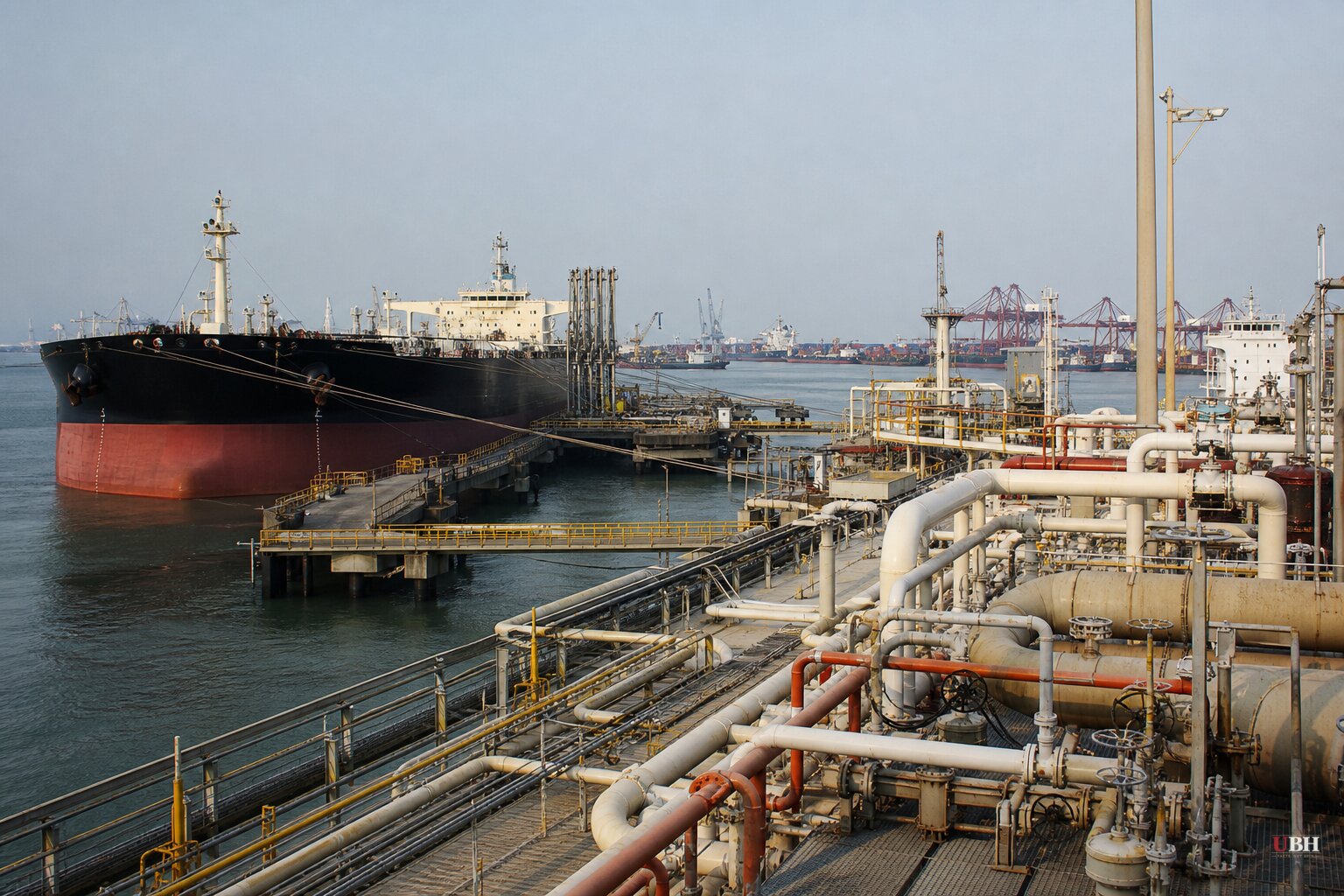
China is buying oil again, and that shift is rippling through crude markets from the Republic of Congo to Brazil.
According to Bloomberg, a rebound in Chinese oil purchases is driving up prices for African, Canadian and Latin American crudes. Refiners are ranging farther afield for supply because Persian Gulf output remains constrained and disruptions in the Strait of Hormuz continue. Bloomberg reports Iranian exports have almost completely dried up under a US blockade, a sharp reversal from earlier in the conflict when weak Chinese demand kept a lid on prices.
Crypto Briefing ran largely the same framing, citing the Bloomberg reporting and naming OPEC's Mohammed Sanusi Barkindo and the IEA's Fatih Birol as officials whose statements could signal where prices head next. The outlet added no independent reporting beyond flagging China's status as the world's largest crude importer and urging readers to watch Beijing's import data.
The Hormuz Backdrop
The current price spike sits on top of a broader Middle East disruption that Breitbart has tracked across the conflict. Breitbart has reported that Chinese companies delayed two refinery projects with combined capacity of 500,000 barrels per day because of the Middle East crude shortage after Iran closed the Strait of Hormuz. The outlet also reported the US and Iran had paused attacks on each other for a stretch as both sides looked toward a negotiated resolution, with Vice President JD Vance saying at a press conference that President Trump's peace plan was "already bearing real fruits for the American people."
Breitbart separately reported pump prices falling for four straight weeks and crude tumbling to its lowest levels since early March, alongside National Economic Council Director Kevin Hassett predicting a "robust recovery" from high energy prices once the Strait of Hormuz fully reopens. None of the sources reviewed here establish how those earlier price declines square with the new Chinese-demand-driven spike Bloomberg is now reporting. If crude prices are climbing again because Beijing is buying more, the administration's case that the peace plan was already cooling prices gets harder to make, and no source addresses that tension directly.
Congo's Bet on Beijing
One of the clearest examples of the price spike's reach is the Republic of Congo, according to riotimesonline. Congo-Brazzaville is Sub-Saharan Africa's third-largest oil producer, behind Nigeria and Angola, per S&P Global Commodity Insights. But output is sliding fast from mature offshore fields.
Trading Economics data cited by riotimesonline show production at 292,000 barrels per day in April 2026, down from 307,000 b/d in March and far below the 437,000 b/d record hit in May 2010. Output has actually run close to the OPEC quota of 277,000 b/d. In June output was 286,000 b/d and in July 274,000 b/d, meaning the quota isn't what's capping production. Aging fields are.
Hydrocarbons Minister Bruno Jean-Richard Itoua originally set a target to double output to 500,000 barrels of oil equivalent per day by 2025. S&P Global reported in late 2024 that target got downgraded to 350,000 boe/d after crude volumes failed to rise. Africanews reported in September 2025 that Brazzaville is now aiming for 500,000 b/d by 2027 instead.
Pointe-Noire remains the country's export and refining hub, home to the CORAF refinery, which covers only about 65 percent of domestic fuel demand, leaving the rest to imports. A Chinese-built plant at the same site was meant to start operating by 2026, according to riotimesonline. A separate new plant, Atlantique Petrochimie, is under construction nearby with a planned capacity of 2.5 million tonnes a year.
Congo's public debt stood at 99 percent of GDP at the end of 2023, classified as in distress but sustainable under an IMF program, per riotimesonline. That debt load is the backdrop against which Brazzaville is courting Chinese capital and pivoting toward gas and LNG projects after missing its earlier output targets.
The Open Question
Higher crude prices are unambiguously good news for producer-government revenue in Congo, Brazil and Canada in the near term. A demand-driven price rise reflects normal market functioning rather than crisis, and oil-exporting economies benefit when a major buyer like China comes back into the market.
What's unresolved is what this means for American drivers. Hassett's prediction of falling prices once Hormuz reopens, and Vance's claim that Trump's peace plan is already working, were both made against a backdrop of falling pump prices reported earlier by Breitbart. None of the sources reviewed here say whether China's renewed buying has reversed that trend at the pump, or whether the reopening of the Strait of Hormuz, if and when it happens, would offset the demand-side pressure Bloomberg is now describing. Watch US retail gasoline prices in the weeks ahead and whether Chinese import volumes keep climbing.
Sources used for this briefing
3 links from 3 independent newsrooms (syndicated copies of the same report count once)
These are the sources it draws on, linked so you can verify.


