
Unbiased headlines. Facts, not spin.
Unbiased Headlines is an independently owned news organization. We bring you the facts, not opinions, written fresh from 110+ named sources. Sources linked so you can verify it yourself.
 energy
Notable (6/10)
energy
Notable (6/10)
Africa's Clean Cookstove Boom Runs on Carbon Credits, Not Climate Guilt
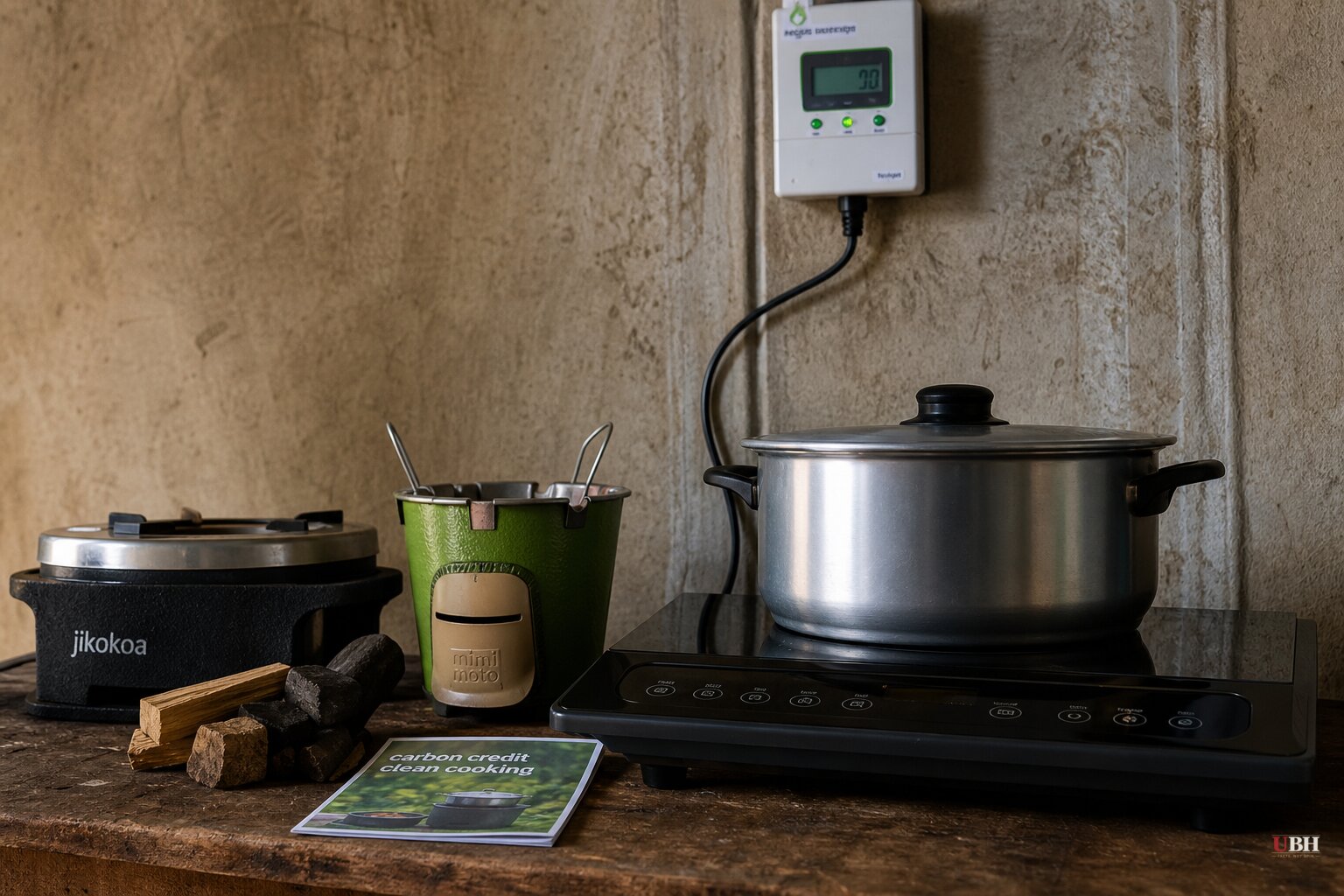
Mary Kavutha cooks breakfast for her two kids every morning on an induction cooker in her Nairobi home. Two years ago she was burning charcoal, which cost her about $1.15 a day and filled her kitchen with smoke. Now she spends 80 cents on electricity tokens, according to reporting from the Associated Press.
"It cooks much faster, and is much safer because I have young children," Kavutha said. "With charcoal there was always smoke in the house. Now I can cook indoors comfortably, and I spend much less."
Kavutha didn't switch because of carbon emissions. She switched because it's cheaper. The AP reporting is explicit on this point, noting she and "millions of other Africans" made the change for cost, not conscience.
The Scale of the Problem
Nearly 1 billion Africans still cook over charcoal or firewood, according to the International Energy Agency. The IEA estimates household air pollution from those fuels kills about 850,000 people on the continent every year. That's smoke inhalation killing real people in real kitchens, right now.
Governments have noticed. More than 30 African governments, in countries that account for roughly 80% of the continent's population without clean cooking access, have rolled out 121 new clean cooking policies since the 2015 Paris climate summit, per IEA figures. Tanzanian President Samia Suluhu called clean cooking "not a luxury, but an everyday necessity" at an IEA-co-hosted conference in Dar es Salaam earlier this year, following the African Union's Dar es Salaam Declaration on Clean Cooking, which 30 governments signed onto last year.
How the Financing Actually Works
The mechanism here isn't a government handout. Private companies raise capital against future revenue from emission-reduction credits, then use that capital to subsidize the upfront cost of stoves for poor households.
Peter Scott, founder and CEO of BURN, a Nairobi-based cookstove manufacturer, put it plainly: "The only way clean cooking is going to scale on the continent is through carbon project finance. Governments earn revenue and customers get a product they would never have been able to afford without that subsidy."
BURN says it has distributed more than 7.3 million cookstoves across 11 African countries. The numbers on affordability are stark: an efficient biomass stove that would normally retail for about $40 can cost customers as little as $5 after carbon subsidies kick in. Pricier induction cookers get financed through a mix of carbon credits and pay-as-you-go plans spread over several months.
In June, the IEA announced Africa had locked in $900 million in new financial commitments toward clean cooking technology.
The Legitimate Concern
Carbon credit markets have a real credibility problem. The reporting itself flags that carbon finance has been "long criticized over concerns about the credibility of some projects." Critics of carbon offset schemes globally have raised fair questions for years: are the emission reductions actually verified? Are credits double-counted? Is a company selling offsets for reductions that would have happened anyway?
Those are legitimate questions for regulators and buyers of carbon credits to keep asking, and none of the sources here resolve them. No independent audit results or third-party verification data are cited in this reporting to confirm the specific emission-reduction claims underlying BURN's or other companies' credit sales. That's a gap to watch as more money flows into this model.
What's not in dispute is the on-the-ground result for people like Kavutha: cheaper cooking, less smoke, lower daily cost. Whether the carbon accounting behind that subsidy holds up to scrutiny is a separate question from whether the stove itself works and saves money, and the reporting doesn't fully answer the first one.
What Happens Next
The test now is whether $900 million in fresh commitments actually reaches the households that need it, and whether the carbon credits underwriting these projects survive closer scrutiny as the market scales. If verification standards hold, this could be a rare case of a UN-style climate mechanism producing a tangible, voluntary, market-based outcome poor people actually want. If the credits turn out to be inflated or poorly audited, taxpayers and carbon-credit buyers in wealthy countries will have funded a subsidy that outran its own paperwork. Neither outcome is confirmed yet.
Sources used for this briefing
8 links from 8 independent newsrooms (syndicated copies of the same report count once)
These are the sources it draws on, linked so you can verify.


