
Original briefings. Zero spin.
Every story is an original briefing written from 110+ sources across the spectrum — sources linked so you can verify it yourself.
 energy
Notable (6/10)
Event date: September 5, 2026
energy
Notable (6/10)
Event date: September 5, 2026
Oman Targets 5.7 GW of Solar and 90% Renewable Power by 2050, But Won't Touch Its 1 Million Barrels a Day
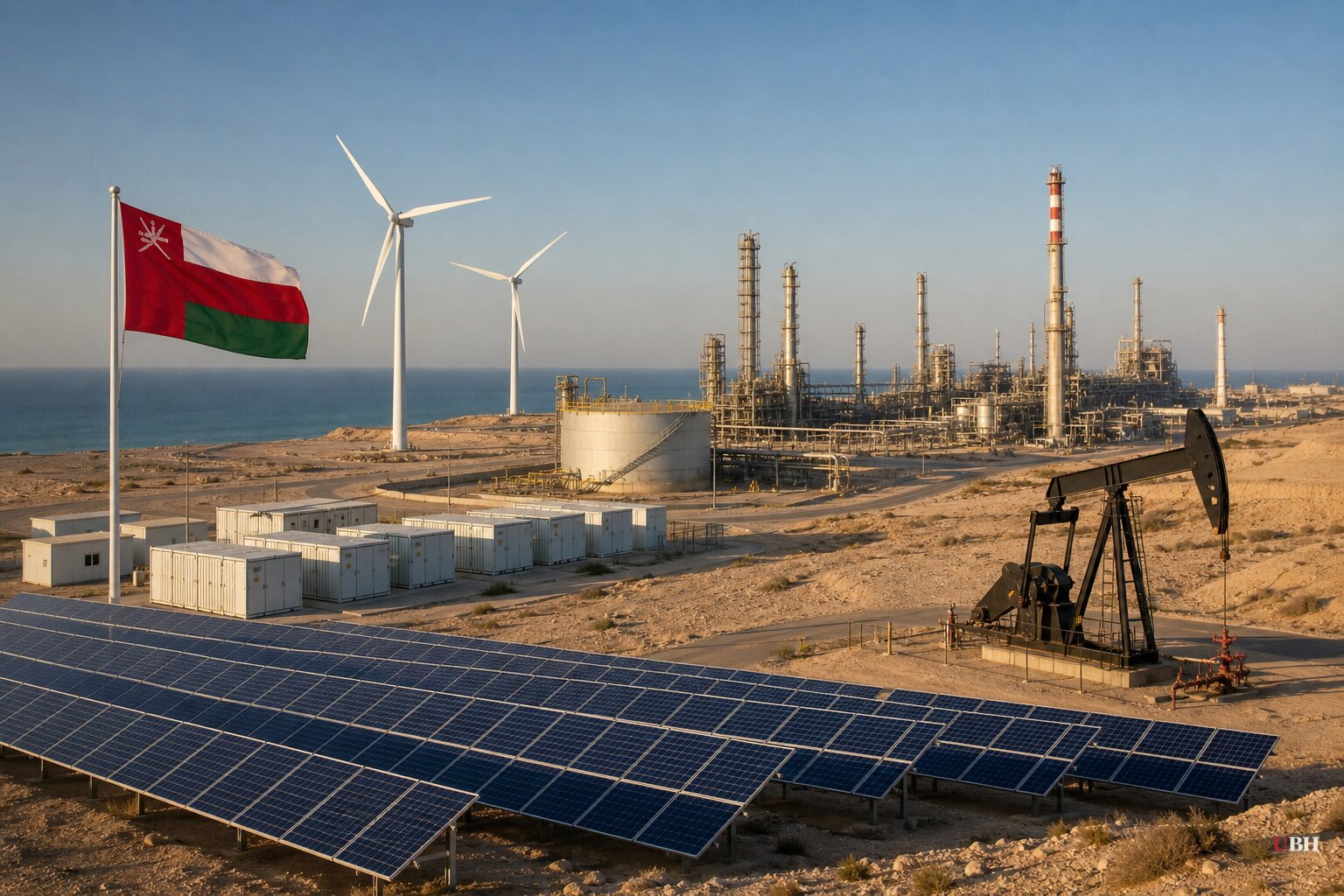
Oman wants it both ways, and it's not hiding it.
The Gulf sultanate updated its National Net Zero Strategy in May 2026, adding a carbon markets regulatory framework and a target to cut greenhouse gas emissions 33 percent by 2035, according to renewablewatch.in. The plan sets renewable electricity targets of 30-40 percent of the national mix by 2030, 60-70 percent by 2040, and 90-100 percent by 2050.
At the same time, Energy Minister Salim Al Aufi says Oman will keep pumping roughly 1 million barrels a day of crude and condensate, produce over 151 million cubic meters of gas daily, and export more than 11 million metric tons of LNG a year, according to OilPrice.com. The government also opened a bidding round earlier this year for five new oil and gas concession areas.
The Numbers Behind the Pivot
Oman's renewable share of power generation rose from 4.26 percent in 2024 to 9.46 percent in 2025, with renewable generation topping 4 TWh for the year, according to renewablewatch.in. That's real growth, but it comes from a small base in a country still built almost entirely on hydrocarbon exports.
To get anywhere near its 2050 target, Oman plans to add about 5.7 GW of solar, more than 2 GW of wind, and 1 GW of battery storage by the end of the decade, according to a report from ua.news citing OilPrice.com figures. Existing projects include the 50 MW Dhofar I wind farm (2019), the 500 MW Ibri II solar plant (2021, with a 2027 expansion adding 100 MWh of storage), and a 1 GW solar buildout at Manah that came online in January 2025.
More is coming. The Adam Solar project with battery storage is due to connect to the grid in early 2028. Three additional 1 GW projects, Kamil Solar II, Dhofar and Mahadah, are expected between 2029 and 2030. A 500 MW project at Sinaw was awarded to a consortium led by France's EDF. Oman also plans the Wadi Dhayka Hydro Pump project, a pumped-storage facility with nearly 1.98 GW of capacity and 17,970 MWh of storage, capable of discharging for up to nine hours.
The Grid Has to Catch Up First
None of this works without wires. The Oman Electricity Transmission Company, majority-owned by the government through Nama Holding with a minority stake held by China's State Grid International Development Limited, is expanding the network from 117 to 157 grid stations by 2030, according to renewablewatch.in. Its latest five-year transmission plan, approved by the Authority for Public Services Regulation in June 2026, lists 70 projects, 37 percent more than the prior plan, and raises planned capital spending to about OMR 1,285 million from OMR 977 million. Fitch Ratings, cited in the same report, says roughly OMR 376 million of that increase is earmarked specifically for battery storage systems.
Peak demand across Oman's interconnected grids is projected to jump nearly 48 percent, from 9,431.9 MW in 2026 to 13,967.4 MW in 2030. Renewable capacity means nothing if the grid can't move the power or store it when the sun isn't out.
Hydrogen Push Widens
Oman is also chasing green hydrogen on multiple fronts. OQ Alternative Energy and Asyad Group signed a term sheet on September 6, 2026, to explore green hydrogen for transport out of a Duqm-based production project, according to IndexBox. OQAE CEO Salim Al Kamyani said the goal is moving from "theoretical promise to tangible deployment."
Oman formally joined the International Partnership for Hydrogen and Fuel Cells in the Economy, the government-to-government body that coordinates hydrogen policy and technical standards, Muscat Daily reported in a story dated September 5, 2026. Energy Minister Al Aufi said the move supports Oman's ambition to build "a competitive global green hydrogen economy." Separately, Hyundai Motor Group signed a memorandum of understanding with Oman's Ministry of Transport at the Gulf Green Mobility Forum, launching a pilot hydrogen city bus with national operator Mwasalat running from the third quarter of 2026 through the third quarter of 2027, plus a 240kW ultra-fast EV charger near Muscat with Oman Oil Marketing Company and EVO, according to CleanTechnica. The broader national target is seven green hydrogen production projects generating 1 million tonnes a year by 2030.
The Backdrop Nobody's Connecting Out Loud
Oman sits next to the Strait of Hormuz, the chokepoint at the center of ongoing U.S.-Iran tensions. Fox News reported that U.S. Central Command commander Adm. Brad Cooper confirmed sea mines have been cleared from the strait's international shipping lanes, with U.S. forces assisting nearly 1,500 commercial vessels carrying roughly 750 million barrels of crude. Treasury Secretary Scott Bessent was set to press G20 finance ministers meeting in Asheville, North Carolina, to squeeze Iran's economy further. None of the sourced reporting ties that conflict directly to Oman's energy diversification push, and Oman's own ministry statements frame the transition as a Vision 2040 economic diversification play, not a security response. But the sultanate's push to build a green hydrogen export business alongside oil sits in a region where a single mine or blockade can shut down a fifth of the world's oil traffic overnight.
What's Actually Unproven
Oman's targets are aggressive on paper, jumping from under 10 percent renewables in 2025 to 90-100 percent by 2050. None of the sourced material lays out a detailed financing plan for the roughly OMR 1,285 million in transmission spending or the billions more needed for the 5.7 GW of planned solar and 2 GW of wind. Whether Oman Vision 2040's diversification goals survive contact with a government that has no plan to cut its 1 million barrels a day of oil production, and still counts on hydrocarbon export revenue to fund the green buildout, is the open question nobody in these reports answers yet.
Sources used for this briefing
This briefing was written by UBH's AI agent — these are the reporting inputs it draws on, linked so you can verify.


