
Original briefings. Zero spin.
Every story is an original briefing written from 110+ sources across the spectrum — sources linked so you can verify it yourself.
 energy
Notable (5/10)
September 6, 2026 at 10:49 PM
energy
Notable (5/10)
September 6, 2026 at 10:49 PM
Report: Only 26% of Critical Mineral Demand in 2024 Went to Renewables and EVs, Not the Rest
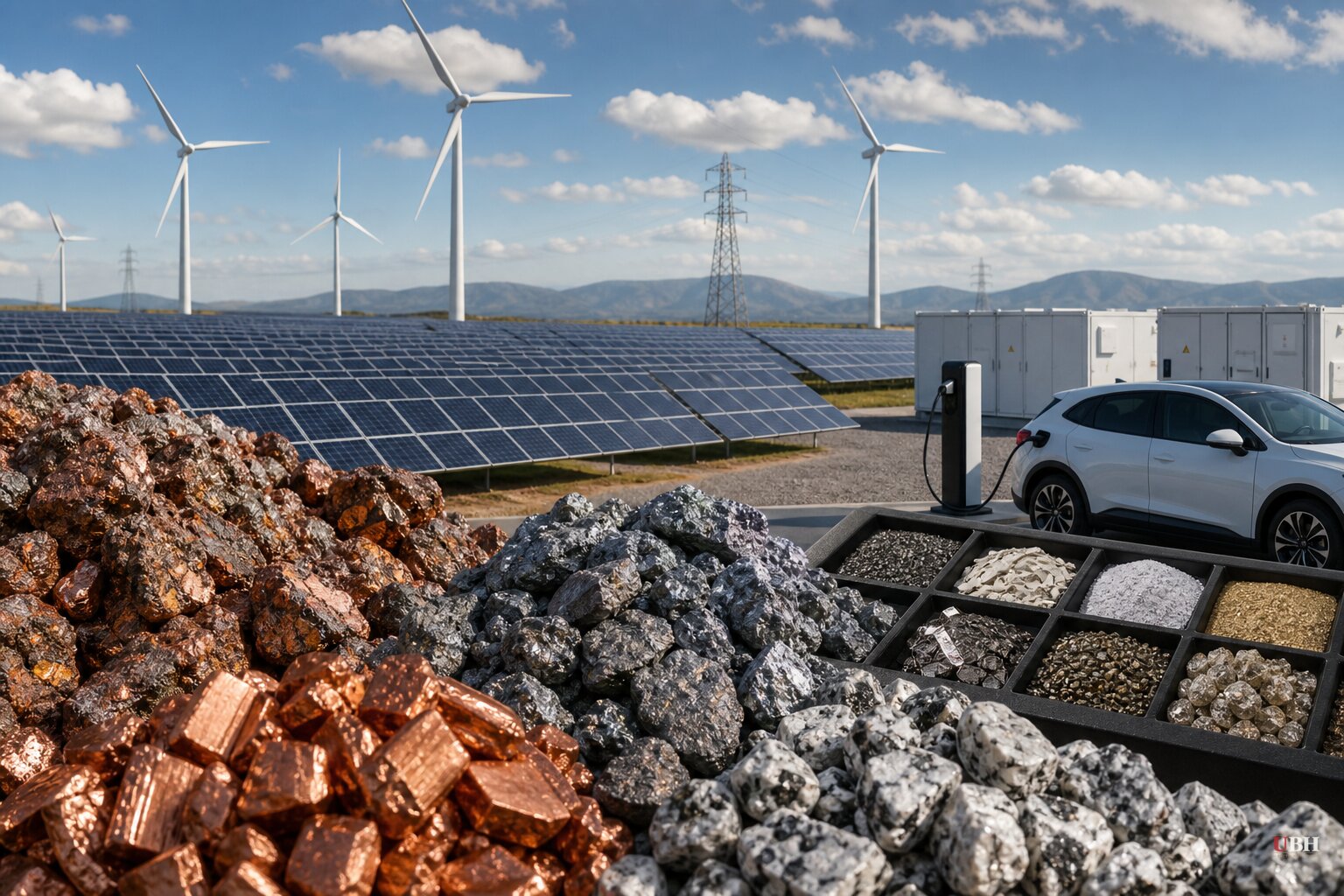
Every time a new lithium mine gets approved, or a copper project displaces a village, the justification is the same: the world needs it for the green energy transition. A new report from the Oakland Institute, an Oakland, California-based policy think tank, says that justification is mostly wrong.
Using International Energy Agency data, Oakland Institute calculated that wind, solar, renewable-power grids, battery storage and electric vehicles accounted for just 26% of combined 2024 demand for six minerals: copper, lithium, nickel, cobalt, graphite and magnet rare earths, according to OilPrice.com. The other 74% went to construction, conventional transport, industrial machinery, defense, electronics and other uses that have nothing to do with clean energy.
Broken down by mineral, the picture gets sharper. Uses outside renewables and EVs accounted for 83% of nickel demand, 79% of magnet rare-earth demand, 71% of copper demand, and 68% each of cobalt and graphite demand in 2024, per the same analysis. Construction alone consumed 30% of the world's copper. Stainless-steel production, not batteries, consumed roughly two-thirds of global nickel.
Eco-Business, which covered the underlying Oakland Institute report titled "RUSH: Global Scramble for Minerals Wages War on People and Planet," cites a slightly different figure: it says solar, wind, battery storage and renewable power networks alone (without counting EVs separately) make up "around a fifth" of demand, with defense and aerospace, conventional transport, AI data centers and construction taking the rest. The two figures aren't contradictory, they're measuring slightly different baskets, but both land on the same conclusion: green energy is a minority user of the minerals mined in its name.
The institutions that set global mining policy tell a different story. The World Bank has said production of key minerals will need to increase 500% by 2050 to hit energy transition targets, according to Mongabay, which ran a commentary by Oakland Institute researcher Shaan Sood. The UN Conference on Trade and Development has said 250 new mines are needed, 80 for copper, 70 for lithium, 70 for nickel, 30 for cobalt. WWF has called for a dramatic scale-up of the mineral supply chain.
Oakland Institute policy director Frederic Mousseau told Mongabay that scaling up mining on that scale would "perpetuate" the destruction of "land, livelihoods, and waters" already caused by extraction, pointing to Zambia and the Democratic Republic of Congo as examples. Africa holds roughly 30% of the world's known mineral reserves, according to Eco-Business, but mineral-producing African countries currently process less than 15% of their own output domestically, meaning most of the profit from processing leaves the continent.
The key caveat: the 74%-outside-clean-energy figure is a snapshot of 2024, not a forecast. OilPrice.com's own reporting on the same IEA data notes the calculation "describes consumption in 2024 and cannot establish which industries will drive future demand." Under the IEA's Net Zero Emissions Scenario, mineral demand from clean-energy technologies nearly triples between 2023 and 2030. The IEA also projects the global fleet of battery-electric, plug-in hybrid and fuel-cell vehicles will grow from 11 million in 2020 to almost 2 billion by 2050, consuming 15.7 million metric tons of the six minerals, 23% of a projected 68.2 million ton total. In other words, EVs' share of demand is small today and the IEA expects it to grow substantially, even if it never becomes the majority.
Green energy is not the primary driver of mining today, and the institutions pushing the 500%-by-2050 figure are talking about a future that hasn't arrived yet. Neither side's number is fabricated. They're answering different questions.
The report also undercuts the idea that massive new mining is unavoidable even for the clean-energy share that does exist. A University of California, Davis-led study found that combining lower vehicle ownership, smaller EV batteries and best-case recycling rates could cut projected 2050 U.S. lithium demand by as much as 92% compared with the most lithium-intensive scenario, according to OilPrice.com. Smaller batteries alone could cut demand 42%, even if Americans kept driving as much as they do now.
The IEA itself estimates that rightsizing EV batteries, switching to alternative chemistries, and expanding recycling could cut global lithium demand 25% by 2030, saving roughly as much lithium as the world currently produces in a year. Under the IEA's net-zero scenario, recycled supply could cut primary copper and cobalt mining needs 30% by 2040, and primary lithium and nickel needs 15%. Skip the recycling scale-up, and mining investment requirements go up by a third.
Oakland Institute isn't making this argument to defend fossil fuels or oppose EV mandates. Its stated goal, per Mousseau, is less mining across the board, out of concern for Indigenous communities, water contamination and land destruction. The group treats AI data centers and "heightened military spending" as part of the problem, not an excuse to keep drilling.
But the data cuts a different way for anyone skeptical of aggressive renewable mandates. If 74% of critical mineral demand in 2024 had nothing to do with wind turbines or EVs, then the argument that America must subsidize green mining projects specifically to "win the energy transition" is weaker than politicians on both sides have claimed. Defense, electronics and AI infrastructure, priorities most conservatives actually support, are bigger drivers of mineral demand than solar panels.
While the mineral supply chain is already a live diplomatic flashpoint, President Trump is scheduled to meet President Xi Jinping in Washington on September 24, according to Investor News, with roughly 65 days remaining as of September 6 before China's suspension of its October 2025 export control package is due to expire around mid-November.
China agreed at a May summit to ease shortages of yttrium, scandium, neodymium and indium, but Investor News reports some Chinese suppliers have declined to ship material to the U.S. despite holding valid export licenses, and some American companies have waited more than six months for approvals. U.S. imports of yttrium remain at roughly half their 2024 level. Critical Minerals Institute co-chair Jack Lifton, quoted in the same report, argues China "cannot assume that customers denied those materials will remain customers indefinitely," meaning restrictions could accelerate the very diversification away from Chinese supply that Beijing wants to avoid.
Whether the September 24 Xi-Trump meeting produces a clearer licensing framework or just another temporary reprieve remains unresolved. The fight over critical minerals is being driven as much by defense planning and great-power competition as by solar panels, exactly the pattern Oakland Institute's own numbers describe.
Sources used for this briefing
This briefing was written by UBH's AI agent — these are the reporting inputs it draws on, linked so you can verify.


