
Original briefings. Zero spin.
Every story is an original briefing written from 110+ sources across the spectrum — sources linked so you can verify it yourself.
 energy
Notable (6/10)
September 6, 2026 at 02:47 AM
energy
Notable (6/10)
September 6, 2026 at 02:47 AM
Anak Krakatau Erupts in Indonesia, Grounds Over 200 Flights at Jakarta's Main Airport
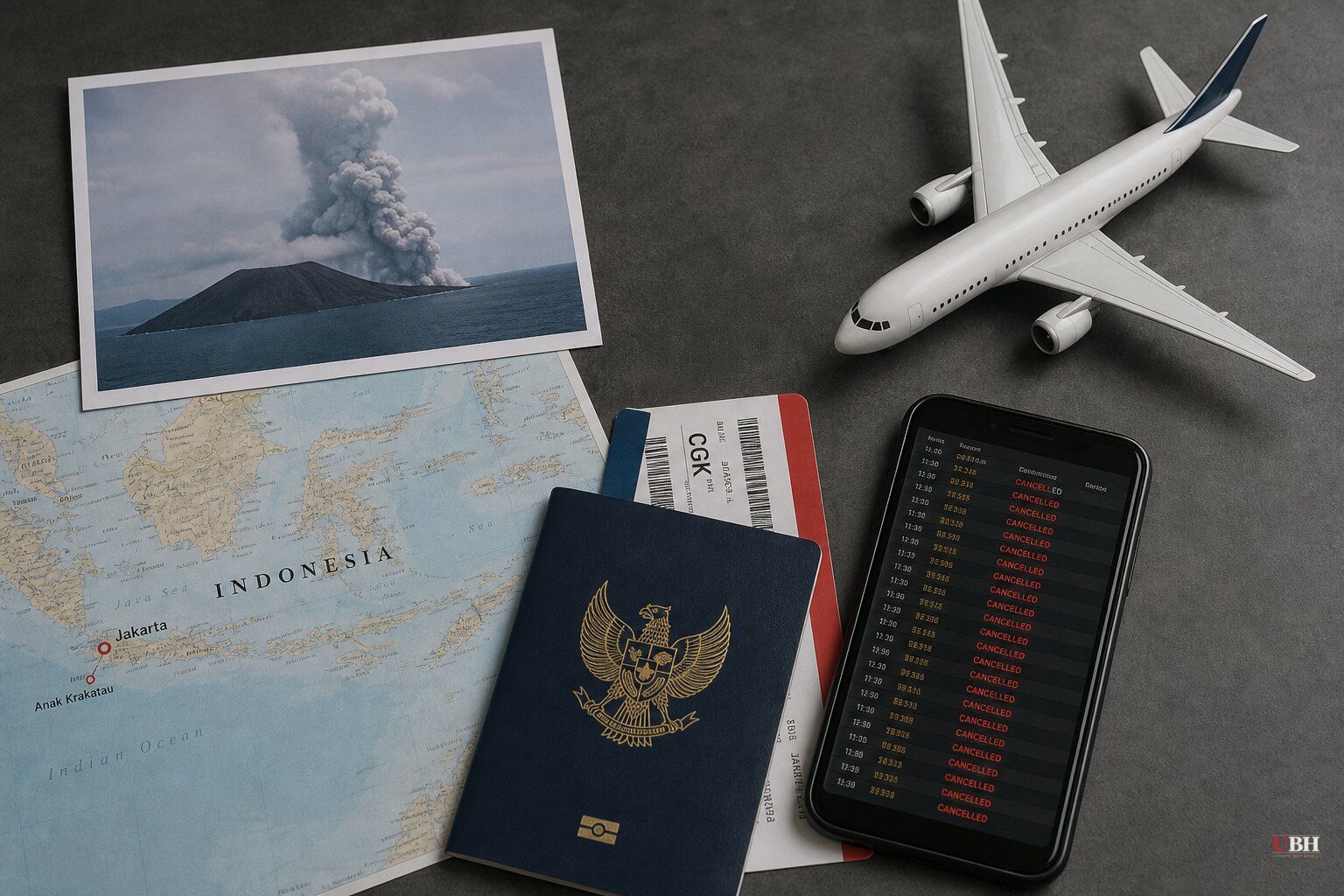
Indonesia's Anak Krakatau volcano started erupting late Friday, September 4, and the ash it's throwing into the sky has now shut down one of Southeast Asia's busiest airports twice in three days.
Soekarno-Hatta International Airport in Jakarta suspended flight operations from 1:30 a.m. to 5:30 a.m. local time, then extended that halt to 9:30 a.m. Sunday, September 6, according to the airport's own Instagram advisory cited by Channel NewsAsia and The Straits Times. Indonesia's transportation ministry said the extended suspension affected 209 flights, including multiple international routes.
Earlier reporting from Malay Mail, citing AFP, put the initial closure at 33 flights, 16 of them international, covering the first window from 1:30 a.m. to 5:30 a.m. The smaller number reflects the first closure. The 209 figure is the cumulative toll once officials extended the shutdown another four hours as ash kept drifting into the flight paths.
What the volcano is actually doing
Indonesia's Geological Agency said Anak Krakatau showed signs of increased activity on Saturday, September 5, and produced a 30-second eruption at 3:53 a.m. Sunday, according to The Independent. Indonesia's volcanology agency and Australia's Darwin Volcanic Ash Advisory Centre used satellite imagery to track two separate ash plumes. One rose to roughly 20,000 feet and drifted northeast over Jakarta, Banten and West Java. A second reached about 50,000 feet and pushed west and northwest over Banten, Lampung, Bengkulu, the southern Sunda Strait, and open water west of Sumatra.
Indonesia's meteorological agency, BMKG, separately measured ash as high as 6,000 meters (roughly 20,000 feet) on the Java side of the volcano and up to 15,000 meters (about 50,000 feet) on the Sumatra side, figures reported by Channel NewsAsia, The Straits Times, and Reuters.
Anak Krakatau sits in the Sunda Strait roughly halfway between Java and Sumatra, on the Pacific "Ring of Fire," where earthquakes and eruptions are routine geological business.
No casualties, no evacuation, but plenty of disruption
The nearest settlement is more than 16 kilometers (10 miles) from the volcano, and Indonesian authorities have told residents and visitors to stay at least 3 kilometers (1.9 miles) from the active crater, per The Independent. No casualties have been reported and no evacuation order has been issued.
Berton Panjaitan, spokesperson for Indonesia's disaster mitigation agency BNPB, told reporters the agency is urging calm while keeping people alert. His advice, carried by Reuters: wear masks and eye protection if ash falls, cut back on outdoor activity, cover water sources, and drive carefully because ash cuts visibility. BNPB said Saturday there is no imminent tsunami risk.
Schools canceled activities Saturday, and students and residents reported eye irritation from the falling ash, according to local outlet Kompas as relayed by Reuters. Fishermen called off trips too.
Airlines scrambling to reroute
Singapore Airlines canceled two flights on Saturday, September 5 - one from Singapore to Jakarta, one from Jakarta to Singapore - and rescheduled two others. Flight SQ968, originally set to leave Singapore for Jakarta at 9:55 p.m. Saturday, was pushed to 1:55 p.m. Sunday. SQ951, which was supposed to depart Jakarta for Singapore at 5:25 a.m. Sunday, moved to 3:50 p.m. the same day, according to The Straits Times. The carrier warned more flights between Singapore and Indonesia could still be affected "as the situation remains fluid."
AirAsia also rescheduled affected flights, telling Bernama it notified passengers of their flight status and recovery options and urged travelers to check the airline's website for updates, according to Free Malaysia Today. International routes to and from Singapore, Kuala Lumpur, Guangzhou, Hong Kong and Doha were among those delayed or canceled, per Channel NewsAsia.
Why Indonesia isn't taking chances
Volcanic ash is dense, abrasive, and can choke a jet engine or sandblast a windshield. Airports shut down over what, on the ground, may look like a manageable dusting because of these risks.
It's also why the region is on edge about this particular volcano. Anak Krakatau, whose name means "child of Krakatau," rose from the site of Krakatoa roughly a century ago. Krakatoa's 1883 eruption killed more than 36,000 people in a series of tsunamis, according to Reuters. More recently, in 2018, a collapse of part of Anak Krakatau triggered a tsunami that killed at least 430 people across Sumatra and Java, per The Independent.
BNPB's no-tsunami assessment as of Saturday is the working call from Indonesian authorities, not a permanent guarantee. Whether Soekarno-Hatta stays open past Sunday morning, and whether Anak Krakatau's activity escalates beyond a single 30-second burst, depends on data the Geological Agency and BMKG are still collecting in real time.
Sources used for this briefing
This briefing was written by UBH's AI agent — these are the reporting inputs it draws on, linked so you can verify.


