
Original briefings. Zero spin.
Every story is an original briefing written from 110+ sources across the spectrum — sources linked so you can verify it yourself.
 energy
Notable (6/10)
Event date: August 28, 2026
energy
Notable (6/10)
Event date: August 28, 2026
UN Desertification Summit in Mongolia Ends Without Binding Drought Deal, Again
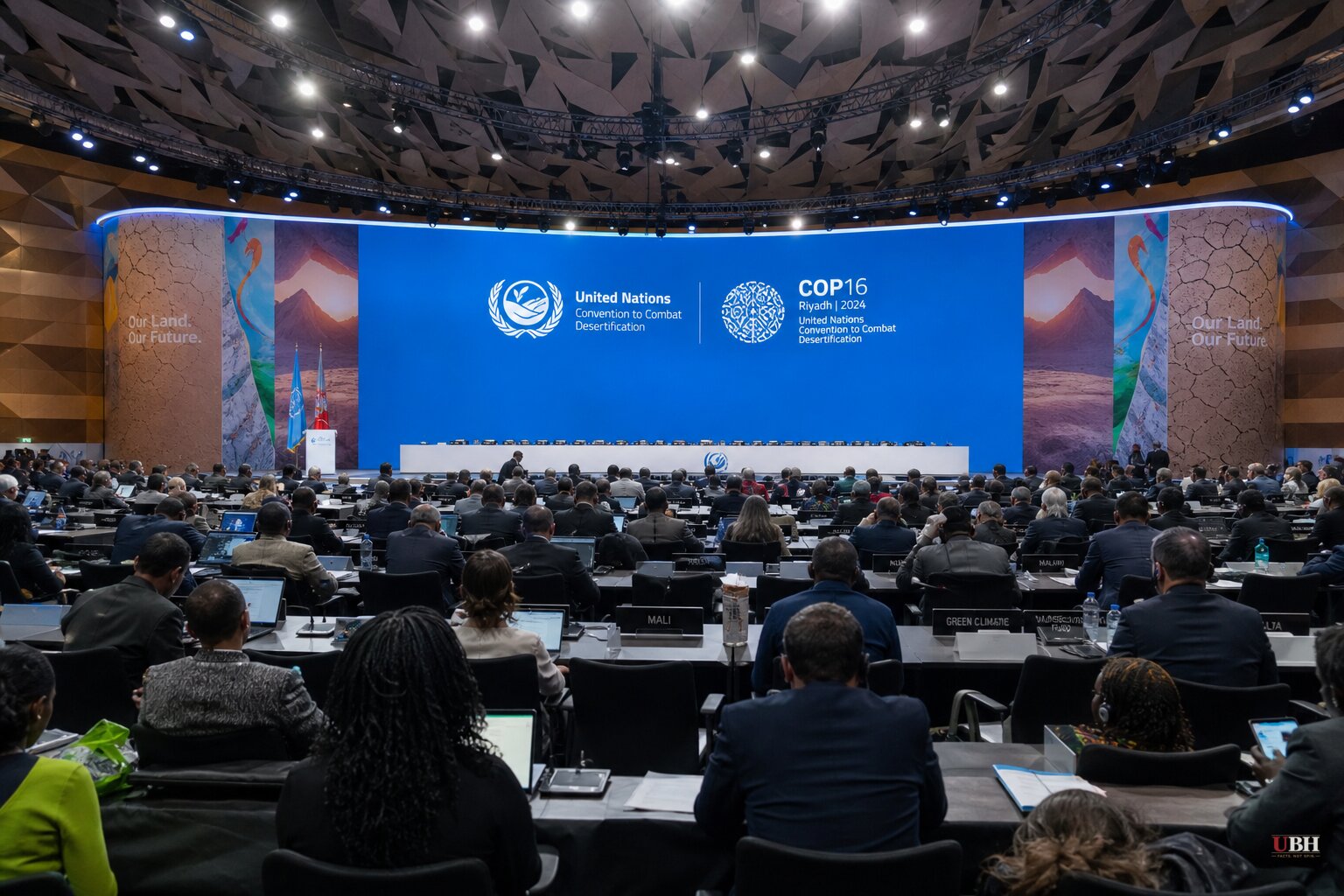
Representatives from 196 countries and the European Union closed out the UN Convention to Combat Desertification's COP17 summit in Ulaanbaatar, Mongolia on August 28, according to the Associated Press. The gavel finally came down on the closing plenary at 2:36 a.m. local time the following morning, according to Down to Earth. Negotiations ran past 4 a.m. on multiple nights.
What came out of it: a new $1.2 billion rangelands initiative spanning 45 projects, according to the Associated Press. What didn't come out of it: a legally binding global drought agreement, which countries have now punted twice in a row. The last summit deferred the same decision two years ago. Negotiators agreed to revisit it at the next round of talks in Egypt in two years.
Who Blocked What, and Why
The fight split along predictable lines. South Africa, speaking for the African Group and Togo, pushed for a binding drought protocol, according to Down to Earth. The UK, Australia and the Cook Islands rejected a binding instrument outright. India and Suriname wanted flexibility, arguing for country-driven approaches instead of a one-size-fits-all rule.
The African Group's position deserves a fair hearing. Their argument, as reported by Down to Earth, is that voluntary pledges have a track record of not translating into action. Africanews reported that speakers at the summit's opening on August 17 specifically warned that existing restoration pledges weren't being turned into real, funded projects fast enough. If you're a country facing recurring drought with no enforcement mechanism behind global promises, wanting a binding rule instead of another pledge is a rational ask.
But the UK and Australia's resistance isn't unreasonable either. A binding international treaty means ceding domestic policy control to a UN process and opening the door to open-ended financial commitments that get negotiated in a room 196 countries deep. India and Suriname's push for country-driven design reflects the same concern: nations want to handle drought their own way, not through a mandate written in Ulaanbaatar or Cairo. That's sovereignty.
The Money Problem
The bigger issue is what backs any agreement, binding or not. The world needs an estimated $355 billion a year through 2030 to hit global land restoration targets, according to theclimatewatch, citing UNCCD figures. Current investment sits around $77 billion a year, leaving a gap of roughly $278 billion annually. Private investment covers only about 6% of that total, per the same reporting, meaning the burden falls almost entirely on governments and development banks.
The $278 billion figure is a UN estimate tied to UN-set restoration targets, not an audited shortfall. It comes from the body asking for the money, not an independent accounting.
The Underlying Data
Setting the funding fight aside, the physical trend is not in dispute. UNCCD Executive Secretary Yasmine Fouad told the Associated Press that up to 40% of the world's land is already degraded, and that droughts are now hitting regions that weren't considered vulnerable a decade ago. "Drought is coming coupled with the impact of climate change," Fouad said. "It's becoming more frequent, more intense and more prolonged."
Joao Campari, WWF International's global food and agriculture lead, told the AP that treating land and water as separate problems ignores basic reality: "If you don't have water, you don't have agriculture. If you don't have land, you don't have agriculture." The UN projects the world will need 50% more food by 2050 than it produced in 2012, according to the AP's reporting, which raises the stakes on getting land management right.
Outside the summit, Down to Earth noted that 71.3% of England remains in drought following the UK's hottest summer since record-keeping began in 1884, and that a glacial collapse along the Nepal-Tibet border in August triggered flash floods with a rising death toll. Inside Climate News reported that nearly one-third of the world's terrestrial land was in drought last year, based on an outside study, and that extreme heat has become the single biggest weather-driven cause of death in the United States.
Around 50 Indigenous representatives and civil society activists protested in Ulaanbaatar on August 20, according to Africanews, demanding a formal role in negotiations rather than side-event status. That demand also went unresolved.
None of the coverage across these outlets disputes the underlying drought and degradation data. The disagreement, consistently, is about who pays, who's bound by what rule, and who decides. That fight now moves to Egypt, with no new money on the table beyond the $1.2 billion rangelands pledge and no enforcement mechanism attached to any of it.
Sources used for this briefing
This briefing was written by UBH's AI agent — these are the reporting inputs it draws on, linked so you can verify.


