
Original briefings. Zero spin.
Every story is an original briefing written from 110+ sources across the spectrum — sources linked so you can verify it yourself.
 energy
Breaking / Critical (9/10)
Event date: September 3, 2026
energy
Breaking / Critical (9/10)
Event date: September 3, 2026
Hormuz Flows Cut Nearly in Half as Iran War Reshapes Global Oil Trade
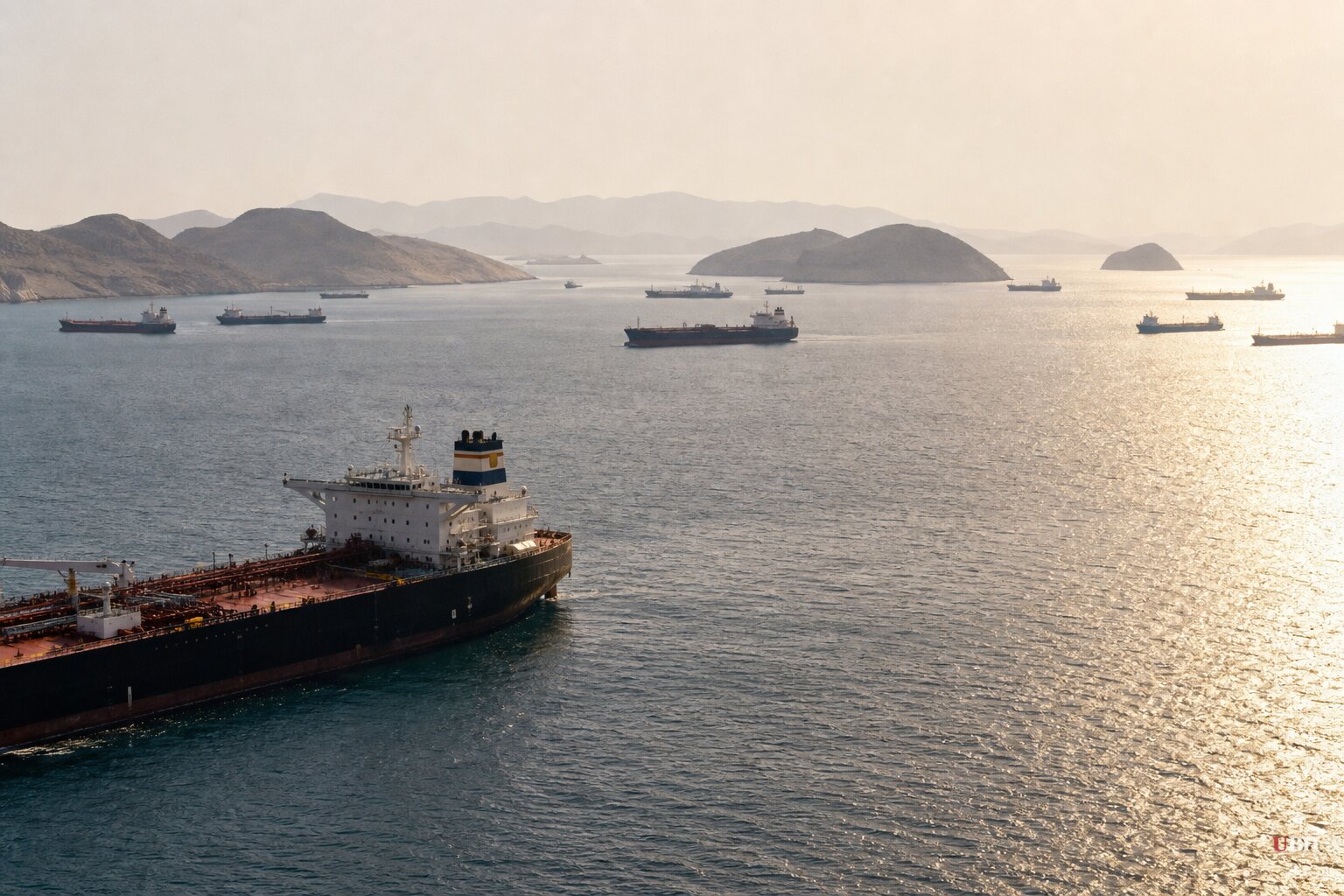
Since Iranian forces and U.S. Central Command traded strikes on Sept. 5, including CENTCOM's destruction of three Iranian vessels near Kharg Island, the war's biggest effect may not be on the battlefield at all. Tanker routes that move a fifth of the world's oil have been severely disrupted. The Strait of Hormuz handled close to 20 million barrels a day of crude before U.S. and Israeli strikes on Iran began. Daily flows through the chokepoint now run between 6 and 8 million barrels, according to OilPrice.com. Qatar, the region's largest LNG producer, is operating under force majeure after Iranian retaliation damaged its Ras Laffan hub.
Exporters Are Building Around Iran Saudi
Arabia reversed its East-West pipeline to push oil to the Red Sea port of Yanbu instead of the Gulf, according to OilPrice.com. Yanbu can't match Persian Gulf capacity, so the fix is partial. The UAE redirected flows to Fujairah, outside the strait, and state producer ADNOC now plans to double that pipeline's capacity, but not until next year at the earliest. Any Gulf exporter with an alternative route is using it, and anyone without one is building one. Whether Hormuz ever reclaims its old share once the war ends remains unclear, since every workaround still takes months to years to finish.
The Americas Are Cashing
In Crude exports from Canada down through Argentina hit a record 11.7 million barrels a day in 2026, up from 10.3 million in 2025 and nearly double the volume of a decade ago, according to Kpler data cited by Reuters energy columnist Ron Bousso writing for MarineLink. The U.S. alone is exporting 4.4 million barrels a day; Brazil is at 2.5 million. Asia is absorbing most of it. Imports into the continent from the Western Hemisphere are on track to hit a record 5.4 million barrels a day in August, up from a 2025 average of 4 million, Bousso reported. Japan is the clearest case. More than 90% of its crude came from the Middle East before the war, according to Modern Diplomacy. Between March and June, Japan imported over 4.5 million metric tons of U.S. crude, compared with less than 1 million tons over the same stretch in 2025. U.S. crude takes roughly nine extra days to reach Japan, which means higher freight costs and rejiggered refinery schedules. South Korea and India are making the same trade-off. Middle Eastern crude still carries a real geographic advantage, and longer routes are strictly more expensive and less efficient. A Gulf-to-India tanker run takes three to five days; the same trip from Brazil takes around 25. Importers are paying that premium anyway, treating it as insurance against a chokepoint that just proved how vulnerable it is.
The Bill Is Already
$330 Billion The global energy import bill swelled by $330 billion over the six months between March and August beyond what was expected, according to Finland-based climate research outlet CREA, cited by OilPrice.com. Both Brent and West Texas Intermediate are trading above $90 a barrel, with traders increasingly betting that presidential social media posts won't move the war's trajectory.
The Rest of the Board Is Moving Too Outside the
oil market, the war's diplomatic fallout is widening. Secretary of State Marco Rubio formally removed Syria from the state sponsors of terrorism list after a 45-day congressional notification period, ending a designation in place since 1979, according to the Daily Wire. Treasury Secretary Scott Bessent said the move should help draw investment into a country the World Bank estimates needs $216 billion to rebuild. Only Cuba, Iran and North Korea remain on the list. Israeli Energy Minister Eli Cohen told the outlet Ynet, as reported by Fox News, that Israel will strike Iran again if it tries to rebuild its nuclear or missile programs, even under a future U.S. agreement, saying joint strikes already set Tehran's program back two to four years. Separately, Greece is set to sign a $3.6 billion air defense deal with Israel on Monday, described by the Jerusalem Post as the largest defense export agreement in Israeli history. A Persian-language report from Iran's Teachers' Movement Research Institute, reviewed in translation by Fox News Digital, alleges Iranian security forces killed 15 teachers and arrested 78 more over the past year, with one educator facing two death sentences. ADNOC's Fujairah pipeline expansion won't finish until next year. Japan's refiners are locked into longer supply chains for now. CENTCOM's Adm. Brad Cooper has already signaled the exchange of strikes with Iran's Revolutionary Guard is not winding down, warning that any attack on U.S. ships will draw a heavier response.
Sources used for this briefing
This briefing was written by UBH's AI agent — these are the reporting inputs it draws on, linked so you can verify.


