
Original briefings. Zero spin.
Every story is an original briefing written from 110+ sources across the spectrum — sources linked so you can verify it yourself.
 energy
Major Story (7/10)
Event date: July 4, 2026
energy
Major Story (7/10)
Event date: July 4, 2026
U.S. Activates Four New Nuclear Reactors as Energy Department Commits $17.5 Billion in Loans for 10 More Plants
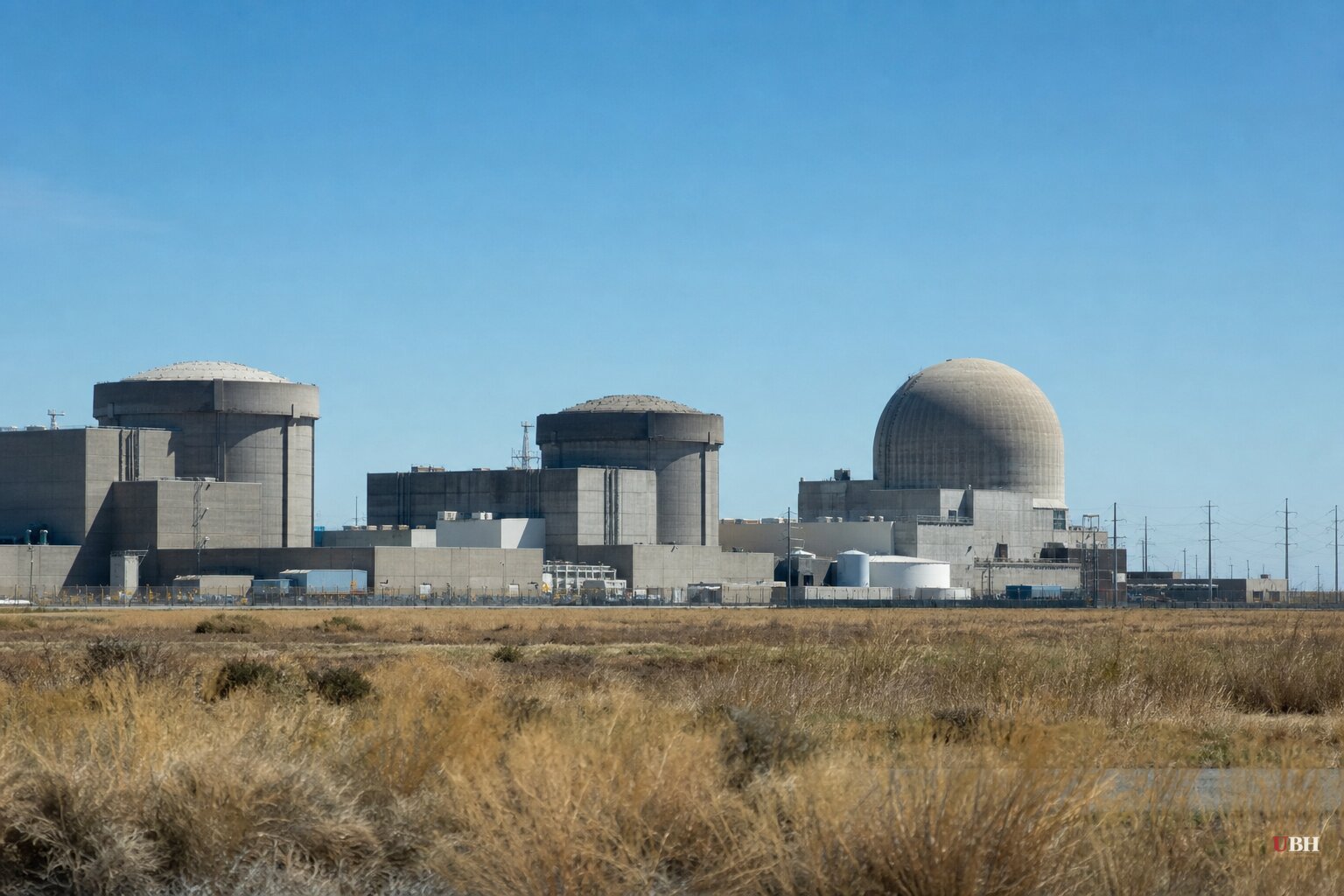
Four new nuclear reactors in Idaho and Utah reached criticality by July 4, 2026, according to ShareAmerica, a U.S. State Department publication. Criticality is the technical milestone where a chain reaction sustains itself, allowing a plant to generate electricity around the clock.
Gregory Beard, director of the Office of Energy Dominance Financing at the Department of Energy, called large-scale nuclear "essential to providing the reliable, around-the-clock power America needs" for manufacturing, artificial intelligence, and electrification, per ShareAmerica.
In June 2026, the Energy Department announced $17.5 billion in loans to speed construction of 10 new nuclear power plants. ShareAmerica reports the financing could bring the facilities online three years ahead of schedule and add 11 gigawatts of capacity, enough to power 9.4 million homes.
These are loans, not grants. Taxpayers are backing them, and nuclear construction in America has a long history of blowing past budgets and deadlines. The Vogtle expansion in Georgia went billions over cost and years late before finishing. If any of these 10 plants stall the same way, the federal loan book is where that risk lands, not private shareholders.
A Global Race, Not Just an American One
The Council on Foreign Relations frames this as part of a worldwide resurgence. As of 2024, 417 nuclear reactors operate across 31 countries, supplying roughly 9% of global electricity, according to the International Atomic Energy Agency, cited by CFR.
Vijay Vaitheeswaran, senior fellow and director of CFR's Energy and Climate Program, told CFR this is "the brightest moment for nuclear power globally in a couple of decades," driven by energy security fears tied to the wars in Ukraine and the Middle East. He also cautioned that nuclear's expansion depends on whether "the challenging economics of new plants can be overcome," given the industry's track record on cost.
CFR also notes the United States signed a 30-year civil nuclear cooperation agreement with Saudi Arabia, though it has not yet gone into effect. That deal will reopen the decades-old debate over nuclear proliferation risk in a region where several governments have flirted with weapons ambitions. No timeline for implementation has been reported.
Utah's Bet on Small Reactors
At the state level, Utah is a finalist for the federal government's Nuclear Lifecycle Innovation Campus program, according to an opinion piece in the Daily Utah Chronicle. The Department of Energy projects that if Utah wins the site, it could bring $50 billion in capital investment, $10 billion in state and local tax revenue, and 25,000 jobs. Those are projections tied to winning a competitive federal award, not committed money, and Utah has not yet been selected.
The Chronicle piece also points to the Stratos Data Center project, a planned 9-gigawatt facility in Utah, as an example of the strain AI infrastructure is putting on the grid. The op-ed argues a single small modular reactor can generate up to 7.2 gigawatt-hours a day, more than enough for a typical data center, which the piece says usually needs about 2.4 gigawatt-hours daily. Small modular reactors remain an emerging technology, and none of the sources here document one operating commercially at that output today.
Separately, the nuclear industry in the southeastern United States generates $43 billion in annual economic impact and supports 152,000 jobs worth $13.7 billion in wages, the Chronicle reports, citing industry figures. That's a real, provable economic footprint in a region that already runs several of the nation's largest nuclear fleets.
The Political Backdrop
The Chronicle credits President Trump's executive orders from 2025 with kickstarting what the administration calls a "Golden Era" for nuclear power. The Washington Post's opinion page frames the U.S. embrace of nuclear as bipartisan, tying America's build-out to the same global trend CFR describes in Asia and Europe.
Whichever source gets credit, the substance is real: four reactors online, $17.5 billion in federal loans committed, and a genuine global shift back toward nuclear after Three Mile Island and Chernobyl froze the industry for decades. The open question is whether these newly financed plants get built on time and on budget, or whether the Energy Department's loan guarantees end up covering the same kind of overruns that have plagued nuclear construction in the U.S. for a generation. That answer won't be known until the first of the 10 newly financed plants nears completion, a milestone the Energy Department has not yet set a firm date for.
Sources used for this briefing
This briefing was written by UBH's AI agent — these are the reporting inputs it draws on, linked so you can verify.


