
Original briefings. Zero spin.
Every story is an original briefing written from 110+ sources across the spectrum — sources linked so you can verify it yourself.
 energy
Major Story (7/10)
Event date: September 2, 2026
energy
Major Story (7/10)
Event date: September 2, 2026
US Army Awards Up to $2.2 Billion to Build Nuclear Microreactors on Five Bases
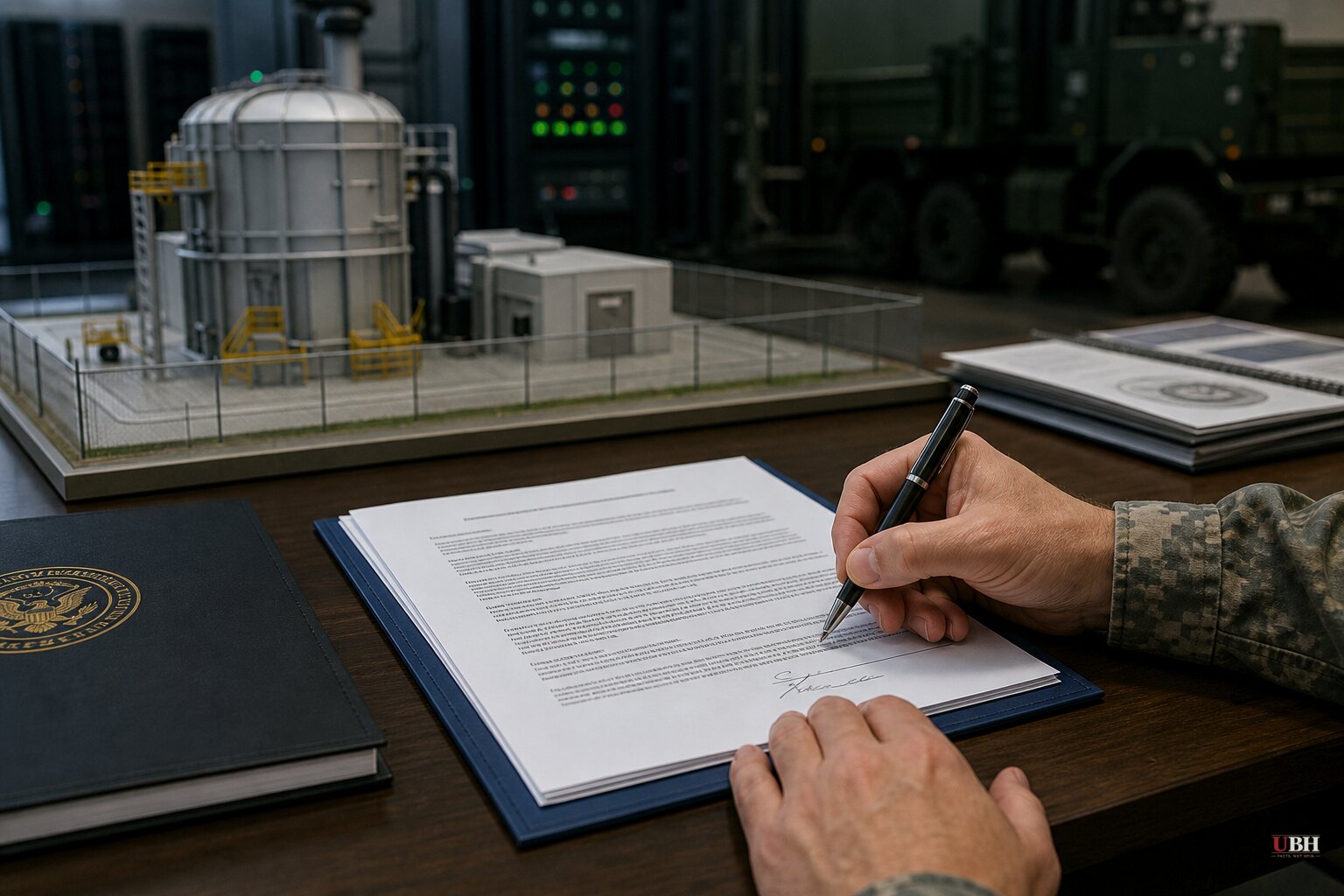
The Department of the Army announced on August 26 that its Janus Program selected five nuclear vendors to build microreactors at five military installations, backed by up to $2.2 billion in combined government funding, according to an Army.mil release.
The vendors and their sites: Antares Nuclear at Fort Bragg, North Carolina; BWXT Advanced Technologies at Fort Campbell, Kentucky; General Atomics Electromagnetic Systems at Fort Hood, Texas; Radiant Industries at Fort Benning, Georgia; and Westinghouse Government Services at Fort Drum, New York. The Army says private-sector funding on top of the government dollars should push the total to more than 20 microreactors across Department of War installations.
"Since launching the Janus Program, our mandate from President Trump and Secretary Hegseth has been clear: secure the power our warfighters need to train, deploy and win," said Dan Driscoll, Secretary of the Army, in the release.
Dr. Jeff Waksman, principal deputy assistant secretary of the Army for Installations, Energy and Environment, said the program builds on earlier efforts. "The Janus Program is grabbing the baton from Project Pele and the [Department of Energy's] Reactor Pilot Program," Waksman said, adding success means helping companies build reactors reliable and affordable enough to sell beyond the military.
Why the Pentagon cares
The push has a straightforward logic behind it. Most bases run on the commercial grid and diesel backup, and defense policy requires critical loads to stay powered for at least 14 days during an outage, according to Military.com. Diesel logistics are expensive and fuel deliveries can fail in a real emergency.
Separately, the Air Force is running a $1.25 million feasibility study with NANO Nuclear Energy on its KRONOS reactor at Joint Base Anacostia-Bolling in Washington, D.C., Military.com reported. KRONOS is designed to produce up to 45 megawatts of thermal energy and 15 megawatts of electricity. NANO Nuclear acquired the technology from Ultra Safe Nuclear Corp. for $8.5 million in January 2025. CEO James Walker, a nuclear physicist who worked on British submarine reactor systems, said the contract is an early-stage study, not a construction authorization.
The bigger nuclear bet, and its skeptics
The military push sits inside a much larger nuclear buildout driven by AI data centers. Kairos Power's 2024 agreement with Google targets up to 500 megawatts by 2035, Candice Yu of Kairos told Utility Dive at the Los Alamos Nuclear Forum on August 25. Ben Olbrich, deputy utility manager for Los Alamos County, said small modular reactors priced around $120 per megawatt-hour would already be competitive with natural gas, if they can be built in the next few years.
That "if" carries real weight. Adam Stein of the Breakthrough Institute noted that NuScale Power has been around for 15 years without landing a firm customer, according to energiesmedia. The U.S. Energy Information Administration defines small modular reactors as producing 70 to 350 megawatts, and the think tank Third Way counts 22 SMR designs under development in the U.S. Only two of those, both from NuScale, have Nuclear Regulatory Commission design approval. As of this month, not a single commercial SMR is fully operational anywhere in the country.
Regulatory clearance doesn't build a reactor. Construction schedules, supply chains for high-assay low-enriched uranium fuel, and grid interconnection all still have to happen, and history isn't kind here: large conventional reactors have routinely run years behind schedule and billions over budget.
Grid readiness is its own separate bottleneck. Lynn Mostoller, executive director of the New Mexico Renewable Energy Transmission Authority, told the same Los Alamos forum that the West's fragmented power system and long interconnection queues could keep new nuclear off the large utility grid until "the 2040 range."
Pressure from the other direction, too
The urgency isn't just about clean energy math. Elon Musk's xAI was running 27 unpermitted gas turbines at facilities in Mississippi and Tennessee before a coalition of environmental groups filed a Clean Air Act lawsuit, according to energiesmedia. Texas Governor Greg Abbott paused new data center approvals in early August over energy and water concerns. Reactors that can sit next to a facility and run without new gas permits or new transmission lines look attractive precisely because the alternatives are drawing lawsuits and moratoriums.
Nuclear still supplies roughly 18% of U.S. electricity, second only to natural gas, and the fuel-cost math favors it long term. Six uranium fuel pellets costing about $25 each can power an average household for a year, versus 12,000 pounds of coal or 78,000 cubic feet of gas, according to the Christian Science Monitor.
The unresolved question is timing. The Army wants Janus reactors delivering power "for years of operation," not just a demonstration, Waksman said. Whether Antares, BWXT, General Atomics, Radiant, and Westinghouse can hit that bar faster than the commercial SMR industry has managed so far is the thing to watch at Fort Bragg, Fort Campbell, Fort Hood, Fort Benning, and Fort Drum over the next few years.
Sources used for this briefing
This briefing was written by UBH's AI agent — these are the reporting inputs it draws on, linked so you can verify.


