
Original briefings. Zero spin.
Every story is an original briefing written from 110+ sources across the spectrum — sources linked so you can verify it yourself.
 energy
Notable (6/10)
Event date: August 25, 2026
energy
Notable (6/10)
Event date: August 25, 2026
Australia's Central Bank Says the AI Data Center Boom Is Now a Factor in Its Interest Rate Decisions
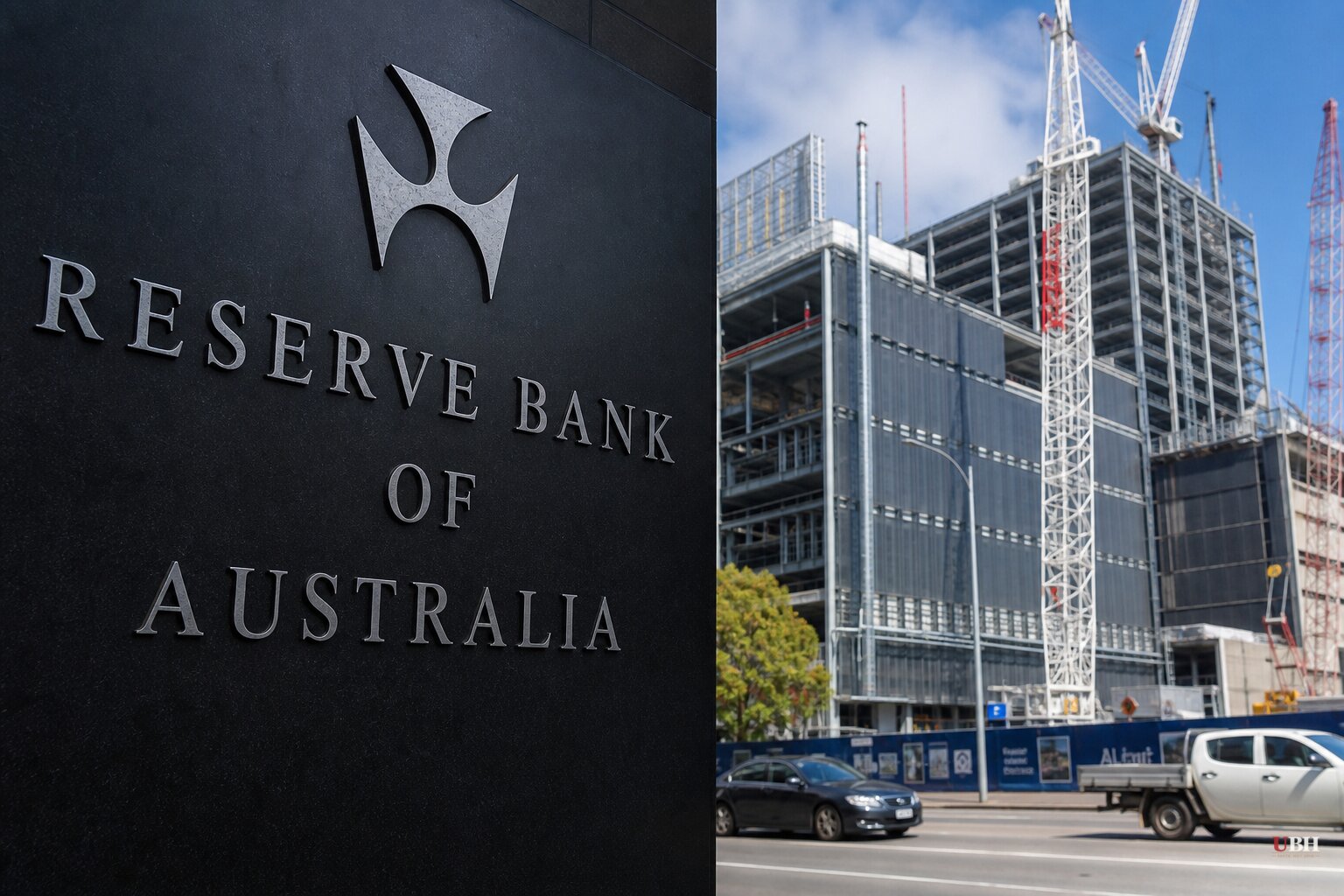
Australia's central bank is now factoring artificial intelligence infrastructure into its interest rate calculus. It's in the minutes.
The Reserve Bank of Australia's cash rate sits at 4.35%. According to Trading Economics' summary of the RBA's August 2026 meeting minutes, board members judged inflation "too high" and flagged data-center investment as one of several upside risks that could force a rate hike, alongside oil prices tied to the Middle East conflict, firms passing costs through more fully, and weak productivity growth. The board held rates steady in August but reaffirmed it's ready to act if those risks materialize.
That followed the July minutes, reported by FXStreet, which showed the board actively debated a 25-basis-point hike versus holding steady. "Several" members thought upside inflation risks were likely to hit. Others saw offsetting downside risks and argued for more time to look at incoming data. The board explicitly listed the data center boom as one of the upside pressures alongside oil prices and cost pass-through.
How big is the pipeline
Bloomberg Economics, cited by Crypto Briefing, estimates data center capital expenditure could surpass 2% of Australia's GDP in the 2026-2027 fiscal year. Bloomberg's James McIntyre warned that kind of concentrated spending risks overwhelming the economy's supply-side capacity. Total investment estimates for the next decade range from A$111 billion to A$155 billion, concentrated mostly in New South Wales and Victoria, according to Crypto Briefing's reporting on the RBA's August Statement on Monetary Policy, which also noted business investment grew 10.4% year-on-year through the March 2026 quarter with data centers as a primary driver.
Deloitte Access Economics' Investment Monitor report, covered by The Nightly, put a sharper number on it: the combined value of Australia's 33 data center projects has hit $104 billion, up 300% from a year earlier. There are already 160 data centers operating in the country, half of them in Sydney.
Building approvals show the tradeoff
CreditorWatch's reading of July building approvals data, reported by cfotech.com.au, found non-residential approvals jumped 14.4% to their second-highest level on record, with data centers identified by chief economist Ivan Colhoun as the main driver. In the same month, residential approvals fell 3.6%, and detached house approvals dropped 4.2%.
In most cycles, a housing slowdown helps cool inflation and gives the RBA room to ease. This time, the commercial data-center pipeline is sustaining pressure on wages and materials even as housing softens, according to Colhoun. Westpac IQ's economics team separately noted Australia's Q2 GDP growth of 0.4% (2.1% year-on-year) reflected a clear loss of momentum, with national home prices down 3.6% from their March peak and Sydney and Melbourne down 4.6% and 4.7% respectively, even as the non-residential construction pipeline tied to data centers stays in an uptrend.
The productivity catch
Deloitte's report makes a case that supporters of the AI buildout would recognize as legitimate: global technology companies are choosing to expand capacity in economies like Australia precisely because they offer stable markets, transparent regulation, and reliable infrastructure. That's real investment, not speculation, and it's the kind of foreign capital inflow that in other contexts gets cheered.
But Deloitte's own report also warns the payoff isn't immediate. Data centers, energy infrastructure, housing, and defense spending are all drawing from the same limited pools of labor, materials, and capital. With productivity growth already weak, the report argues that ensuring capital flows to genuinely productivity-enhancing projects matters more than ever.
Power bills, not just interest rates
The Australian Energy Market Operator projects data-center electricity demand could triple by 2030. Without substantial new generation investment, Crypto Briefing reported, Australians could see a 26% increase in electricity prices. That's the same argument critics of renewable-heavy grid planning have made for years: adding enormous new industrial demand without matching baseload capacity produces price spikes, regardless of the source of the megawatts.
Americans are living a smaller-scale version of this already. Research from the Federal Reserve Bank of Dallas, reported by Fox News, found existing U.S. data centers have already pushed average wholesale electricity prices up 2% to 6% nationally, with sharper increases in concentrated areas. The Dallas Fed's middle-range scenario projects wholesale generation costs could run 20% to 30% higher by 2028 because of data-center demand, though researchers caution that doesn't translate directly into a 20-30% jump on a household bill, since wholesale costs are roughly half of what consumers actually pay. Texas Governor Greg Abbott has already paused new data-center projects in the state pending a grid audit, according to Fox News's reporting on AI Infrastructure Coalition co-chair Garret Graves.
The RBA will have fresh inflation, jobs, and GDP data in hand by its September meeting, per the July minutes reported by FXStreet. Whether that data shows the data-center-driven cost pressure easing or hardening will determine whether Australia's cash rate moves for the first time in months, and whether the same electricity-price math starts showing up more visibly on American utility bills over the next two years.
Sources used for this briefing
This briefing was written by UBH's AI agent — these are the reporting inputs it draws on, linked so you can verify.


