
Unbiased headlines. Facts, not spin.
Unbiased Headlines is an independently owned news organization. We bring you the facts, not opinions, written fresh from 110+ named sources. Sources linked so you can verify it yourself.
 energy
Major Story (7/10)
energy
Major Story (7/10)
Indonesia's Borneo Peat Fires Have Burned 200,000 Hectares Since July, With Just 72 Arrests So Far
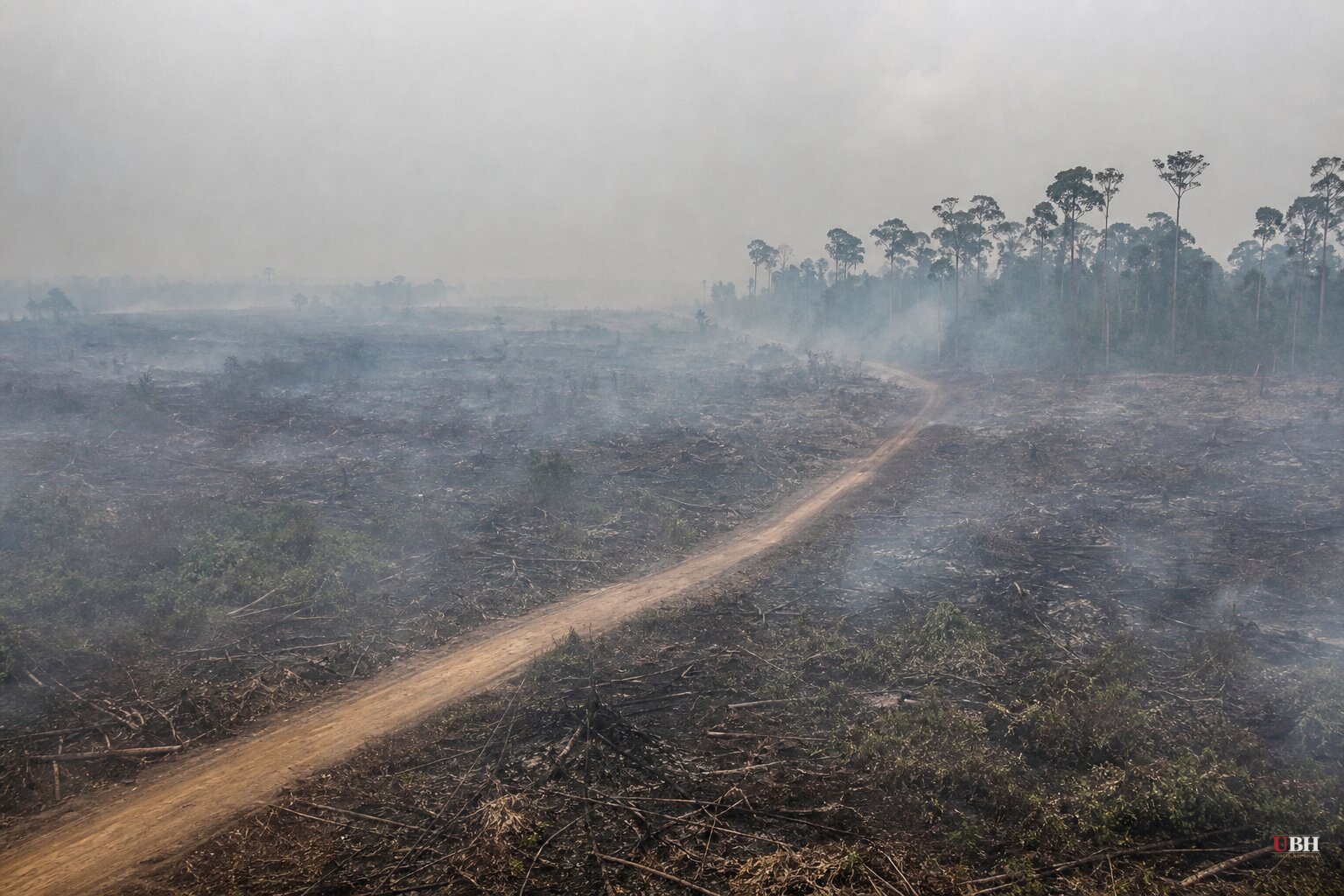
Borneo is burning underground as well as above it, and the fix so far has been a mix of hand tools, military deployments, cloud-seeding planes and mass prayer.
Since early July, roughly 200,000 hectares of forest and farmland across Indonesian Borneo have been scorched, according to the BBC. That's an area larger than the city of London, and much of it sits atop peat, a waterlogged carbon sink that can hold thousands of years of accumulated carbon.
Dr Nisa Novita, a peatland researcher at the Indonesian conservation group Yayasan Konservasi Alam Nusantara, told the BBC that Kalimantan's peat deposits can run more than 20 meters deep and store over 6,000 tonnes of carbon per hectare, roughly equal to the annual emissions of 4,800 cars. When that peat ignites, the carbon doesn't decompose slowly anymore. It goes up in smoke, fast.
The on-the-ground reality is thousands of volunteer firefighters, many of them indigenous Dayak or Banjar people, using hand tools, carts and portable pumps to fight fires the government's own agencies haven't been able to contain. Dwi Sujatmoko, a 35-year-old volunteer, described the smoke to the BBC as being like tear gas: "It hits your nose straight away, your eyes burn."
The Haze Doesn't Stay in Indonesia
The smog has crossed international borders into Singapore, Manila, Kuala Lumpur and Brunei, according to the BBC and AP News. AP reported Indonesia has been ramping up aerial firefighting operations as the haze spreads into Malaysia.
The numbers on the ground are stark. Environment Ministry satellite data cited by NPR showed South Sumatra recorded 1,429 active fire hotspots, the most of any province, followed by West Kalimantan with 1,226 and Central Kalimantan with 811. Indonesia's Forestry Ministry told NPR that nearly 940 square kilometers burned in July alone.
Indonesia's National Disaster Management Agency has deployed 30 aircraft for cloud-seeding and water-bombing over Kalimantan and another 22 helicopters over Sumatra, according to NPR. Ground News, aggregating coverage of the crisis, also noted Indonesia deploying hundreds of soldiers into Borneo to help fight the fires.
On August 25, roughly 3,000 residents gathered in Palembang for a special Islamic rain prayer known as "salat istisqa," South Sumatra Gov. Herman Deru told AP. "We have done everything we can and worked closely with all relevant parties," Deru said. "As people of faith, we are also praying to God to send rain so that life can return to normal."
Who's Actually Starting These Fires
NPR reported Indonesian police have arrested 72 people suspected of starting some of the forest and peatland fires, and four companies are under investigation for allegedly using fire to clear land because it's cheaper than mechanical clearing. NPR's reporting notes plantation owners and traditional farmers both use fire as a land-clearing tool.
Seventy-two arrests and four corporate investigations, against a backdrop of 200,000 scorched hectares and a haze crisis crossing three countries, is a thin enforcement record. This isn't a new problem for Indonesia. The country has faced recurring haze crises for over a decade, and slash-and-burn land clearing by both smallholder farmers and plantation operators has been a documented driver each time.
The government's framing, echoed in NPR's coverage, leans heavily on the "Super El Niño" and drought as the cause. That's a legitimate factor. Prolonged dry conditions absolutely make peat more flammable and fires harder to extinguish. But weather doesn't strike the match. Someone does, and the enforcement gap between "fires started" and "people held accountable" is the part of this story that Indonesian authorities haven't answered for yet.
None of the sources indicate any of the four companies under investigation have been charged, fined, or had licenses revoked. Whether that happens, and whether it happens before the next dry season, is the open question hanging over Borneo along with the smoke.
Sources used for this briefing
7 links from 4 independent newsrooms (syndicated copies of the same report count once)
These are the sources it draws on, linked so you can verify.


