
Unbiased headlines. Facts, not spin.
Unbiased Headlines is an independently owned news organization. We bring you the facts, not opinions, written fresh from 110+ named sources. Sources linked so you can verify it yourself.
 energy
Major Story (7/10)
Event date: October 17, 2026 ·
Taiwan Plans Up to $4.4 Billion for Alaska LNG; Separate Alaska Gas Startup's Ex-CEO Says Novatek Secretly Funded It
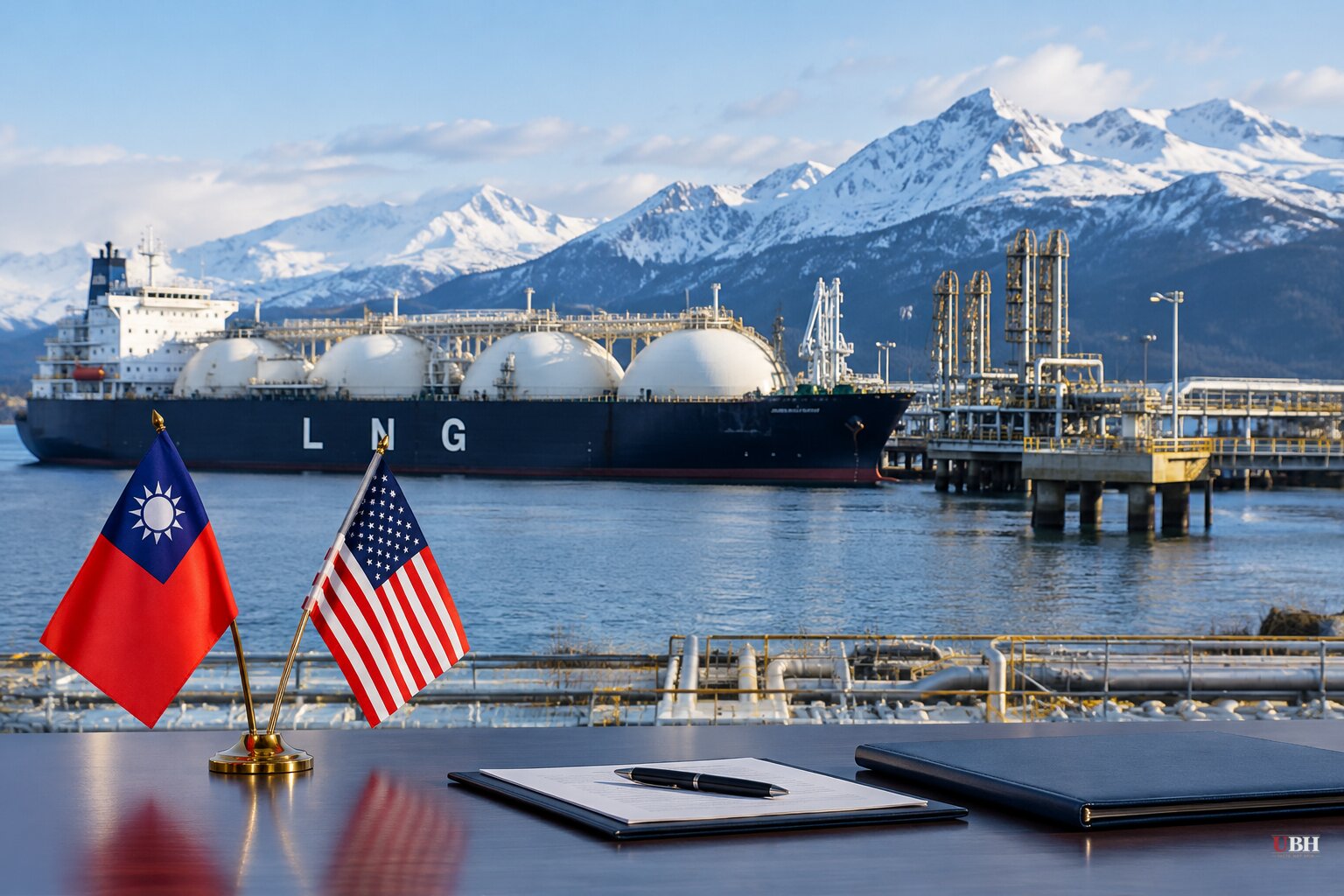
Alaska's long-stalled natural gas export dream got two very different pieces of news in the past two weeks. One involves a U.S. ally with real money on the table. The other involves a sanctioned Russian company.
Taiwan's offer
Taiwan's Ministry of Economic Affairs said on Oct. 14 that it plans to buy 6 million metric tons of liquefied natural gas a year from Alaska and invest up to $4.4 billion in the pipeline and export project. President Trump, at an Oct. 13 rally in Wasilla, called the commitment one of the largest of its kind. "That guarantees a success," he said.
The numbers are not final. Taiwan's state-owned CPC Corp. signed a nonbinding letter of intent in March 2025 to buy 6 million tons a year for 20 years. The ministry says CPC has made significant progress after nearly a year and a half of talks, but the purchase and investment terms remain unsettled.
The developer is Glenfarne Alaska LNG, working with the state-owned Alaska Gasline Development Corp. The plan is an approximately 800-mile pipeline from the North Slope to an export terminal in Nikiski, built in two phases. The first would supply Alaskan communities and businesses. The second would add an export terminal able to produce 20 million tons of LNG a year.
The project has dealt with years of delays and concerns about construction costs. Its developers have sought long-term purchase commitments from Asian buyers to help secure financing. Glenfarne said on Sept. 30 that its commercial agreements covered 13 million metric tons of annual LNG sales, including preliminary commitments from buyers in Taiwan, Japan, South Korea and Thailand.
Taiwan's motive is straightforward. It imported 95.4 percent of its energy in 2025, according to official statistics, and LNG made up 23.6 percent of its total supply. Alaskan gas would cross the North Pacific directly, a shorter trip than shipments from the U.S. Gulf Coast.
CPC already signed a deal in February with Houston-based Cheniere Energy for up to 1.2 million tons a year from 2026 through 2050, on top of an existing contract for roughly 2 million tons annually. Taiwan has said it wants U.S. gas at 25 percent of its LNG imports by 2029.
The Russian money question
A different Alaska gas venture is in trouble. Polar LNG, a startup pitching North Slope gas exports, received secret funding from Russian energy giant Novatek, the New York Times reported Friday, Oct. 23.
Joel Riddle, who ran Polar LNG until he resigned in September, told the Times he was misled into believing the money came from a firm in the United Arab Emirates. "It's not only unlawful, but it's not in the U.S. interest," he said.
Text messages reviewed by the Times show Novatek deputy chairman Denis Solovyov and CEO Leonid Mikhelson discussed sending as much as $15 million to Polar LNG's Abu Dhabi parent company, Tech Wave. "The first 5 million were supposed to arrive by today," Solovyov wrote to Riddle in early September.
Novatek is under partial U.S. sanctions and was already set to supply the project's technology. Memos from the law firm Baker Botts, attached to Riddle's resignation letter, said Treasury Department sanctions enforcers had flagged "potential Russia-related sanctions concerns."
The Times also reported, citing people familiar with the negotiations, that Vladimir Putin discussed the project last month with Trump envoys Steve Witkoff and Jared Kushner. Those people said White House officials see energy deals like this as a way to smooth relations with Moscow. There is no indication Witkoff or Kushner knew about Polar LNG's ties to Novatek, the Times reported.
What the companies say
Polar LNG disputes Riddle's account. The company named Tim Talkington acting CEO and called Riddle a "disgruntled former employee" who was fired for cause. Documents obtained by the Times show Riddle resigned six days before the company sent him a termination letter.
Novatek told the Times it was moving to become a "minority shareholder" in the project. That is a statement about future ownership, not a denial that money moved.
Riddle said he and two other departing executives warned the Trump administration about the Russian financing and urged officials to investigate. The Energy Department did not respond to the Times.
The sanctions backdrop
Recent sanctions legislation specifically targets Novatek. Trump temporarily waived the law's Russia sanctions last week, saying the move was needed to keep peace talks alive.
The waiver is time-limited, so what happens to Novatek's role in any Alaska project depends on whether it is renewed and on what Treasury does with the concerns its enforcers raised.
The Taiwan deal and Polar LNG are separate stories. Taiwan is negotiating with Glenfarne and the state gasline corporation, and nothing in the Taiwan announcement involves Novatek. Both, however, run through the same question. Alaska has wanted an export project for decades, and who ends up financing and equipping one is now a matter of national security policy.
The next concrete marker is Taiwan's: CPC and Glenfarne still have to turn a nonbinding letter of intent into signed purchase and investment terms. On the Russian side, the open question is whether Treasury acts on the sanctions concerns flagged in the Baker Botts memos once the temporary waiver runs its course.
Sources used for this briefing
3 links from 3 independent newsrooms (syndicated copies of the same report count once)
These are the sources it draws on, linked so you can verify.


