
Unbiased headlines. Facts, not spin.
Unbiased Headlines is an independently owned news organization. We bring you the facts, not opinions, written fresh from 110+ named sources. Sources linked so you can verify it yourself.
 energy
Major Story (7/10)
energy
Major Story (7/10)
China Freezes New Battery Storage Factory Approvals, Reinstates Battery Tax as Overcapacity Fears Grow
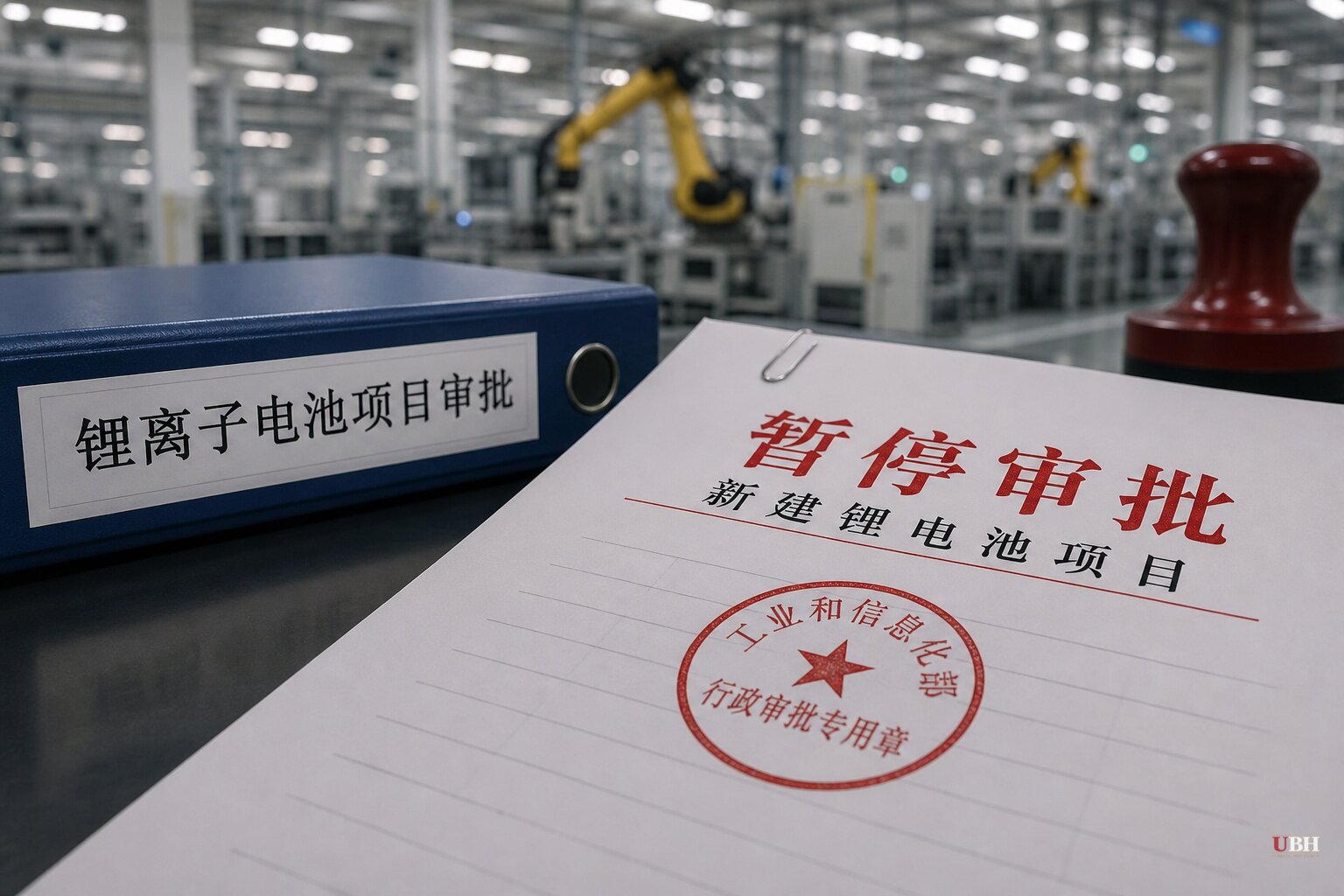
Since Beijing's crackdown on presale housing and its industrial overcapacity fights in steel, solar and EVs, the same pattern has now hit battery storage. Chinese financial outlet Cailianshe reported Monday, September 7, 2026, that China has temporarily suspended approvals for new battery cell manufacturing factories, according to Reuters. The freeze is national and applies specifically to storage-focused battery cell production.
Projects that haven't broken ground are stuck. Factories already under construction can keep building, for now, according to Cailianshe sources cited by Reuters.
China makes more energy storage batteries than any other country by a wide margin. That dominance is exactly the problem Beijing is trying to manage.
New energy storage capacity commissioned in the first half of 2026 dropped 18% compared to the same period last year, according to reporting from Crypto Briefing. At the same time, China relaxed mandatory co-location rules that used to force renewable energy projects to install on-site battery storage. That policy shift removed a guaranteed chunk of demand that battery makers had been counting on.
Solar panel manufacturers, meanwhile, have piled into the storage business as their own profit margins collapsed from years of overbuilding, according to Reuters. More competitors chasing a shrinking pool of mandated demand is a recipe for a price war, and Beijing has seen this movie before.
The factory freeze didn't show up alone. On September 1, 2026, China reinstated a 2% consumption tax on lithium-ion batteries. That rate is scheduled to climb to 4% by September 2027, according to Crypto Briefing.
The Counterargument Worth Taking Seriously
Demand for batteries used in grid balancing and backup power keeps growing, according to Reuters' own reporting on the freeze. A manufacturer or investor could reasonably argue that halting new factory approvals now risks choking off supply just as the market needs it most, especially with co-location mandates gone and utilities needing more flexible backup capacity.
But that doesn't actually contradict Beijing's read of the situation. The concern isn't that storage demand is fake. It's that the number of factories and planned production lines has outrun even the growing demand, and prices have been crashing as a result. An 18% drop in newly commissioned capacity alongside continued rising demand for the batteries that get installed suggests a supply chain that built too much manufacturing muscle for the actual build-out pace. Beijing is pausing approvals to figure out exactly how big that gap is before more factories come online chasing a market that already can't absorb what's been built.
China has run into this central-planning problem before with steel, solar panels and electric vehicles. Government-directed industrial buildup outpaces market demand, prices crater, and Beijing has to step in with tariffs, quotas or approval freezes to stop companies from bleeding each other dry.
Washington's Separate Fight Over the Same Equipment
While Beijing squeezes its own manufacturers, Washington has been squeezing Chinese storage and inverter makers out of the U.S. market through a different mechanism entirely. The Federal Communications Commission on July 28, 2026, added certain foreign-made power inverters to its Covered List, blocking new equipment authorizations for utility-interactive inverters built with remote communication or control features, according to Energy Storage News. The FCC revised that rule on August 20 to carve out some inverters eligible for the Section 45X manufacturing tax credit while also widening it to cover wired, not just wireless, products.
President Trump then went further. On August 26, 2026, he signed Executive Order 14420, declaring a national emergency over foreign supply of bulk-power system equipment, covering grid-connected inverters, battery storage systems, transformers and industrial control systems on transmission lines rated 69 kV and above, according to Energy Storage News. The Department of Energy now has 120 days, a deadline landing in late December, to write the implementing rules.
China's Ministry of Commerce called the FCC action discriminatory and accused Washington of stretching the concept of national security to interfere with normal trade, warning of countermeasures if the restrictions continue, according to Energy Storage News. China's Ministry of Foreign Affairs argued the protectionism would ultimately hurt American companies and consumers.
Sungrow, the Chinese inverter and storage giant with roughly 15% to 20% of its revenue tied to the U.S. market according to its own disclosures, has told institutional investors it expects its American business to shrink gradually over the long term amid the uncertainty, according to Energy Storage News. The company said it's shifting resources elsewhere to manage the exposure.
Two governments are using different tools on the same problem. Beijing is trying to prevent its own companies from destroying each other on price. Washington is trying to keep that same equipment off American transmission lines on national security grounds. Neither problem has a resolution date. China gave no timeline for lifting its approval freeze, and the Department of Energy's rulemaking won't land until the deadline expires in late December.
Sources used for this briefing
7 links from 5 independent newsrooms (syndicated copies of the same report count once)
These are the sources it draws on, linked so you can verify.


