
Unbiased headlines. Facts, not spin.
Every story is an unbiased news briefing written from 110+ sources across the spectrum — sources linked so you can verify it yourself.
 defense
Major Story (8/10)
Event date: September 19, 2026
defense
Major Story (8/10)
Event date: September 19, 2026
US Considers Delaying $14 Billion Taiwan Arms Sale Until After November's APEC Summit, Sources Tell SCMP
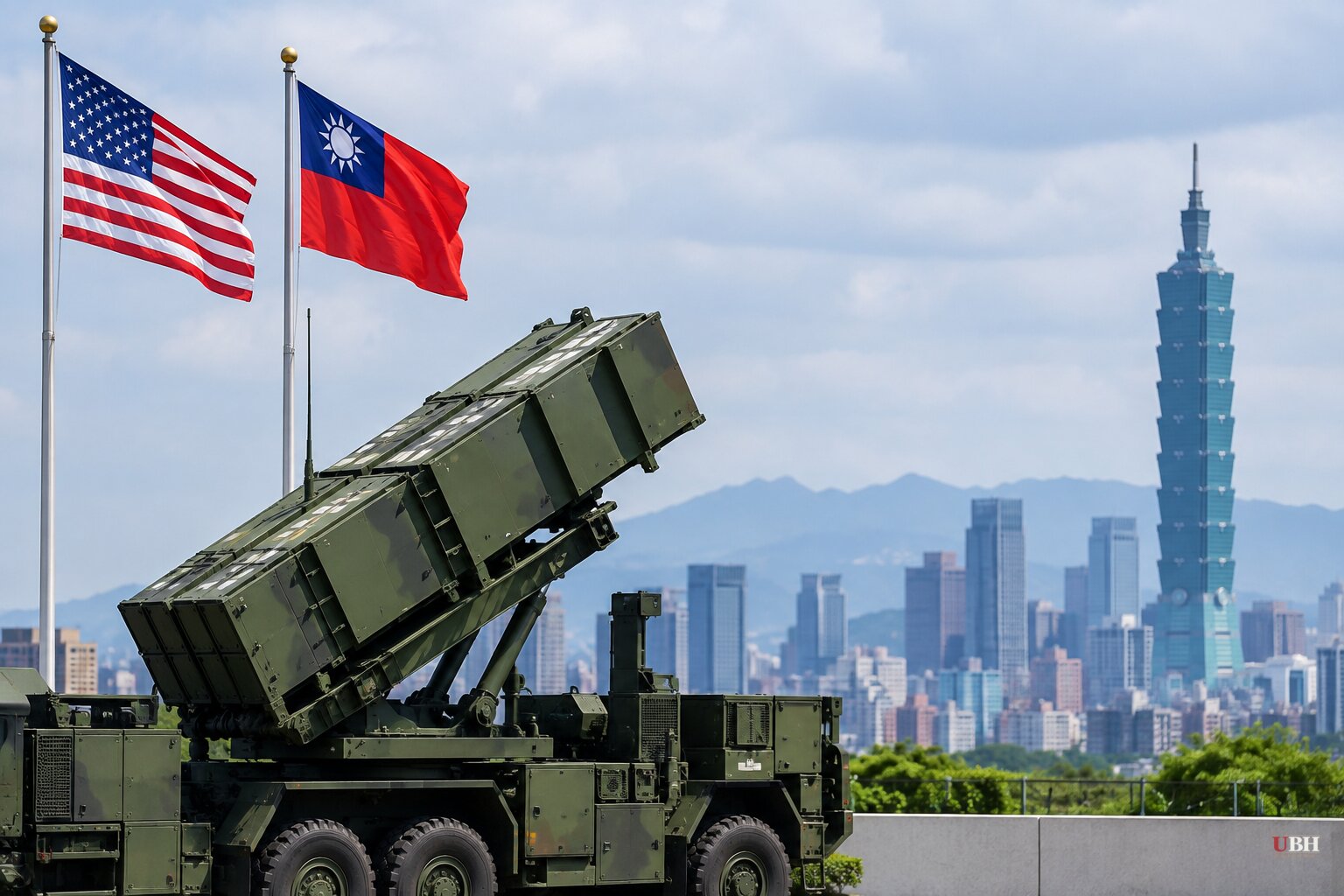
As Xi Jinping prepares to arrive in Washington Thursday, September 24, for a state visit, the fight over what Trump will or won't give Beijing has centered on a new front: Taiwan arms sales.
The South China Morning Post reported September 19, citing multiple sources, that the U.S. is weighing whether to postpone announcing a roughly $14 billion Taiwan arms package until after November's APEC summit in Shenzhen. The report said there is a "strong possibility" Trump extends that delay through the end of 2026, timed to a planned Trump-Xi meeting at APEC and Xi's expected December trip to Florida for the G20. Taipei Times and Taiwan News both picked up the SCMP account without adding new sourcing.
According to the SCMP report, Chinese officials asked Washington directly not to announce new Taiwan arms sales ahead of Xi's state visit. Sources described the eventual timing as a compromise between Trump, China hawks in his own party, and Taiwan's lobbyists in Washington.
One source told SCMP that Trump had floated pushing the arms decision all the way to late 2028 or January 2029, near the end of his term, but backed off after "very loud opposition" from hawks. A middle option under discussion: a smaller, phased arms sale between the Trump-Xi meeting and APEC, with Washington notifying Beijing in advance to avoid catching Chinese officials off guard, according to SCMP's sources. A large multibillion-dollar package being approved outright, the sources said, is unlikely.
Moolenaar tells Trump to reject Beijing's demands outright
Representative John Moolenaar, chairman of the House Select Committee on China, sent Trump a letter Friday urging him not to make concessions to Beijing on Taiwan, according to Reuters as reported by Taiwan News. Moolenaar said China's efforts to interfere with U.S. arms exports and security cooperation with allies "should be rejected out of hand," and argued China's military buildup, not U.S. arms sales, is the actual source of regional instability.
Reuters also reported that Chinese officials want Trump to publicly state the U.S. opposes Taiwan independence, a shift from Washington's decades-long formulation that it merely does not support independence. That distinction matters under the policy of strategic ambiguity that has governed U.S.-Taiwan relations since the Taiwan Relations Act of 1979, which commits Washington to providing Taiwan defensive arms without explicitly requiring military intervention if China attacks, as Vision Times laid out in its analysis of the summit's stakes.
Vision Times also reported that Beijing has warned the summit itself could be jeopardized if the U.S. approves the $14 billion package before Xi's arrival — a claim a senior U.S. official close to the Trump administration has disputed as inaccurate, according to the International Business Times.
Trump's own framing: a bargaining chip
Trump described the pending Taiwan arms package as a useful "bargaining chip" in negotiations with Xi after his May trip to Beijing, according to Taiwan News and SCMP's reporting. Beijing made a similar request to delay arms sales ahead of that May visit, and Washington reportedly withheld approval at the time, per SCMP. China understands the U.S. can't indefinitely postpone Taiwan arms decisions, SCMP's sources said, suggesting Beijing expects only a delay, not a cancellation.
The strongest case for delay, as Heritage Foundation's Andrew Harding told the Daily Signal, is that Washington is trying to hold China accountable on issues like Iran while also keeping the broader relationship "predictable and stable." The strongest case against it comes from Moolenaar and allied hawks, who argue that softening on Taiwan to protect broader U.S.-China ties rewards Chinese pressure tactics and undercuts a bipartisan U.S. commitment that predates Trump.
Trade truce clock is also running
The arms question doesn't exist in isolation. The Busan trade truce reached October 30, 2025, which suspended Washington's Affiliates Rule export-control expansion in exchange for China holding rare-earth export curbs and resuming agricultural purchases, expires in early November, according to the International Business Times. China wants a multiyear extension through the end of Trump's second term; Washington prefers a shorter one to preserve leverage, IBT reported. CSIS's Scott Kennedy estimated the two sides will likely land around a one-year extension. Rare-earth flows including gallium, germanium, antimony and graphite remain roughly 50% below pre-restriction levels even under the current truce, per IBT.
Separately, Daily Signal reported that Iran policy could surface at the summit too. Adam Savit of the America First Policy Institute noted China accounted for roughly 90% of Iran's oil revenue before the recent conflict, and Bessent's new sanctions on countries supporting Iran raise the question of whether China gets swept in.
Trump and Xi meet Thursday, September 24, at the White House. Whether Washington announces, delays, or scales down the Taiwan arms package will be one of the clearest early signals of what, if anything, Trump traded away to get there.
Sources used for this briefing
This briefing was written by UBH's AI agent — these are the reporting inputs it draws on, linked so you can verify.


