
Unbiased headlines. Facts, not spin.
Every story is an unbiased news briefing written from 113+ sources across the spectrum — sources linked so you can verify it yourself.
 economy
Major Story (8/10)
Event date: September 1, 2026
economy
Major Story (8/10)
Event date: September 1, 2026
US and China Cut Tariffs on $60 Billion in Goods While Farm Purchases and Rare Earths Still Lag
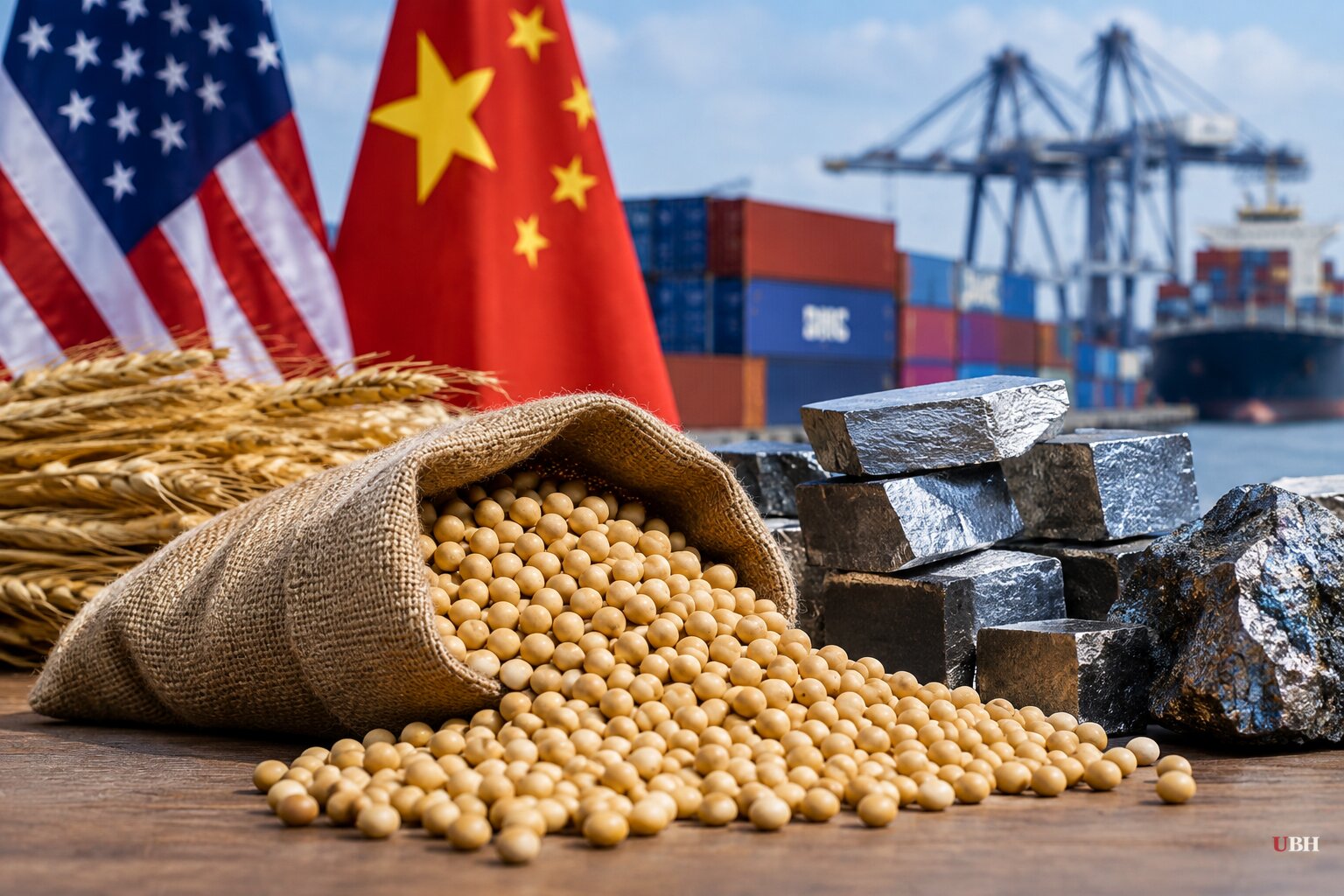
The tariff deal: real cuts, real gaps
The White House announced late Sunday that the US and China agreed to slash tariffs on $60 billion worth of goods under a "30-for-30" framework, according to CNN. Each country gets to import $30 billion in "non-sensitive" goods from the other at reduced rates.
US Trade Representative Jamieson Greer said the arrangement improves market access for roughly 30% of US exports to China. China's list covers 1,619 items, including corn, wheat, frozen meat, seafood, wood products, cosmetics and medical devices, per a White House list cited by CNN. The US list is narrower: 77 items, among them toys, tableware, curtains and electric shavers.
China also committed to buying at least 10 million metric tons of US coal in both 2027 and 2028, CNN reported. US soybeans did not make the cut. That's a direct hit to American farmers who have spent years absorbing the fallout from the trade war, and CNN noted China's record on past agricultural commitments has been spotty.
The tariff cuts follow the Trump-Xi summit that wrapped up in Washington in late September. CNN's own framing called the meeting "heavy on pomp, light on substance." The characterization is notable given the deal struck days later did produce actual tariff movement, even if narrow.
What's still unresolved
Fox News reported that four months after the original May agreement in Beijing, implementation remains uneven. China is reportedly making progress finalizing a prior commitment to buy 200 Boeing jets, but agricultural imports are projected to fall short of the $17 billion annual target, and the new US-China trade and investment boards are still being stood up.
Rare earths remain the sharpest edge. Lipi Sternheim, CEO of REalloys, told Fox News Digital that China's grip on the rare-earth supply chain still gives Beijing leverage over US defense manufacturers. Sternheim said the realistic goal coming out of the summit was keeping rare-earth supplies flowing for two to three years while American producers build domestic capacity, not eliminating dependence outright.
Ahead of the summit, NPR reported that basic logistics such as delegation seating and which Chinese tech sector representatives would attend the state dinner were still unsettled with just a week to go, based on interviews with ten current and former US officials. Columbia scholar Julian Gewirtz told NPR that Beijing treats every detail of these summits, down to stage positioning, as something it wants certainty on, not just room to negotiate. Taiwan, advanced tech, AI and intellectual property were left off the table entirely in the final deal.
Bond markets aren't buying the calm
While trade diplomacy grinds forward, the bond market delivered its own verdict. The 10-year US Treasury yield hit a 24-year high on Thursday, topping 5.3%, according to Reuters. That's despite softer-than-expected August inflation data released Wednesday, which included methodology changes but still failed to cool long-term borrowing costs.
Reuters noted the quarterly jump in 10-year yields was the largest since 1994, the last time a bond rout this severe forced a sitting president, Bill Clinton, to scale back fiscal ambitions. President Trump has continued pushing Fed board member Jerome Powell to resign over cost overruns tied to Fed building renovations, Reuters reported. That adds another layer of friction heading into Friday's September payrolls report.
Europe has its own version of this problem. France's 10-year yield premium over Germany widened past 120 basis points, the widest gap in 14 years, driven by new French Treasury debt estimates and budget tensions in Paris, per Reuters. In Japan, foreign investors pulled 4.6 trillion yen ($29.2 billion) out of government bonds in the week through September 26, the largest weekly exit in six months, even after the Bank of Japan raised rates to a 31-year high of 1.25%.
A diesel standoff with no resolution yet
Separately, Crypto Briefing reported that the Trump administration has urged France and Germany to release emergency diesel reserves, with a potential US diesel export ban floated if they don't. That report, attributed to unnamed sources close to the discussions, says no final decision has been made and the EU has not reached consensus on releasing stocks. Treasury Secretary Scott Bessent and Energy Secretary Chris Wright would be the officials to watch for any formal US announcement.
Also moving: development finance and a charity ruling
A coalition of 30 multilateral development banks, including the World Bank, African Development Bank and EBRD, launched new joint methodologies Thursday to better measure and expand private capital flowing to emerging markets, Reuters reported. The World Bank said it attracted $112 billion in private capital in the year through June, triple its fiscal 2022 total.
In an unrelated ruling, a London tribunal overturned a five-year charity trustee ban against supermodel Naomi Campbell, finding that misuse of funds at her charity, Fashion for Relief, had been concealed from her, according to Reuters.
The open question heading into the weekend: whether Friday's September jobs report gives the Fed and the bond market a reason to reconcile, or whether the 10-year yield keeps climbing regardless of what the data says.
Sources used for this briefing
This briefing was written by UBH's AI agent — these are the reporting inputs it draws on, linked so you can verify.


