
Unbiased headlines. Facts, not spin.
Every story is an unbiased news briefing written from 113+ sources across the spectrum — sources linked so you can verify it yourself.
 economy
Major Story (8/10)
Event date: September 30, 2026
economy
Major Story (8/10)
Event date: September 30, 2026
Ukraine Asks EU for $78 Billion as Brussels Tells Kyiv: Finish the Reforms First
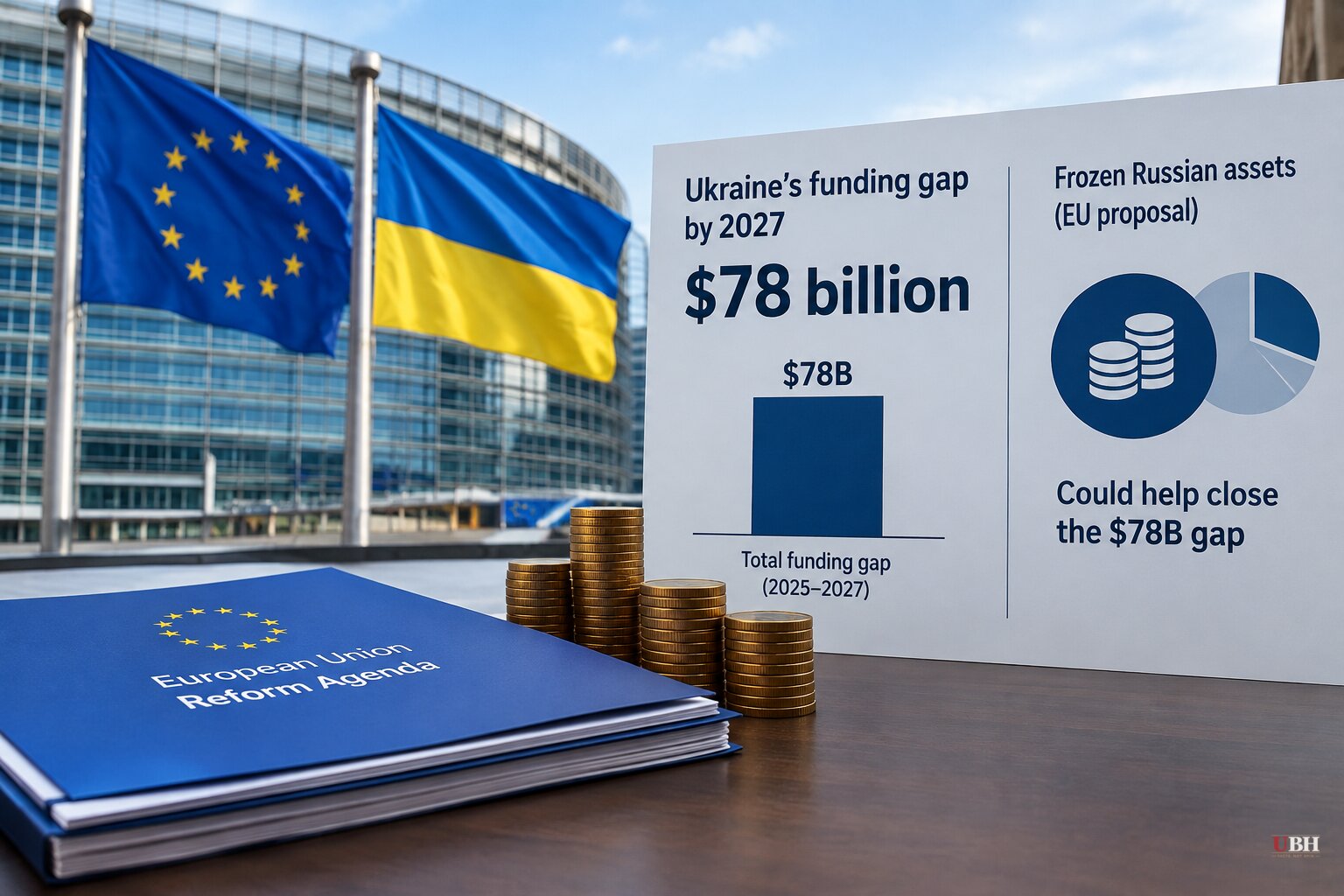
Since Ukrainian Finance Minister Serhii Marchenko's pitch to European allies in Brussels on September 29, the fight over how to pay for Ukraine's war has split into two separate arguments: how much more money Kyiv needs, and whether Europe is even willing to hand over what it already promised.
Marchenko told a Ukraine Donor Platform meeting that Ukraine needs $52.6 billion in external financing for its 2027 budget. Only about $20 billion of that has identified sources so far, leaving a $32.6 billion hole. Add in roughly $45 billion in 2027 defense spending with no partner guarantees behind it, and the total shortfall hits $78 billion, according to figures reported by Euronews and confirmed across NV, RBC Ukraine and Euromaidan Press.
"We're very happy with the €90 billion. But it's not sufficient," Marchenko said, referring to the EU's existing €90 billion ($102 billion) loan package for 2026-27.
Brussels says: cash the check we already wrote first
The EU isn't rushing to write a new check. Of the €45 billion ($51 billion) allocated for 2026 alone, the European Commission has disbursed only about €15 billion ($17 billion) so far. The rest is tied to reforms Brussels says Ukraine hasn't delivered yet.
"Our message to our Ukrainian friends is clear: deliver the agreed reforms, so we can continue supporting you financially," European Commissioner for Enlargement Marta Kos said at the same Brussels meeting, calling on Ukraine's government, parliament and state institutions to get it done.
If a country is burning through tens of billions in foreign aid every year, tying the next tranche to actual reform benchmarks isn't stinginess. It's basic fiscal discipline with other people's money. The Commission has also said it hasn't yet validated Ukraine's own $78 billion shortfall figure, according to Kyiv Post.
Marchenko himself admitted the strain is partly homegrown. He said this is the first time since 2022 that Ukraine has realized its own tax and customs administrations were underperforming, per Euromaidan Press. The Cabinet of Ministers says tax and customs revenue actually rose 14.5% year-over-year in January-August 2026, so the system isn't broken, but Kyiv's own finance chief is flagging it as a weak spot right as he's asking Europe for tens of billions more.
The frozen-assets fight, again
Marchenko's real target is the roughly €210 billion ($239 billion) in Russian central bank assets immobilized across the EU, most of it sitting in the Belgian clearing house Euroclear. "We need our friends, our European politicians, to be brave enough and to make some bold actions," he said at a European Policy Centre panel on September 28. "Unfortunately, the war is longer, the war is harder, and we need to provide some resolution of frozen Russian assets or provide other means for us to survive."
123 members of the European Parliament signed a letter pushing EU leaders to resume talks on using the money, according to NV. Sweden, the Netherlands, Spain and Poland have also called for new options on the assets, Euronews reported.
But Belgium has pushed back hard over the legal and financial risk of actually seizing sovereign assets it holds in custody, not just the interest they generate. France and Italy remain skeptical too, according to diplomats cited by Euronews. A proposal to use the assets outright already collapsed at an EU summit in December 2025, which is why the €90 billion loan exists in the first place. Seizing a sovereign's reserves, even a hostile one's, sets a precedent that could spook anyone holding euro-denominated assets, and Belgium is the country that would eat the legal liability if a court ever ruled against it.
What Europe is actually doing with the frozen pile is narrower: skimming off the windfall profits the assets generate while they sit frozen. The European Commission sent a fresh $1.6 billion transfer in August, bringing total windfall profits routed to Ukraine to roughly $9 billion since the freeze began, according to NV. That's real money, but it's a fraction of the $78 billion gap Marchenko is describing.
No EU decision on a centralized mechanism to move the assets from Euroclear to an EU-owned custodian has been made. The idea was discussed at the September 28 panel as a way to shield Belgium from liability, but it remains a proposal, not policy. Whether Brussels moves on it, or whether Ukraine delivers the reforms tied to the €90 billion already on the table, will decide which side of this standoff gives first.
Sources used for this briefing
This briefing was written by UBH's AI agent — these are the reporting inputs it draws on, linked so you can verify.


