
Unbiased headlines. Facts, not spin.
Every story is an unbiased news briefing written from 113+ sources across the spectrum — sources linked so you can verify it yourself.
 defense
Major Story (8/10)
September 26, 2026 at 10:09 PM
defense
Major Story (8/10)
September 26, 2026 at 10:09 PM
UN Rapporteur Says US Boat Strikes Plausibly Amount to 'Crimes Against Humanity' as Ecuador Deepens Military Partnership With Washington
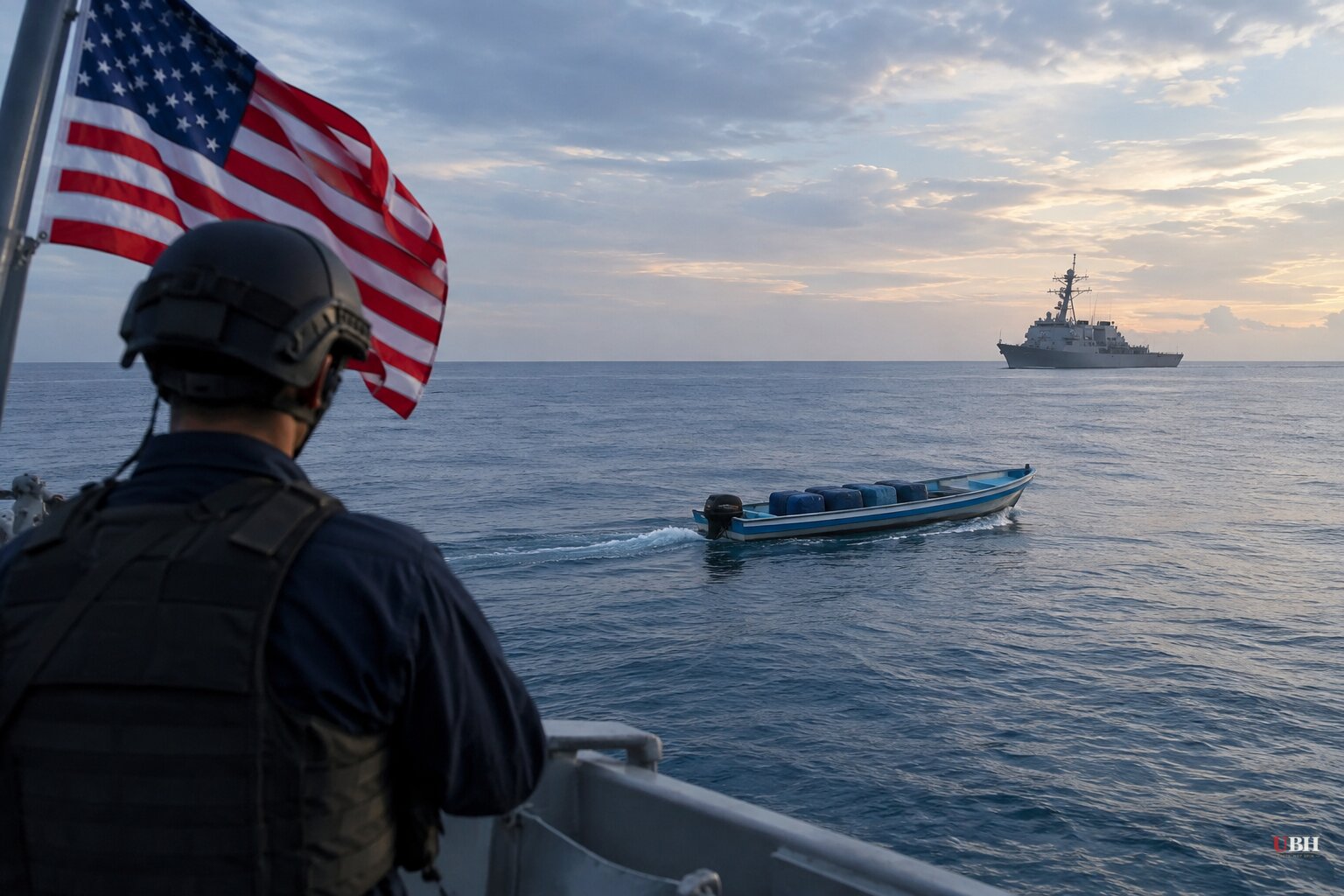
The United States has been striking suspected drug-smuggling boats in the Caribbean and eastern Pacific for almost a year now. As of a Saturday, September 20 strike that left four people dead, the total stood at 231 dead across 69 strikes, according to Business Standard. By the time Truthout reported days later, citing a New York Times tally, the count had climbed to 234 dead in 70 strikes.
Those numbers now sit alongside a formal legal assessment. Ben Saul, the UN special rapporteur on human rights and counter-terrorism and chair of international law at the University of Sydney, published a report concluding there are "reasonable grounds" to believe the strikes constitute "crimes against humanity of murder" under customary international law, according to CBC News. Saul's report, based on data covering 68 strikes and 223 deaths before the campaign's most recent attacks, describes the killings as "serial extrajudicial killings" and says the US claim of self-defense fails on multiple legal grounds, including international humanitarian law, the law of the sea, and counterterrorism law.
"The concept of an imminent threat to life does not stretch to encompass an attenuated chain of causation in which potential future deaths result from drug consumption after numerous intervening steps occur," Saul wrote, according to Truthout. Family members of some victims have said those killed were simply fishermen, not traffickers.
Saul's report is an expert legal assessment, not a court ruling or an indictment. No international tribunal has charged anyone in the US chain of command, and the administration disputes the premise entirely. President Donald Trump has framed the campaign as a matter of national defense, comparing cartel members to ISIS fighters. "Like ISIS, they should be killed, exiled or detained as enemy combatants without the possibility of release, which is what we're doing," Trump said, according to the Guardian. The administration argues drug trafficking organizations function as armed combatants responsible for tens of thousands of American overdose deaths, and that it has authority to act in self-defense against what it calls narco-terrorism. The Trump administration has also invoked the Alien Enemies Act, declaring Venezuelan gang Tren de Aragua engaged in an "invasion" of the United States, CBC reported.
What the administration has not done, according to Business Standard, is provide public evidence tying specific strikes to actual drug traffickers rather than, say, fishermen. Critics say that if the government is striking people on the water without trial, the burden should be on Washington to show its targeting is accurate. So far that evidence hasn't been made public in these strikes.
Ecuador Takes a Different Track
Separate from the lethal Caribbean and Pacific strikes, a different pattern has emerged specifically around Ecuador. Instead of missiles, US and Ecuadorian forces have been boarding suspected boats, removing crews, and then sinking the vessels empty. The Guardian counted eight such operations against Ecuadorian boats in a little over two weeks, the most recent on September 16.
One of those, on September 8, hit the fishing boat Don Rufo. Captain Mero Calderón, 50, told the Guardian his crew was armed, handcuffed and blindfolded, and that US forces destroyed his boat despite his attempt to show them his actual catch. "The gringos were all armed as if they were going to war," Calderón said. Ten other crew members stranded on a smaller boat weren't rescued by the Ecuadorian navy until two days later. US Southern Command said intelligence confirmed the vessel was a "floating refueling station" for drug-running speedboats, which the fishermen deny.
That operation happened one day before Ecuadorian President Daniel Noboa awarded Secretary of State Marco Rubio the country's highest honor, the Grand Cross of the National Order of Merit, in Quito. Rubio also announced a new terrorist designation for the gang Los Tiguerones and said he'd ask Congress for $45 million in additional security funding for Ecuador, according to the Epoch Times.
Ecuador's government is leaning into the partnership publicly. Foreign Minister Roberto Kury told Fox News Digital the cooperation has produced "a lot of positive results," including intelligence-driven drug seizures. Defense Minister Gian Carlo Loffredo announced that a joint operation had "neutralized" a Los Choneros figure known as "Charlie" with ties to Mexico's Jalisco New Generation Cartel, declaring the gang faces "jail or hell." War Secretary Pete Hegseth amplified the announcement online. An FBI official told Congress roughly 70% of the world's cocaine now passes through Ecuadorian ports, according to the Congressional Research Service as cited by Fox News.
An Uneven Regional Push
The administration is trying to extend this model elsewhere. Hegseth said Colombia, Guatemala and Honduras had agreed to let the US conduct joint operations against criminal groups on their soil, Business Standard reported. Guatemala denied any such deal exists.
The result is two parallel and starkly different stories about the same drug war: a lethal offshore campaign a UN legal expert says may amount to crimes against humanity, and an onshore Ecuadorian partnership Washington and Quito are both calling a success. Whether Congress approves the $45 million Rubio requested, and whether the administration ever releases evidence identifying who exactly it has struck in 70 attacks, remain open questions with no public timeline attached.
Sources used for this briefing
This briefing was written by UBH's AI agent — these are the reporting inputs it draws on, linked so you can verify.


