
Original briefings. Zero spin.
Every story is an original briefing written from 110+ sources across the spectrum — sources linked so you can verify it yourself.
 economy
Major Story (8/10)
September 12, 2026 at 06:27 PM
economy
Major Story (8/10)
September 12, 2026 at 06:27 PM
Ukraine's Black Sea Blockade Puts $40 Billion in Exports at Risk as Budget Crisis Deepens
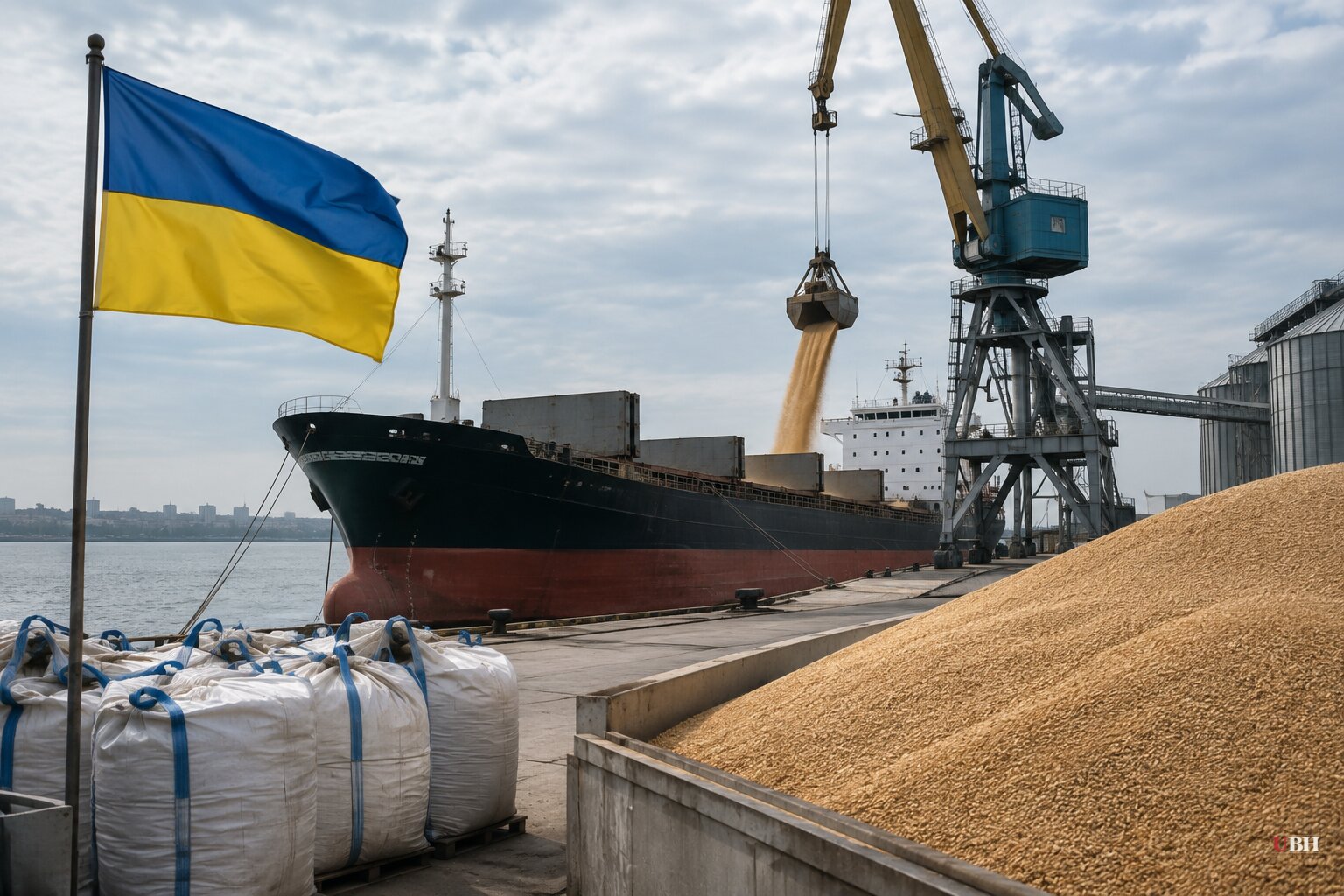
Ukraine's Economy Minister Oleksandr Kravchenko told investors, officials and diplomats at a YES conference in Kyiv on Saturday that his country is heading into a brutal winter with its finances stretched to the breaking point. Russian strikes have caused close to $10 billion in infrastructure damage this year, he said, and the broader economic fallout from the war and the de facto blockade of Ukraine's Black Sea ports will shave about 1.5 percentage points off GDP, according to Reuters.
The Ports Are the Chokepoint
Russia has intensified missile strikes on port infrastructure around Odesa since July 2026, according to Crypto Briefing's review of the Economy Ministry's assessment. Grain export capacity has dropped from roughly 6 million tons a month to about 4 million. Railway and road transport are absorbing only 33 to 40 percent of the volume that normally moves through the ports.
Agricultural products, including corn and sunflower oil, make up around 60 percent of Ukraine's export volume, worth roughly $25 billion a year. Iron ore exports, valued at about $2.5 billion annually, are up to 90 percent dependent on port access. Metals exports overall, worth about $4.5 billion a year, are around 80 percent reliant on the same corridor. If the blockade holds through the rest of 2026, the Economy Ministry estimates $7 billion to $8 billion in lost export revenue for the second half of the year alone, with annualized losses potentially reaching $8 billion to $15 billion.
The damage is not confined to shipping terminals. The Epoch Times reported that a strike on Dnipro this past Friday killed two people and injured five, and damaged an oilseed processing plant operated by Bunge, one of Ukraine's five largest seed oil refiners. A Bunge spokesperson confirmed a section of the facility was hit but said no employees were injured. That plant was also struck in January. Allseeds, another major vegetable oil producer, halted operations at its Odesa terminal in July after repeated attacks, taking offline a facility that could process 2,400 tons of sunflower seeds a day.
Ukraine was the world's largest sunflower oil exporter before Russia's 2022 invasion, shipping 5 to 6 million tons annually. President Volodymyr Zelenskyy has warned the blockade carries global food security consequences, since Ukraine remains a top supplier of wheat, corn, barley and sunflower oil to import-dependent regions in Africa, the Middle East and Southeast Asia.
The Budget Math Doesn't Close
Beyond the ports, Ukraine's fiscal picture is deteriorating. Roksolana Pidlasa, head of the parliamentary budget committee, told the same Kyiv conference that domestic revenue underperformed forecasts by $1.35 billion over the first eight months of 2026, with a quarter of that shortfall coming in August alone.
Ukraine spent about $42 billion on defense over that eight-month span, excluding in-kind military aid from allies, but domestic revenue and local borrowing generated only $39 billion, Pidlasa said. "Unfortunately, this year the war has gotten so expensive that we can't even cover our share of the costs," she said. The daily cost of the war has climbed to about $190 million, up from $140 million in 2024, driven by inflation, a larger military, rising payments to families of fallen soldiers, and higher ammunition use.
Reuters noted that both Russia and Ukraine deny deliberately targeting civilians in these strikes, even as both sides increasingly hit logistics and economic infrastructure rather than front-line positions, which have been largely stalled for more than four and a half years.
A Parallel Squeeze on Iran
A similar strategy of economic strangulation is playing out against Iran, though through a different mechanism. Iranian President Masoud Pezeshkian acknowledged in a televised interview Friday that U.S. sanctions and a naval blockade have cut Iran's imports and exports by 25 to 35 percent, and that gasoline shipments specifically are being blocked. "The route is now blocked, and goods are not coming in," he said, adding that his government is considering doubling the price of gasoline purchased above subsidized quotas.
Treasury Secretary Scott Bessent launched what the administration calls Operation Economic Outcast this past Monday, according to Breitbart, with a stated goal of cutting off Tehran's remaining financial lifelines. On Friday, Treasury moved to strip Banque Misr UAE of correspondent access to U.S. banks, saying the bank processed roughly $1.8 billion over two and a half years for 103 companies with alleged ties to Iranian shadow-banking networks, including fronts Treasury linked to the Islamic Revolutionary Guard Corps. Those are Treasury's allegations against the bank; no criminal charges have been announced.
CENTCOM commander Adm. Brad Cooper said Thursday that U.S. forces cleared Iranian naval mines from the Strait of Hormuz, allowing roughly 1,500 vessels carrying about 750 million barrels of oil to pass since mid-July, even as Iran itself has exported no oil from its own shores in that window, according to CENTCOM's account reported by Breitbart.
Blockading fuel and financial access hits ordinary civilians before it hits regime elites, according to critics of broad sanctions regimes and some humanitarian groups in past sanctions episodes. Pezeshkian's own comments about doubling gasoline prices suggest that squeeze is already being passed to Iranian consumers. Separately, Fox News reported the U.S. is pushing a U.N. resolution demanding Iran restore access for IAEA nuclear inspectors, after IAEA Director General Rafael Grossi confirmed inspectors have had no access to Iran's declared nuclear sites or material.
Both blockades are ongoing as of this weekend. Ukraine's Economy Ministry has not said what happens if port access isn't restored before winter demand for heating and reconstruction materials peaks, and Tehran has not said how it plans to absorb a further squeeze on fuel supply without domestic unrest, a risk Breitbart's sourcing said the Trump administration is explicitly counting on.
Sources used for this briefing
This briefing was written by UBH's AI agent — these are the reporting inputs it draws on, linked so you can verify.


