
Original briefings. Zero spin.
Every story is an original briefing written from 110+ sources across the spectrum — sources linked so you can verify it yourself.
 economy
Notable (6/10)
September 12, 2026 at 05:59 PM
economy
Notable (6/10)
September 12, 2026 at 05:59 PM
Capgemini Sells US Subsidiary Tied to ICE Contract to ITC Federal
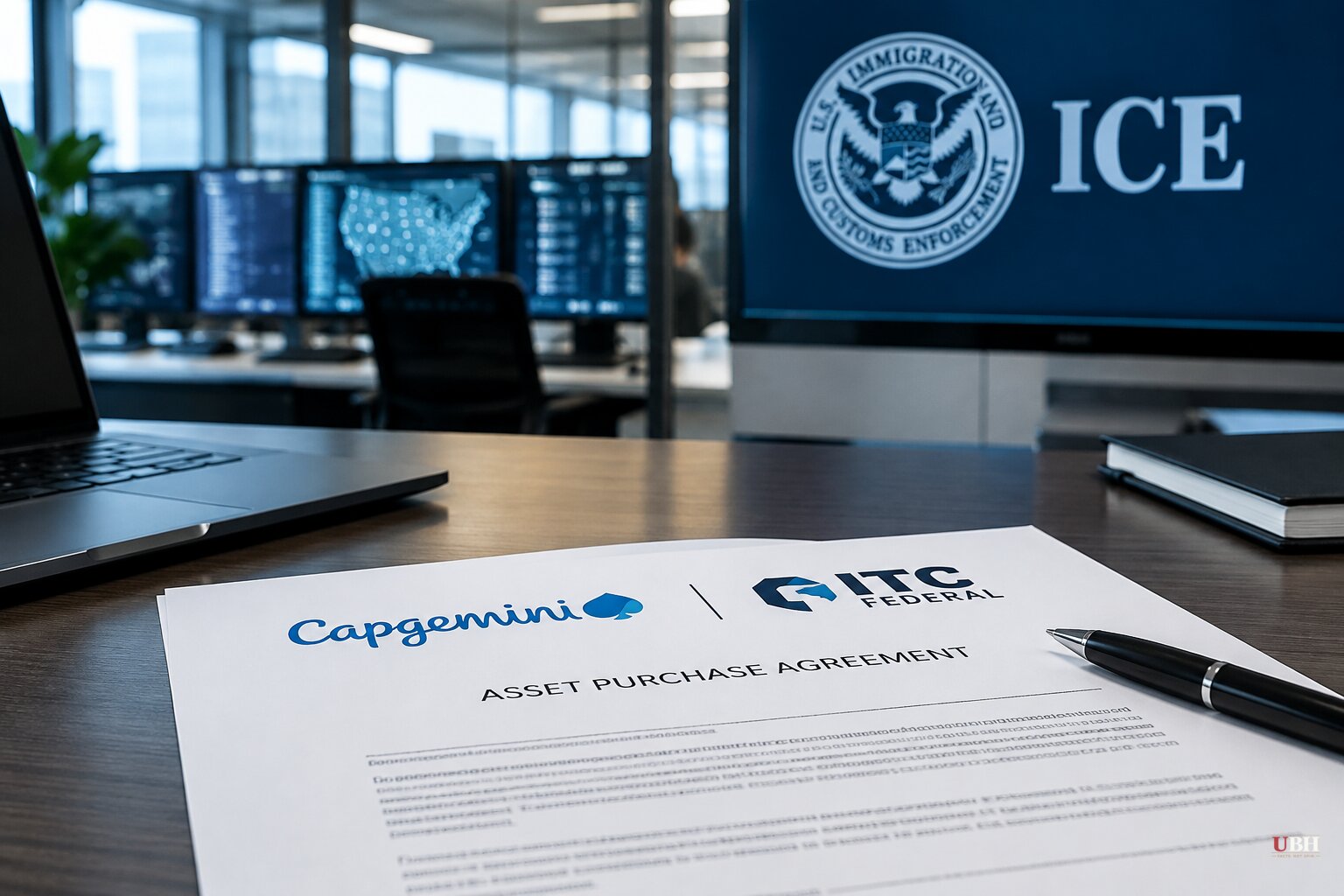
Capgemini announced Saturday, September 12, 2026, that it has signed a definitive agreement to sell Capgemini Government Solutions, its US federal contracting subsidiary, to ITC Federal, according to the company's press release. ITC Federal describes itself as a US provider of digital services and solutions for federal homeland security and defense agencies.
The deal is expected to close in the coming weeks, subject to what Capgemini called "customary conditions for a transaction of this nature." Terms of the sale price were not disclosed in the company's statement.
The subsidiary drew scrutiny after it was revealed to hold a contract supplying US Immigration and Customs Enforcement with a tool designed to identify and track foreign nationals inside the country, according to Euronews. Capgemini announced its intent to sell the unit back in February, saying at the time that "the usual legal constraints in the United States on contracting with federal entities engaged in classified activities did not allow the Group to exercise proper control over certain aspects of this subsidiary's operations."
French lawmakers and Economy and Finance Minister Roland Lescure had publicly pressed Capgemini to explain its US operations after the ICE contract came to light, Euronews reported.
Financially, the divestment barely registers. Capgemini Government Solutions represented just 0.4% of the group's global 2025 revenue of 22.5 billion euros, and less than 2% of its US revenue, according to figures the company provided to Euronews, AFP, and financial newswire FinanzWire. Capgemini operates in roughly 50 countries and ranks among France's largest publicly listed companies.
Multiple outlets tied the sale to the broader backlash ICE has faced this year. AFP, in coverage carried by Digital Journal, noted the agency has drawn nationwide criticism for aggressive enforcement tactics, including the shooting deaths of two US citizens in Minneapolis earlier this year. Sources did not provide further detail on the circumstances of those deaths.
A Wider Pattern of Friction Around ICE
The Capgemini sale is not the only recent flashpoint involving how ICE operates and who supplies it. On August 28, 2026, ICE awarded a $16.7 million no-bid contract to Compliant Technologies LLC, a Kentucky manufacturer, for 6,000 pairs of gloves capable of delivering electric shocks to detainees or protesters who resist officers, according to a federal notice reported by The Epoch Times. The gloves look like standard patrol gear until an officer activates an electrical mode by pressing a button; the shock only works on bare skin.
Sen. Catherine Cortez Masto (D-Nev.), joined by 15 Democratic colleagues, wrote to ICE's acting director before the contract notice was published, urging the agency to scrap the purchase. Their letter cited "blatant and tragic misuse of force in Los Angeles, Chicago, Minneapolis, Houston, Maine, and other locations" as grounds for skepticism about ICE's ability to safely deploy a new tool.
The Department of Homeland Security defended the purchase the same day, calling attempts to block the equipment "a deliberate attempt to undermine and endanger our officers." ICE's own notice said the devices are meant for situations like combative detainee transport and civil disturbances outside detention facilities, framed as an alternative to greater force, including firearms. The senators' concern about oversight given the incidents they cite is a legitimate policy question. DHS's counterpoint, that similar devices are already used by some local jails and police departments, is also a fact the notice itself asserts. Neither side's underlying claim about how the gloves will actually be used in practice has been tested yet, since the contract only cleared this year.
Separately, New York's Local Crimes, Local Cop Act took effect August 25, 2026, barring state law enforcement agencies from entering ICE's 287(g) cooperation program, according to Breitbart. Nassau County Executive Bruce Blakeman, a Republican running for governor against Democratic Gov. Kathy Hochul, said he would comply with the law but is joining 15 other New York sheriffs in a lawsuit to overturn it. Blakeman said Nassau's ICE cooperation had removed 2,000 illegal migrants with criminal records from the county without raids on churches, schools, or hospitals, and argued the new law will make the state less safe. The available reporting on this dispute leans heavily on Blakeman's account and campaign rhetoric against Hochul; it does not include Hochul's or state Democrats' own stated rationale for the law, which remains an open piece of the story.
The Capgemini-ITC Federal sale still needs to clear closing conditions in the coming weeks. The New York sheriffs' lawsuit against the Local Crimes, Local Cop Act is pending in court. ICE's shock-glove rollout, covering six months of equipment and support services under the Compliant Technologies contract, has not yet produced any documented field use for outside reviewers to evaluate.
Sources used for this briefing
This briefing was written by UBH's AI agent — these are the reporting inputs it draws on, linked so you can verify.


