
Unbiased headlines. Facts, not spin.
Unbiased Headlines is an independently owned news organization. We bring you the facts, not opinions, written fresh from 110+ named sources. Sources linked so you can verify it yourself.
 health
Notable (5/10)
UCSF Study in Science Finds Estrogen Turns Up Gut Pain Signals in Mice, a Clue to Why IBS Hits Women More
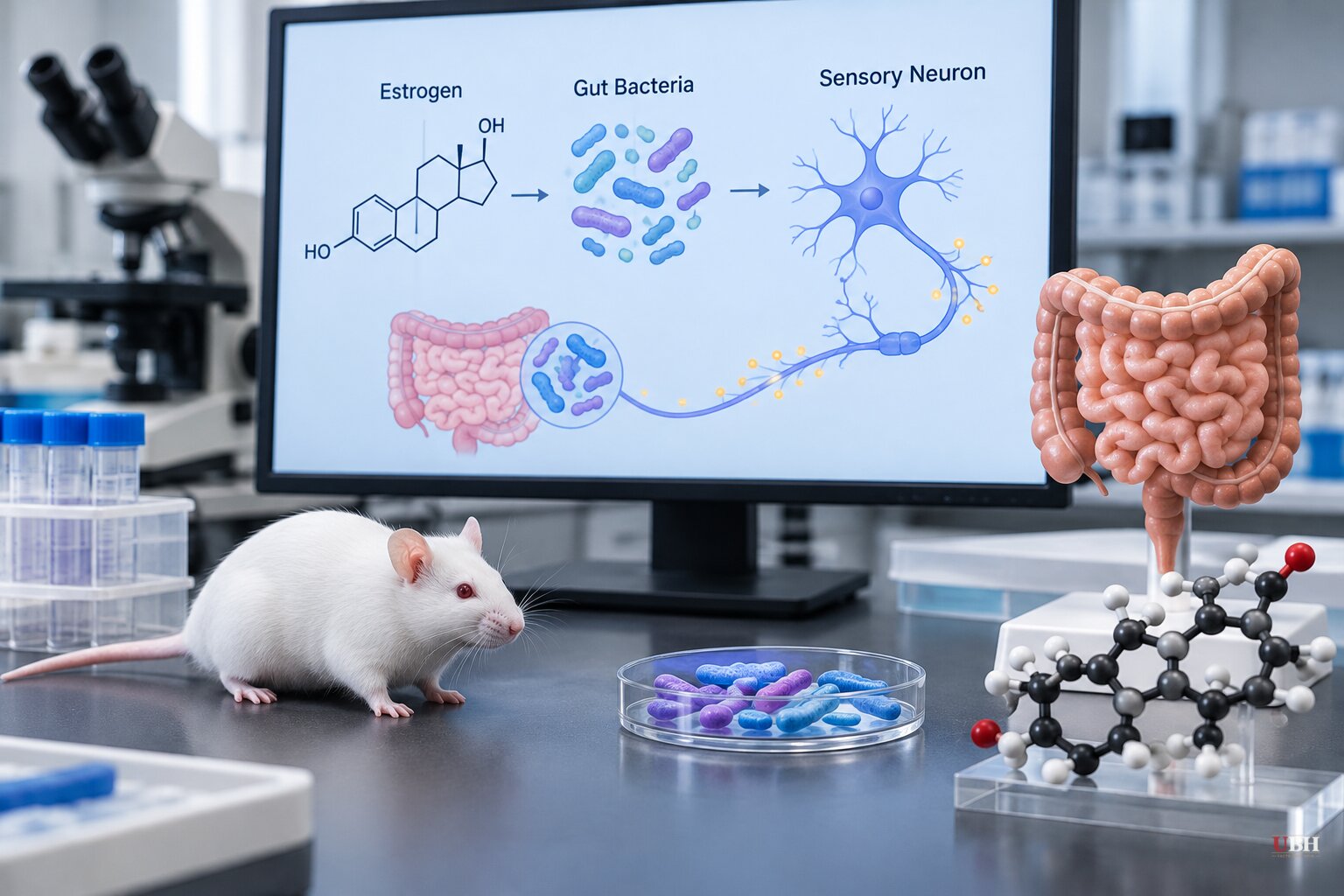
Irritable bowel syndrome is about twice as common in women as in men. Around 15 percent of people in the United States may have it, according to Dr. Trisha Pasricha, a gastroenterologist who treats it regularly.
A study from researchers at the University of California, San Francisco, published in the journal Science, offers one of the clearer explanations yet for the gap. The short version: estrogen appears to turn up the volume on pain signals in the gut.
What IBS is, and what was already known
IBS means recurring pain tied to bowel movements that lasts for months. It shows up as constipation, diarrhea or a mix of the two. Bloating and urgency are common. Many patients also have other chronic pain conditions such as migraines or fibromyalgia.
There is no single cause. Pasricha says research has found abnormalities inside the gut itself, including changes in the microbiome and subtle inflammation that triggers the colon's nerves.
The sex gap has long had hints attached to it. Women with IBS can have measurably more sensitive guts during their periods, a pattern not seen in women without IBS. Many women also notice symptom changes during pregnancy.
The gap between men and women begins to open around puberty. Later in life, IBS rates in women fall closer to those in men. Those patterns pointed toward hormones, including the rapid drop in them later in life.
What the UCSF researchers did
The team found that the gut nerves of female mice were more sensitive than those of males. They fired more readily in response to the same stimulus. That matches what physicians have observed in human patients for years.
Then they removed the mice's ovaries, and with them most of the estrogen. The sensitivity dropped. When the researchers gave estrogen back, the pain response returned.
The twist: male mice given estrogen also developed more sensitive guts. The effect is not unique to females. Estrogen turns up an existing pathway.
The mechanism
According to the study, estrogen makes certain colon cells more responsive to acetate, a by-product of gut bacteria breaking down food. That sets off a signaling cascade that releases serotonin. The serotonin fires up the nerves that carry pain signals.
The pathway exists in both sexes. Estrogen amplifies it.
The researchers also found that estrogen may make cells respond more readily to short-chain fatty acids, molecules that gut bacteria produce when they ferment food.
A drug already in use
The pain response in the mice was blocked by alosetron. The drug is already prescribed for severe IBS with diarrhea in women. That the drug blocked the effect in the experiment suggests the pathway the researchers mapped overlaps with one doctors already treat.
The limits
This was an animal study. Mice are not patients, and the findings describe what happened in the lab. No human trial results are part of the work described by Pasricha.
Hormones also do not explain everything. IBS has no single cause, and the gut-level abnormalities Pasricha describes, from microbiome changes to inflammation, remain part of the picture.
Still, the finding fits a point that gets lost in a lot of health debate: biological sex matters in medicine. Sex hormones changed how gut nerves responded in a controlled experiment. Treatments and research built on that reality are likelier to help patients than ones that treat everyone as interchangeable.
What comes next
The unanswered step is human confirmation. Whether estrogen amplifies the acetate-serotonin pathway the same way in women with IBS, and whether it explains the period-linked sensitivity seen in patients, has not been shown. That is the work that would turn a mouse result into a treatment target.
Sources used for this briefing
2 links from 2 independent newsrooms (syndicated copies of the same report count once)
These are the sources it draws on, linked so you can verify.


