
Unbiased headlines. Facts, not spin.
Unbiased Headlines is an independently owned news organization. We bring you the facts, not opinions, written fresh from 110+ named sources. Sources linked so you can verify it yourself.
 health
Notable (6/10)
Event date: October 23, 2026 ·
CMS and All 50 States Launch $275 Million Nurse Incentive Program Funded by Nursing Home Penalties
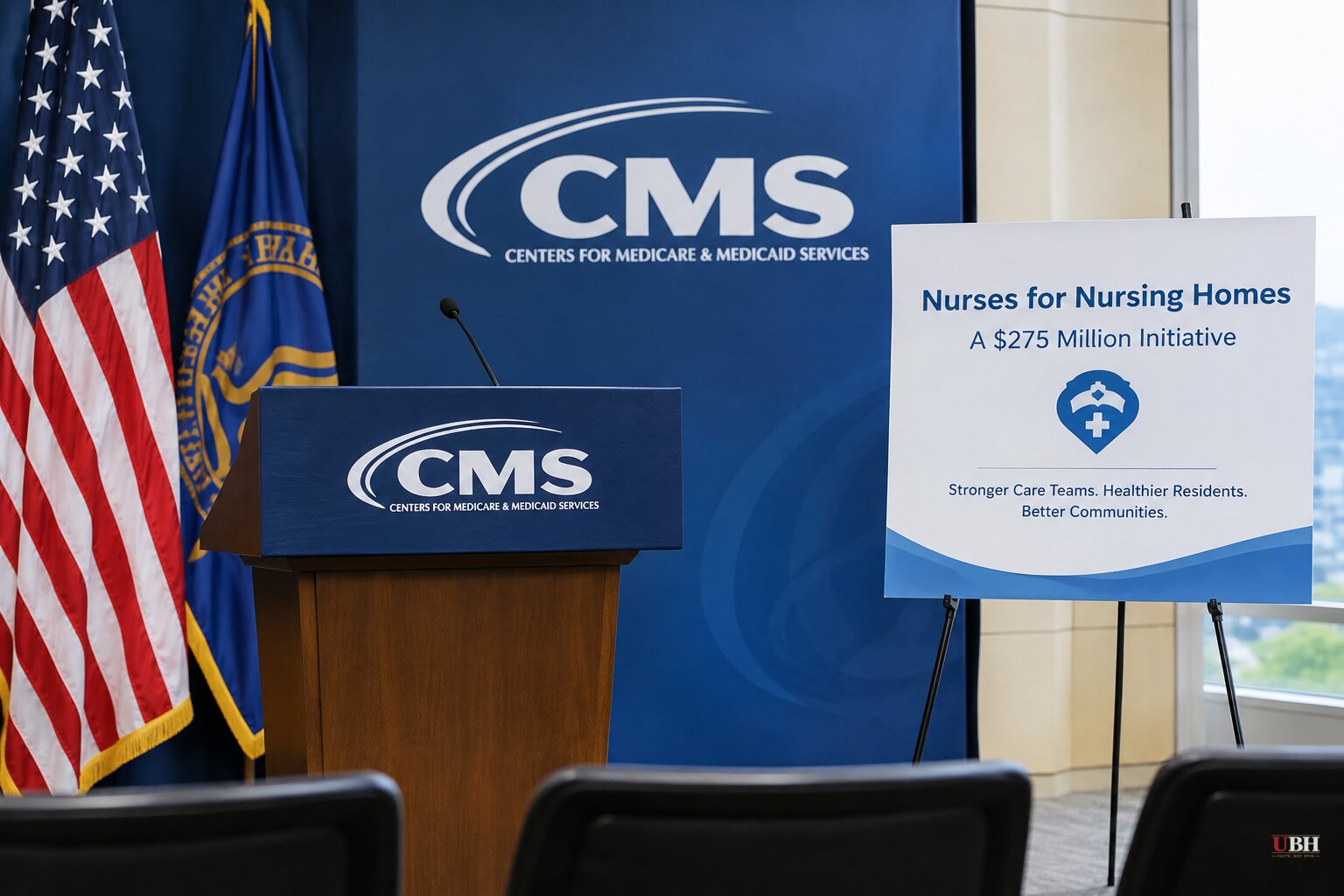
The Centers for Medicare & Medicaid Services and all 50 states plus the District of Columbia announced a $275 million program on Oct. 23 to recruit and retain nurses in rural and understaffed nursing homes. It is called Nurses for Nursing Homes.
CMS has committed $100 million. The states have pledged at least another $175 million.
According to the Department of Health and Human Services, the money comes from civil monetary penalties CMS and the states have already collected from nursing homes. CMS Administrator Dr. Mehmet Oz said the program works "without taking a dime from taxpayers."
What nurses can get
All rural nursing facilities qualify. So do other facilities in areas with labor shortages.
A nurse must hold an active registered nurse, licensed practical nurse, or vocational nurse license when starting the job. The nurse must average at least 30 hours a week at a qualifying facility and commit to three years of service.
The agencies describe two benefits: up to $40,000 in student loan repayment, or a $10,000 stipend. Nurses with eligible student debt may qualify for both. Those without qualifying debt can receive the stipend if they graduated within the past two years.
That adds up to the "up to $50,000" figure President Trump cited in a Truth Social post Monday evening, Oct. 26.
Two numbers for one program
Trump first announced the effort at a campaign rally at Florida Gulf Coast University's Alico Arena in Fort Myers on Friday, Oct. 23. "I'm pleased to announce that the Trump administration is investing $250 million to hire at least 5,000 new nurses in elder care facilities all across America," he told the crowd.
CMS and HHS put the total at $275 million, not $250 million. Neither agency has put a hiring target of 5,000 in its announcement. HHS Secretary Robert F. Kennedy Jr. said the program "will recruit and retain thousands of nurses."
At the maximum $50,000 per nurse, $275 million covers 5,500 people. Most awards could come in under the maximum, which would stretch the money further.
In his Monday post, Trump also said the fund "was nearly a THIRD of this amount until I stepped in, and had our Great Governors join the fight." The agencies have not described the fund's earlier size or any change to it. They have not said what role the president or governors played in setting the final figure.
The staffing problem is documented
The need is not in dispute. The Long Term Care Community Coalition, citing federal data, reported that nearly nine in 10 nursing homes are understaffed by about 24 percent every day. It said that could mean more than one million Americans live in facilities without enough staff to meet residents' needs.
The American Health Care Association, an industry group, cited research in JAMA Internal Medicine finding that counties with more frequent staffing shortages saw bigger declines in the number of skilled nursing beds facilities could operate. The steepest declines were more likely in rural counties.
"When nursing homes can't find caregivers, residents and families must wait longer or look farther for the care they need," AHCA President and CEO Clif Porter said. "This should be a signal to policymakers that when nursing homes say they need help with workforce challenges, believe them."
The larger argument over long-term care
Senate Democrats argue that targeted programs like this are not enough. Earlier this month they published goals for overhauling long-term care, covering both home care and nursing homes.
"It has been decades since Congress enacted a comprehensive, system-level investment in long-term care infrastructure and financing," Sen. Ron Wyden, D-Ore., said at the time. "And a system-level investment is what is needed."
The two approaches differ in scale and method. The administration's program is a one-time pool of $275 million, paid from penalty money, with a three-year work commitment attached to each award. Wyden is calling for a permanent investment in long-term care infrastructure and financing.
Oz's claim that no taxpayer money is involved rests on where the money originated. The penalties came from nursing homes. The program now uses them to pay for recruiting nurses into those same homes and others like them.
Whether that framing holds up in practice depends on details the agencies have yet to spell out. They have not said how much of the $275 million is new spending versus money already earmarked for other purposes. They have also not said how the states' $175 million in pledges will be disbursed.
The announcement came 11 days before the Nov. 3 midterms, at a rally held during early voting in Florida.
It is not yet clear whether the money reaches 5,000 nurses, as Trump said in Fort Myers, or some other number. The answer will show up in application data and award counts once the program starts paying out.
Sources used for this briefing
7 links from 7 independent newsrooms (syndicated copies of the same report count once)
These are the sources it draws on, linked so you can verify.


