
Unbiased headlines. Facts, not spin.
Unbiased Headlines is an independently owned news organization. We bring you the facts, not opinions, written fresh from 110+ named sources. Sources linked so you can verify it yourself.
 health
Low Interest (4/10)
Health Groups Urge WHO's 194 Member States to Treat Climate Disinformation as a Public Health Threat
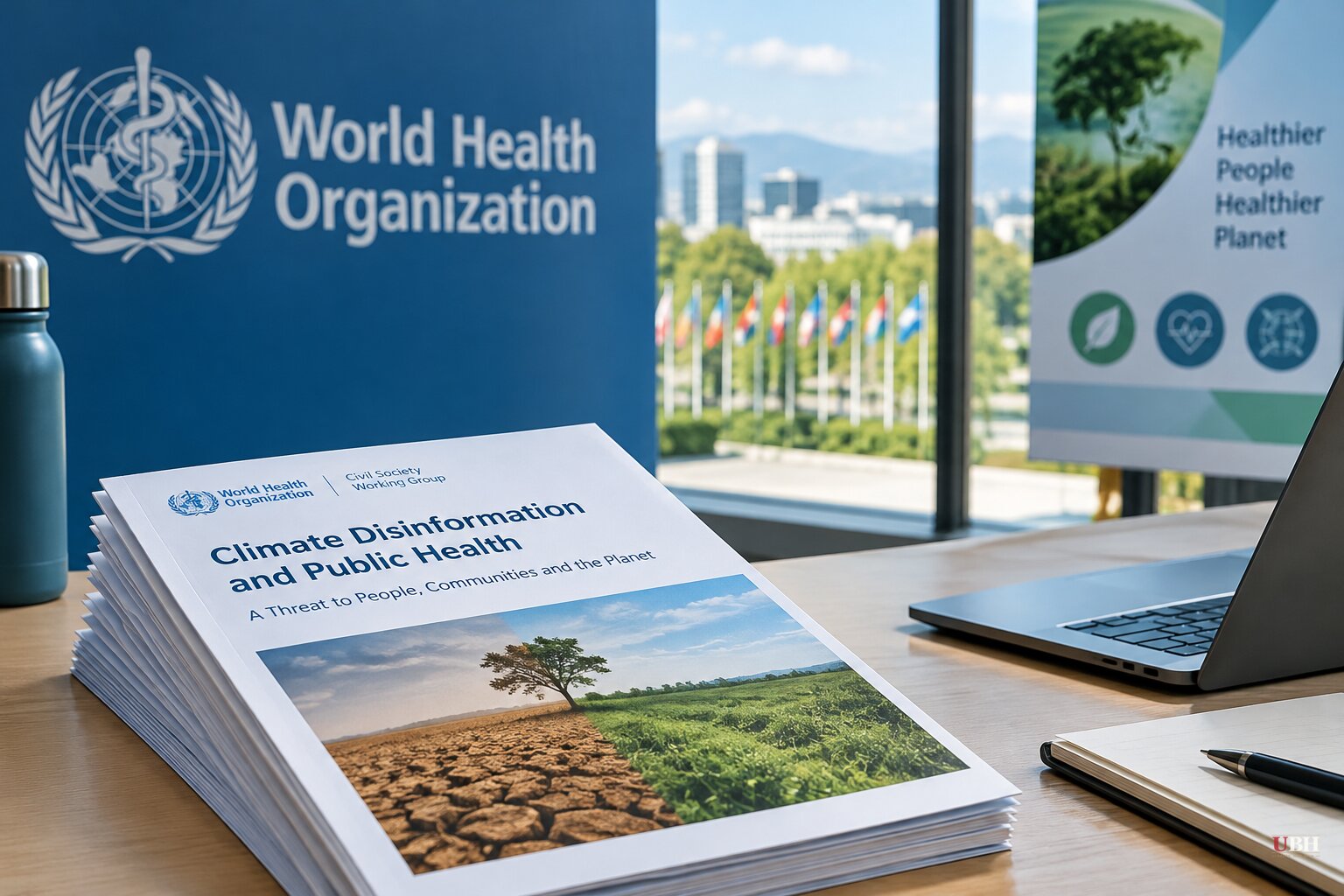
Health and civil society organisations on Monday, Oct. 26, called on the World Health Organization's 194 member states to recognise climate disinformation as a public health threat. They want "information integrity" written into climate and health policy, preparedness and response.
The push comes from a new report, Protecting Health in the Age of Climate Disinformation, produced by the WHO Civil Society Working Group on Climate and Health. The Global Climate and Health Alliance published the announcement.
This is an advocacy document from a civil society group. It is not a WHO resolution, and no member state has adopted its recommendations.
What the report asks for
The report argues that "a healthier information environment is not a communications luxury. It is a condition for climate justice, public health, and the right to a healthy future."
Its recommendations are specific:
- Embed information integrity across climate and health policy instead of leaving it to communications teams.
- Expand climate and health education so that clinicians and health workers can link fossil fuel combustion, air pollution, harmful exposures, disease and climate change.
- Treat the climate crisis with the same institutional seriousness public health has brought to other major information threats.
The authors describe the report as the first time the health community has examined how climate disinformation harms human health worldwide. They say it does so by undermining emergency warnings and public-health guidance, and by delaying policies on air pollution, clean energy and fossil fuels.
The definition at the center
The report defines climate disinformation as the intentional spread of false or misleading information about climate change and climate action. That includes outright denial of global warming and conspiracy theories.
It separates this from misinformation, meaning false or out-of-context information someone presents as fact without necessarily intending to deceive. The report says misinformation can still cause equally dangerous consequences.
Intent is the line between the two categories, and it is the hardest part of any claim to prove about another person's speech.
The case studies
The strongest example is Maui. After the 2023 wildfires, false claims circulated online that residents who applied for disaster assistance could have their land or property seized by the Federal Emergency Management Agency. Fact-checkers established the claim was false.
The report says the rumour could have deterred survivors from seeking aid when they needed housing support, financial assistance, medical care and recovery services. "In a disaster setting, misinformation is not just confusing," the report states. "It can directly obstruct access to life-saving and stabilising support."
The other case studies include:
- Wildfire misinformation in Canada
- Backlash against London's Ultra Low Emission Zone
- Cascading climate and information risks during floods in South Sudan
- Fossil fuel greenwashing
- Development narratives affecting Indigenous Peoples in Indonesia
- Attacks on scientists, journalists and environmental defenders
The report says those who try to provide evidence can themselves become targets.
London's ULEZ
The ULEZ example is the one where the report itself concedes ground. London's zone charges vehicles that do not meet emissions standards. The report acknowledges that the debate around it has included concerns about affordability and implementation, particularly for low-income households, workers and small businesses.
The report's argument is that clean air policies of this kind, including low-emission zones across Europe, are often targeted by misleading narratives. It places the misleading narratives alongside the affordability concerns it acknowledges, rather than treating all criticism as disinformation.
The greenwashing case study cuts the other way. It targets misleading claims from the fossil fuel industry, not just from critics of climate policy. The report says it highlights the interests and power structures that enable disinformation to flourish, and the groups say vested interests are trying to "sow doubt and confusion."
The policy backdrop
The appeal arrives with international momentum already in place. The United Nations has established Global Principles for Information Integrity. Brazil, the UN and UNESCO have launched the Global Initiative for Information Integrity on Climate Change.
At COP30 in Belém in 2025, information integrity was formally recognised as essential for effective climate action. An EU-backed declaration on countering fake news and conspiracy theories was launched at the same summit.
The health community now wants that recognition extended into health policy.
What happens next
The request is addressed to governments, and the groups have not announced any binding mechanism. It is not yet clear which of the 194 member states, if any, will take it up.
If one does, the practical question is definitional. A public health framework that treats intentional falsehood as a threat has to say who determines intent, and how that differs from a good-faith dispute over costs, such as the one the report itself acknowledges over ULEZ.
Sources used for this briefing
5 links from 4 independent newsrooms (syndicated copies of the same report count once)
These are the sources it draws on, linked so you can verify.


