
Unbiased headlines. Facts, not spin.
Unbiased Headlines is an independently owned news organization. We bring you the facts, not opinions, written fresh from 110+ named sources. Sources linked so you can verify it yourself.
 health
Notable (6/10)
Event date: October 13, 2026 ·
UnitedHealthcare opens Avery AI assistant to 21 million members, up from about 6.7 million at launch
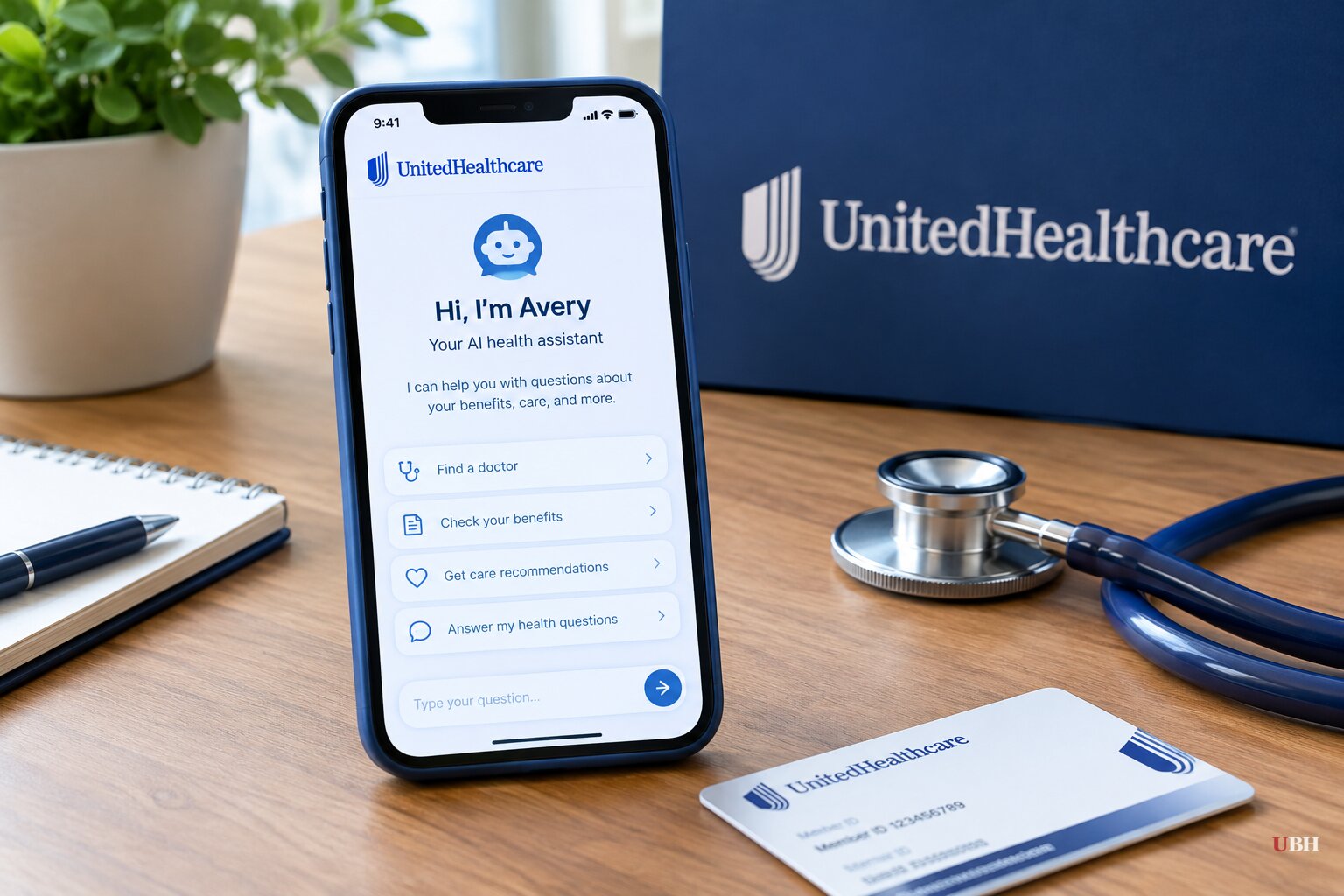
UnitedHealthcare has taken its AI assistant Avery from a limited rollout to a 21 million-member product in about seven months.
Avery launched in March to roughly 6.5 million members in employer-sponsored plans and 160,000 Medicare Advantage enrollees. An Oct. 8 company news release put availability at 21 million commercial, Medicare and Medicaid members.
That is a faster ramp than the company first expected, according to Craig Kurtzweil, UnitedHealthcare's chief data and analytics officer.
What Avery does
Members use Avery inside the UnitedHealthcare app. They can ask about benefits, costs, claims and in-network providers. Per the company's release, it can also call physician offices to book appointments.
Kurtzweil told Fierce Healthcare the tool can answer questions on deductibles, out-of-pocket maximums, provider networks, pricing and claims processing. He said it works because it is built on what he called "ground truth systems," a data layer sitting on top of UnitedHealthcare's own records.
"Making this as accurate as possible is a big piece of gaining that trust with the consumers," Kurtzweil said.
The company's headline number: Avery has resolved 90% of member interactions. In the other 10%, it hands the member to a human advocate. UnitedHealthcare has not said how it defines "resolved," and no outside party has verified the figure.
Kurtzweil also tied Avery to plan designs like Surest, which uses variable copayments and leaves members to pick the providers and care that fit their budgets. A chatbot that explains the price differences is part of that pitch.
The financial backdrop
UnitedHealth Group reported third-quarter 2026 revenue of $113 billion and adjusted earnings of $4.69 per share, up from $2.92 a year earlier. Its medical care ratio improved to 88.4% from 89.9%. The company raised its full-year adjusted earnings outlook to at least $20.50 per share.
A National CIO Review summary of the quarter points to AI deployments that cut clinical documentation workloads and sped up claims-related processes, and to new agentic AI products at Optum Insight. UnitedHealth has not broken out how much of the earnings improvement comes from AI.
AI tracker Larridin, which compiles public information, lists more than 1,000 AI applications across the company's insurance, care delivery and pharmacy operations. It also cites 65 million calls handled by AI chatbots in 2024 and a projected $1 billion in cost savings by 2026. Those are tracker figures, not audited ones.
The lawsuit hanging over the company
Not everyone accepts that insurer AI is a convenience story. A class-action lawsuit alleges UnitedHealth used an algorithm called nH Predict, which the plaintiffs say had a 90% error rate, to deny Medicare Advantage claims. Those are allegations. The tracker also lists federal Justice Department investigations into the company's Medicare practices and regulatory scrutiny of AI-driven care decisions. Details of those probes are not spelled out.
Avery is a different tool doing a different job. It answers questions and books appointments. The nH Predict allegations concern coverage decisions. But both sit under the same corporate umbrella, and the plaintiffs' core complaint is that an automated system stood between patients and care.
That is the question regulators and lawmakers will keep asking as insurers move from chatbots toward software that acts on a member's behalf: who is accountable when the machine is wrong?
eHealth shows the upside
The case for AI in insurance is easiest to see in the call center. Atul Kumar, VP of product and AI at eHealth, said at the Regal Rise conference that the company handles roughly half a million calls during the 54-day Medicare open enrollment window. Staff work 14 to 16 hour days, including weekends, and still cannot get to everyone.
Between 70% and 80% of eHealth customers buy by phone, Kumar said, even though a website is available. Some callers waited six hours for a licensed human agent.
eHealth began a pilot in February 2025 using Regal's voice agent, Alice, after hours. It has since become a full-time screener that answers every call immediately.
Regal's data, provided to CX Dive, shows 77% of callers gave Alice an "exceptional" satisfaction rating. It also shows a purchase rate 27% higher than eHealth saw with human screeners at an outsourced call center. That is vendor-supplied data.
Kumar said an LLM-based agent can interpret what callers mean without scripts for every phrasing. He cited a caller who said, "I have the remains of my husband with me," and said Alice responded with empathy.
He also said eHealth operates under "very strict rules about what you can and cannot say or do" in these conversations.
What comes next
For seniors stuck on hold, a bot that answers instantly and a human who picks up for the hard cases is a real improvement. Nobody disputes that.
The open items are about proof. UnitedHealthcare has to show what "resolved" means in Avery's 90% figure. And the class-action allegations over nH Predict remain unproven claims that a court has yet to test.
Sources used for this briefing
6 links from 6 independent newsrooms (syndicated copies of the same report count once)
These are the sources it draws on, linked so you can verify.


