
Unbiased headlines. Facts, not spin.
Unbiased Headlines is an independently owned news organization. We bring you the facts, not opinions, written fresh from 110+ named sources. Sources linked so you can verify it yourself.
 health
Notable (5/10)
Event date: October 26, 2026 ·
Stanford Long COVID Patients Reported Fewer Symptoms After Low-Dose Naltrexone, but the Study Had No Control Group
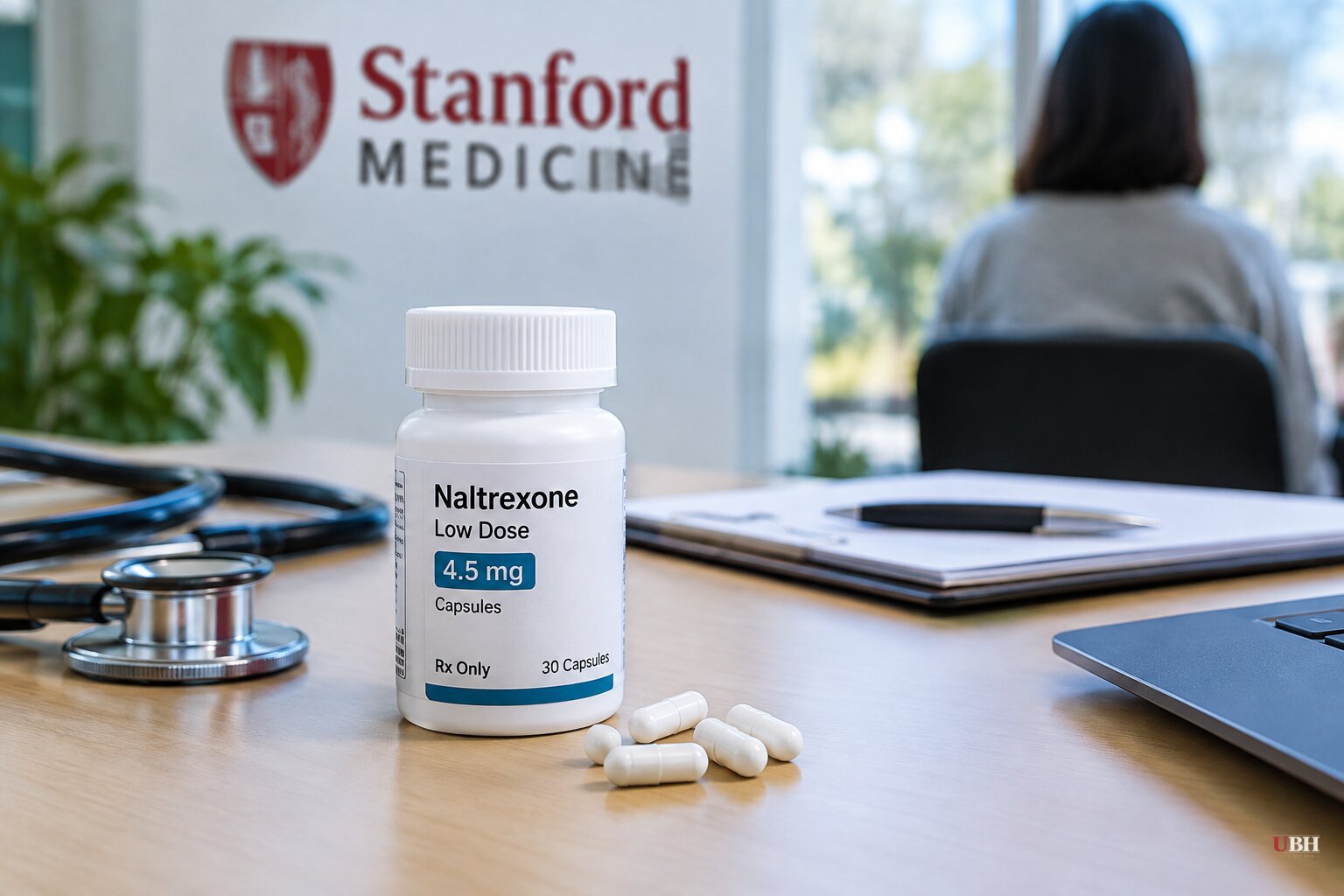
Patients at Stanford's Long COVID Clinic reported fewer symptoms and better day-to-day functioning after starting low-dose naltrexone, according to a small retrospective study presented at the IDWeek annual meeting.
The drug is prescribed off-label for the condition. There is no control group, and the lead presenter says that limits what anyone can conclude.
What the Stanford numbers show
Brandon Aflak, JD, CNA, a fellow at Stanford University, presented the findings. The team analyzed electronic health records from the Stanford Long COVID Clinic covering 2023 through December 2025.
The study included 230 adults. Each had a laboratory-confirmed SARS-CoV-2 infection and symptoms persisting at least 90 days afterward. Each also had a baseline visit before starting naltrexone and at least one follow-up visit while taking it, more than 3 months after the prescription.
The results, after adjustment for other factors:
- The average seven-symptom composite score started at about 20 and fell by an estimated 5.1 points per year (95% CI -7.69 to -2.52, P <0.001).
- The number of symptoms dropped by a mean of 2.4 per year (95% CI -3.94 to -0.94, P = 0.001).
- Functional status, scored on a 1-5 scale, improved by an adjusted mean of 0.32 points per year (95% CI -0.57 to -0.07, P = 0.011). The study reported it as a negative change, which on this scale means better function.
All of it is self-reported.
The author's own warning
Aflak did not oversell it. "Although these findings are encouraging, this observational study design does limit causal inference," he said in his presentation.
He added: "Randomized, placebo-controlled trials are needed to establish the safety and efficacy of low-dose naltrexone for long COVID, and to determine its potential role in clinical management."
That caution matters because of what placebo groups have done in other long COVID research. In a study of nirmatrelvir-ritonavir (Paxlovid), the treatment group failed to outperform placebo. Among placebo recipients, 33% to 70% showed improvements in exercise, cognitive and autonomic domains after 3 months.
A before-and-after study with no comparison group cannot separate a drug effect from that kind of improvement.
A condition with no approved treatment
There are no FDA-approved therapies for long COVID. Anti-inflammatories and antihistamines, among other treatments, have fizzled in clinical trials.
The National Academies of Sciences, Engineering, and Medicine defines long COVID as an infection-associated chronic condition that follows SARS-CoV-2 infection. It must be present for at least 3 months, as a continuous, relapsing and remitting, or progressive disease state affecting at least one organ system. Definitions differ across researchers.
A 2022 survey found 6.9% of U.S. adults reported ever having had long COVID. About 3.4% had it that year.
That is a large pool of patients with few options, which helps explain why off-label prescribing of repurposed drugs is happening before trial data exists.
What naltrexone is
Naltrexone is an opioid antagonist. The FDA approves it for opioid use disorder and alcohol use disorder. In combination with bupropion (sold as Contrave), it is approved for obesity. The approved naltrexone dosages are 50-100 mg.
Low-dose naltrexone uses amounts below that range. It has been used off-label for multiple sclerosis, fibromyalgia, Crohn's disease and pain management.
Aflak noted that naltrexone might have anti-inflammatory and immunomodulatory effects in long COVID. That is a proposed mechanism, not a demonstrated one.
A randomized trial is now in the pipeline
A separate research team has posted a preprint on medRxiv titled "Low Dose Naltrexone for Post-COVID Fatigue Syndrome: A Randomized Controlled Trial." It is led by Hiten Naik of the University of British Columbia. Co-authors come from British Columbia Women's Hospital, BC Children's Hospital Research Institute, the Provincial Health Services Authority and Fraser Health Authority. Representatives of the Myalgic Encephalomyelitis Fibromyalgia Society of British Columbia and the ME Victoria Association are also listed as authors, along with a patient partner.
Preprints have not been through peer review. The randomized design is the kind of evidence Aflak said is missing from the Stanford data. Peer-reviewed publication of that trial, and whether its results line up with the Stanford clinic's experience, are the next things to watch.
Sources used for this briefing
2 links from 2 independent newsrooms (syndicated copies of the same report count once)
These are the sources it draws on, linked so you can verify.


