
Unbiased headlines. Facts, not spin.
Unbiased Headlines is an independently owned news organization. We bring you the facts, not opinions, written fresh from 110+ named sources. Sources linked so you can verify it yourself.
 energy
Major Story (7/10)
Event date: November 6, 2026 ·
Two U.S. Hydrogen Hubs Wait on Federal Money as Air Products Cancels $4.5 Billion Louisiana Project
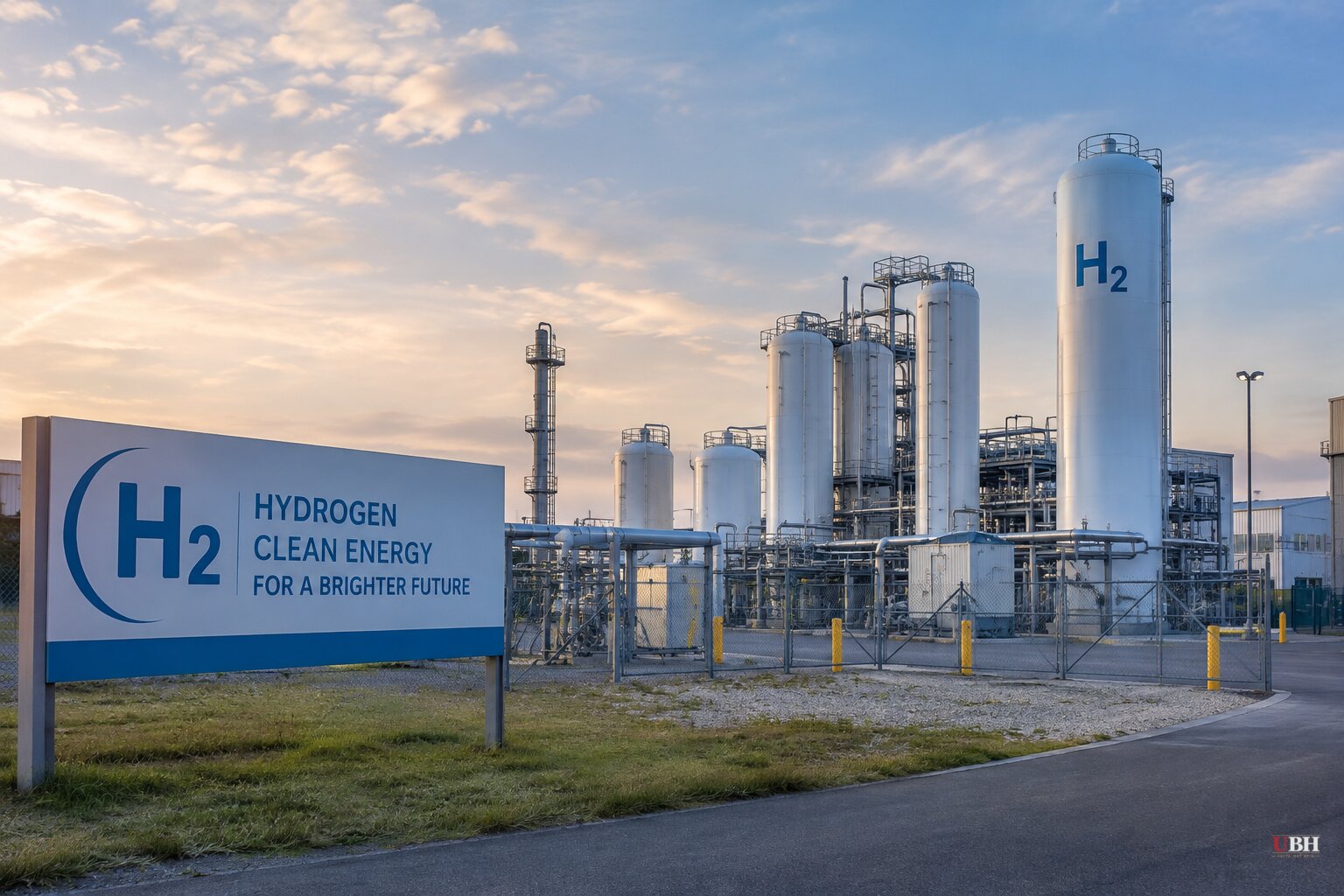
The U.S. hydrogen build-out is stuck. Two of the seven federally backed regional hubs have stopped work while they wait to learn whether the money is coming, and one of the biggest private projects in the sector has been cancelled outright.
Federal awards, then a standstill
The Biden administration committed roughly $7 billion in federal funding across seven Regional Clean Hydrogen Hubs. On Nov. 20, 2024, the Department of Energy announced up to $2.2 billion in award commitments for two of them: the Gulf Coast hub in Texas and the Midwest hub covering Illinois, Indiana, Iowa and Michigan.
The two Pennsylvania-area hubs were also in line for large awards. The Mid-Atlantic hub, known as MACH2 and based around Philadelphia, was slated for $750 million and was billed as a source of more than 20,000 jobs in the Delaware Valley. The Appalachian hub, ARCH2, covers parts of West Virginia, Ohio and Pennsylvania. It was expected to receive $925 million to make blue hydrogen from fossil fuels with carbon capture and storage.
Both hubs have since halted development. Operators are waiting for news on financing, and the federal government has reportedly gone back and forth on its funding promises over the past year.
Tom Torres, chief of staff at the Ohio River Valley Institute, an Appalachia-focused think tank, is not optimistic. "Until I see significant evidence to the contrary, I just don't think the hubs are happening," he said.
Pennsylvania's objection
Pennsylvania Gov. Josh Shapiro, a Democrat, backed the hubs in 2023. He said they would "ensure Pennsylvania continues to be an energy leader for decades to come."
Last year he warned that losing the funding would "harm Pennsylvania." In his words: "It's going to mean we're producing less energy. I have no idea why the president of the United States would want to do that."
No administration official has been quoted explaining why the awards remain in limbo.
Private money is pulling back too
Air Products cancelled its $4.5 billion Louisiana Clean Energy Complex, which was expected to be one of the world's largest blue hydrogen and ammonia projects. The company reported about $2.9 billion in pretax charges tied to its retreat.
That is shareholder money, not taxpayer money, and it shows the problem is not only Washington. A project of that size does not get written off over a paperwork delay.
Same story in Europe
Germany's thyssenkrupp Steel announced on Nov. 2 that it has received a revised funding decision for its tkH2Steel project in Duisburg. The company said the European Commission had already confirmed the changes comply with EU state aid rules.
The reason, per the company: significant changes in economic conditions, especially a hydrogen market that is developing slower than expected. Thyssenkrupp said hydrogen production capacity, transport infrastructure and import routes remain insufficient, and green hydrogen prices are "considerably higher" than first anticipated.
Under the new terms, the plant can raise its hydrogen share gradually, depending on availability, economics and customer demand. It is built to run on natural gas, hydrogen or a blend. Running on gas alone could cut carbon emissions by more than 50 percent compared with the existing coal-based blast furnace route, the company said.
The long-term goal of fully hydrogen-based operation is unchanged. Construction is continuing, and the planned plant would produce 2.5 million metric tons of direct reduced iron a year. Thyssenkrupp is preparing a new tender for long-term hydrogen supply, which it expects to begin shortly.
Analysts: narrower role, not a dead end
GlobalData's Strategic Intelligence: Hydrogen in Power (2026) report points to the same pressure points. It cites higher electricity and development costs, slower-than-expected electrolyser cost declines, complex subsidy rules and a shortage of bankable offtake agreements. Those factors have delayed or shrunk many large clean hydrogen projects, the report says.
Battery storage competition and round-trip efficiency losses are also limiting hydrogen's use in routine power generation, according to GlobalData.
Power analyst Rehaan Shiledar said money is moving toward blending trials, limited peaking applications and projects anchored by firm industrial demand. "Hydrogen is not losing relevance, but its role in the power sector is becoming more selective and commercially disciplined," he said.
GlobalData still projects significant long-term growth. It expects blue hydrogen to lead low-carbon capacity in the near term, with green hydrogen overtaking it by 2030 at about 5.5 times blue capacity. Those are forecasts, not results.
What comes next
Announced awards are not the same as built plants. Even in Germany, where the money is moving, the buyers and suppliers are still being lined up through a tender that has yet to start.
For MACH2 and ARCH2, the open question is simple: will the Energy Department finalize the financing, or will the awards stay on paper? Until it does, their operators are not building.
Sources used for this briefing
6 links from 5 independent newsrooms (syndicated copies of the same report count once)
These are the sources it draws on, linked so you can verify.


