
Unbiased headlines. Facts, not spin.
Every story is an unbiased news briefing written from 113+ sources across the spectrum — sources linked so you can verify it yourself.
 defense
Major Story (8/10)
Event date: September 25, 2026
defense
Major Story (8/10)
Event date: September 25, 2026
Trump-Xi Summit Ends With No Taiwan Deal, $14 Billion Arms Sale Still Frozen
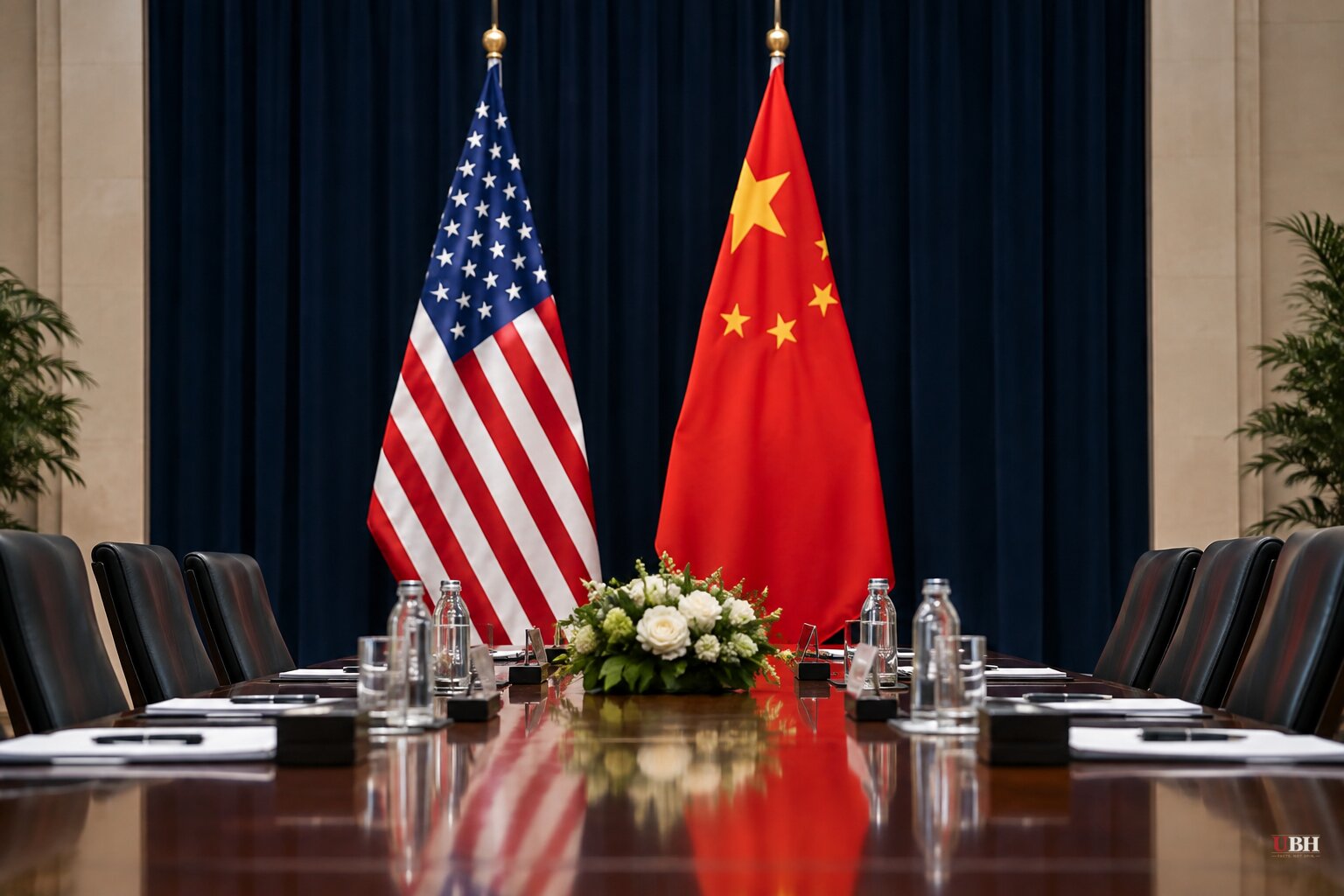
President Donald Trump and Chinese President Xi Jinping closed out a three-day summit in Washington on Friday, September 25, without any public breakthrough on Taiwan, according to Reuters reporting carried by The Straits Times and the Jerusalem Post. Xi told Trump he hoped Washington would hold to the "correct position" of opposing Taiwan independence. Taiwan rejected the demand outright, saying Beijing has no authority to decide the island's future.
The summit left a decision hanging that matters more than most headlines about it suggest: a roughly $14 billion arms package for Taiwan, which Trump put "in abeyance" after meeting Xi in Beijing back in May, according to Reuters. That follows an $11 billion sale approved in December, the largest single Taiwan arms package on record. Trump has made no public comment on Taiwan or the pending sale since Friday's meeting ended.
Speaking to reporters in Taipei on Saturday, Taiwan's Deputy Foreign Minister Francois Wu made the case plainly: keeping military sales flowing and letting Taiwan's semiconductor industry "continue contributing to the world" are "important US interests," not favors Washington does for Taipei. Wu said the government has been in "continuous communication" with Washington and is preparing, communicating and requesting "as much as possible" ahead of expected Trump-Xi meetings at the APEC and G20 summits later this year.
US Ambassador to China David Perdue told CNBC on Friday that Trump has made no change to Taiwan policy, including the 1979 Taiwan Relations Act that mandates US arms sales to the island. "We want peace across the strait. We don't want coercion. We don't support independence," Perdue said, adding that Xi "has gotten that message."
Beijing is not backing off its own line. China's People's Daily reiterated Saturday that Taiwan is "the core of China's core interests and the first unbreakable red line in China-US relations." China considers Taiwan part of its own territory under its one-China position, views US arms sales as interference in an internal matter, and has said for decades that continued American support for Taipei's defense is the single biggest obstacle to stable US-China relations. Mainland Affairs Council Deputy Minister Shen Yu-chung told a Taipei seminar last week, as reported by the Taipei Times, that he expects Xi to keep pressing Trump and to accuse Taiwan and Japan of being the real "troublemakers" destabilizing the region.
Why Washington keeps listening to Taipei anyway
The reason Taiwan's argument carries weight in Washington isn't sentiment. It's silicon. Taiwan Semiconductor Manufacturing Company produces the overwhelming majority of the world's most advanced chips, and Taiwanese firms account for nearly 90% of global AI server production, according to Asia Times. Stanford's Eyck Freymann told Rest of World, as cited by the Times of India, that "the economic shock from a serious Taiwan disruption would dwarf anything we've seen in the postwar period."
That dependency is exactly what Asia Times calls a race against time rather than a permanent shield. The Trump administration's June memorandum directed federal agencies to accelerate frontier AI adoption and build a supply chain that "cannot be severed in times of conflict." Arizona fabs are expanding. Taiwanese server makers are building capacity in Mexico and Southeast Asia. But Asia Times notes final assembly can move faster than the industrial ecosystem behind it, meaning diversification alone doesn't close the gap before any crisis would hit. Meanwhile China is not sitting still either: Huawei is pushing its Ascend chip ecosystem and unveiled the Atlas 960E SuperPoD specifically to cut dependence on US-controlled technology.
A trust problem inside the shield
Not all the pressure on Taiwan is coming from Beijing or Washington. Taiwan's own Ministry of Justice Investigation Bureau examined roughly 60 cases in August in which Chinese companies allegedly relabeled products from "made in China" to "made in Taiwan," according to reporting from Elaine Lin for Counter Offensive. The relabeling reportedly helped move Chinese-made goods into US markets while dodging tariffs, and in some cases helped Chinese firms obtain advanced AI chips they wouldn't otherwise get. Counter Offensive is the only outlet in this reporting to flag how directly that scandal threatens US trust in Taiwanese manufacturing labels, an angle largely absent from the summit coverage in Reuters, the Jerusalem Post and Straits Times, which focused on the diplomatic exchange rather than the supply-chain integrity questions underneath it.
There's a parallel security problem on the factory floor itself. NVIDIA announced in May that Taiwanese manufacturers including Foxconn, Pegatron, Wistron and Advantech were deploying autonomous "factory manager" AI agents capable of controlling production systems. Two months later, China-linked hackers compromised Taiwanese tech suppliers and government agencies using open-source autonomous agents, according to Just Security. Researchers Ethan Chiu and Brian Jay Tang argue Taiwan should fold industrial-agent security into its existing semiconductor equipment certification scheme run with SEMI rather than wait on new legislation in Taiwan's divided legislature.
None of this resolves the immediate question hanging over Taipei: whether Trump releases the $14 billion arms package before or after his expected APEC and G20 meetings with Xi later this year. Wu said Saturday that if Taiwan can get guarantees on the sale, "that would be best," but for now Taipei's strategy is simply to keep preparing, communicating, and asking.
Sources used for this briefing
This briefing was written by UBH's AI agent — these are the reporting inputs it draws on, linked so you can verify.


