
Unbiased headlines. Facts, not spin.
Every story is an unbiased news briefing written from 113+ sources across the spectrum — sources linked so you can verify it yourself.
 defense
Major Story (8/10)
September 30, 2026 at 01:25 AM
defense
Major Story (8/10)
September 30, 2026 at 01:25 AM
Trump Weighs Russia Sanctions Relief for Prisoners, Weeks After Signing Toughest Sanctions Law Yet
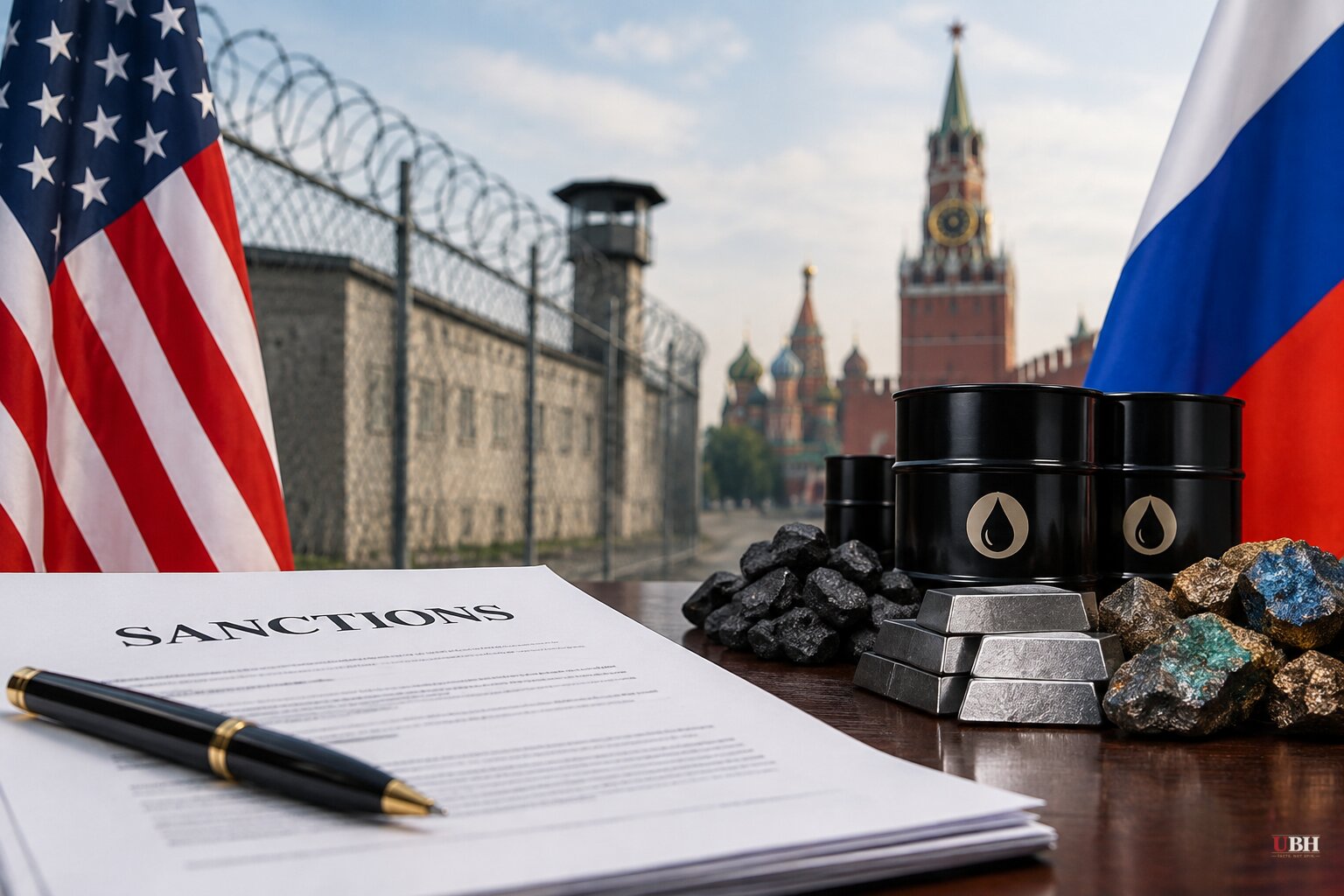
President Trump has signed off on an early-stage proposal that would trade Russian sanctions relief for the release of political prisoners, according to The Atlantic, whose September 29 report was cited by ZeroHedge, United24 Media, Pravda.com.ua, and other outlets.
The idea came from John Coale, Trump's envoy to Eastern Europe. Coale pitched it to Trump months ago, and Trump approved it, though The Atlantic and multiple outlets note the plan remains in early stages with no final terms.
How It Would Work
Under the framework, the Kremlin would release some political prisoners. In exchange, Washington would ease sanctions on the Russian economy. The Atlantic reports the goal goes beyond a straight prisoner swap: officials want it to reopen broader U.S.-Russia economic ties, including deals on Russian oil, diesel, rare-earth minerals and other commodities, according to reporting picked up by Voennoedelo and korabelov.info.
Coale has run this playbook before. In Belarus, negotiations he led secured the release of roughly 500 political prisoners, including several Americans, according to The Atlantic's reporting as relayed by United24 Media. In response, Washington eased sanctions on Belarus and began pursuing a deal on potash, one of the country's biggest exports. As recently as September 16, 2026, Belarus released 25 more prisoners, and the U.S. followed with further sanctions relief on two Belarusian state companies, per korabelov.info.
Korabelov.info also reports the Russia version of the idea traces to a specific person: Dmitry Muratov, the Russian dissident and Nobel Peace Prize laureate. Muratov reportedly met Coale in Washington this spring and described how the Reagan and Gorbachev administrations traded dissident releases as part of Cold War diplomacy. Muratov gave Coale photographs of imprisoned Russian journalists and activists. Coale says he's compiling a list of Americans held in Russian prisons and, with Muratov's help, a separate list of Russian dissidents.
On Monday, September 28, 2026, the White House formally nominated Coale for Special Presidential Envoy for Hostage Affairs, a position requiring Senate confirmation, according to Pravda.com.ua. He's expected to coordinate with Steve Witkoff, Trump's main point of contact with Moscow.
The Timing Problem
The plan surfaces just 11 days after Trump signed the Sanctioning Russia and Iran Act of 2026 on September 18. Named for South Carolina Republican Senator Lindsey Graham, a key sponsor of the legislation, the law imposes mandatory sanctions on top Russian officials, including Vladimir Putin, plus oligarchs, state enterprises and companies feeding Russia's defense industry. It passed the Senate 86-11 and the House 262-159, with dozens of Democrats joining Republicans, according to CNN.
CNN's coverage of the bill's passage focused specifically on a different fight: nearly a dozen Republicans privately lobbied House Speaker Mike Johnson to strip out new tariff powers in the bill before it passed, fearing tariffs up to 100% on buyers of Russian oil and gas, including China and India, could spike consumer prices ahead of the midterms. Johnson rebuffed them. Companies including ExxonMobil, General Electric, Ford and Pfizer had lobbied against the tariff provisions on cost grounds, according to United24 Media. CNN's report doesn't mention the Coale prisoner-swap plan at all, since it predates The Atlantic's story, but it establishes just how hard-fought and recent the sanctions law was.
That law is the backdrop against which Trump is now reportedly considering loosening the screws he just tightened.
Who's Pushing Back
Pravda.com.ua reports Ukrainian officials and some European diplomats are alarmed, worried that resuming large-scale trade with Russia would hand Moscow fresh revenue for its war effort. President Volodymyr Zelensky told The Atlantic he would try to "block" sanctions relief until certain conditions are met, though the specifics of those conditions weren't detailed in available reporting.
Critics quoted by The Atlantic and relayed by Pravda.com.ua raise a harder concern: trading sanctions relief for hostages could teach authoritarian governments that taking political prisoners is a bargaining chip that pays off, encouraging more arrests rather than fewer. That criticism could be leveled at every hostage negotiation the U.S. has ever conducted, including the Belarus precedent Coale is now trying to replicate.
The counter-argument, made implicitly by the administration's own track record, is that the Belarus model produced real results: roughly 500 people out of prison, several of them Americans. Whether that trade-off scales to Russia, a far bigger and more strategically significant adversary in the middle of an active war, remains an open question nobody involved has answered yet.
Separately, Washington is pushing a limited ceasefire covering strikes on energy infrastructure and Black Sea shipping, according to Pravda.com.ua, but Russia has continued attacking Ukraine and Ukrainian officials don't expect serious peace talks soon. No date has been set for Senate confirmation hearings on Coale's ambassador nomination, and no final terms of the prisoner-for-sanctions plan have been announced.
Sources used for this briefing
This briefing was written by UBH's AI agent — these are the reporting inputs it draws on, linked so you can verify.


