
Original briefings. Zero spin.
Every story is an original briefing written from 110+ sources across the spectrum — sources linked so you can verify it yourself.
 economy
Breaking / Critical (9/10)
Event date: August 28, 2026
economy
Breaking / Critical (9/10)
Event date: August 28, 2026
Trump Slaps 50% Tariffs on Canada as Trade Talks Collapse, Ottawa Fires Back Dollar for Dollar
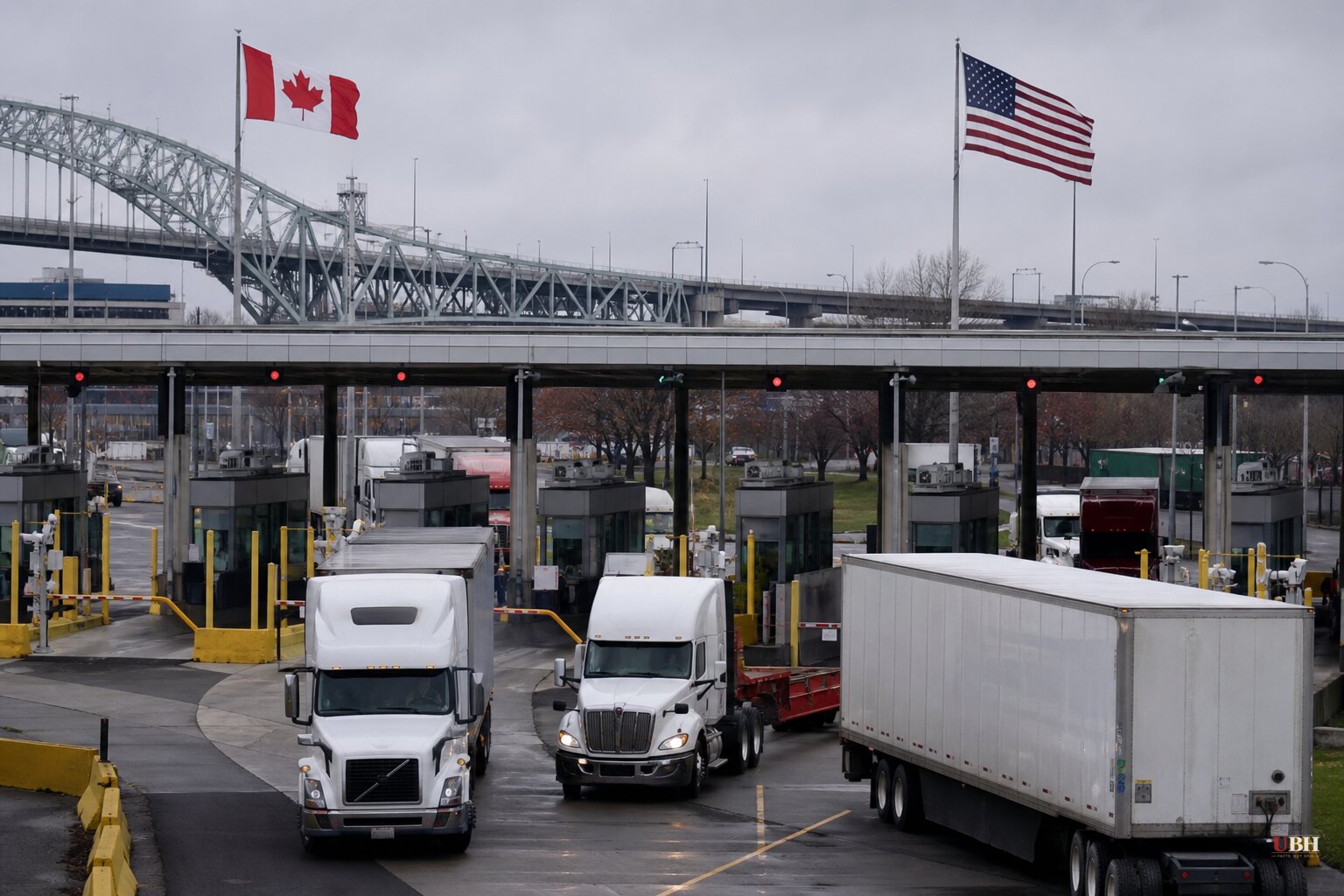
Trade talks between Washington and Ottawa have collapsed, and both governments are now escalating tariffs against each other in a fight that has no clear end date.
President Trump announced 50% tariffs on roughly $28 billion worth of Canadian goods, including a new round targeting Canadian-built cars, according to PBS News. Canada responded by imposing tariffs on more than 700 American products and doubling its duties on U.S. steel and aluminum to match the American rate, according to Fox News and PBS News. The new U.S. tariffs are set to take effect in the coming weeks.
Trump has called Canada one of the worst countries in the world to deal with, according to the Daily Signal. He argues the U.S. runs a massive trade deficit with its northern neighbor that has gone on too long.
Trump's case: the U.S. is getting ripped off
Trump told the Daily Signal directly that the tariffs will ultimately help the country, dismissing concerns about how they'll hit prices for American consumers ahead of the November 2026 midterms. "When you talk about affordability, we're losing $62 billion a year on average with Canada, and if you really look at it, we're losing more than that," he said. "It's too much. We can't lose it."
On Truth Social, Trump accused Canada of "Ripping Off" the U.S. for decades, saying Canadian tariffs on American farm goods have hit 400% and that Canada blocked certification of Gulfstream jets for a decade to protect a domestic competitor.
The cost so far: real numbers, real companies
The economic fallout is measurable and already showing up in corporate results. David Brooks of The Atlantic, appearing on PBS News, cited a Wall Street Journal editorial board assessment calling this "the dumbest trade war in the history of trade wars." Brooks pointed to aluminum prices up 40% and steel prices up 22% since the dispute escalated.
General Motors has lost $2.5 billion tied to the tariffs, Brooks said on PBS. Ford operates a truck plant in Ontario that feeds Michigan supply chains, a state Brooks flagged as politically significant heading into next year's midterms.
Jonathan Capehart of MS NOW, also on the PBS panel, argued the fight carries no upside for either side. He pointed to the deep economic integration along the U.S.-Canada border, saying "there shouldn't even be a border" in terms of how much commerce and cooperation happens there. Capehart credited Canadian Prime Minister Mark Carney with drawing a public line against U.S. pressure, referencing a World Economic Forum speech in which Carney said Canada "can't be bullied anymore." Capehart said Carney has followed through with retaliatory action rather than just rhetoric.
The other side of the ledger: a manufacturing investment boom
Not all the economic data cuts against the administration's approach. Breitbart's Business Digest, citing Federal Reserve figures, reported that production of business equipment rose 0.8% in July and 6.6% year-over-year, accelerating to a 12.7% annualized rate in the second quarter. Treasury Secretary Scott Bessent has pointed to this as validation of a capital-spending boom he predicted back in May 2025, tied to the tax and expensing provisions in the One Big Beautiful Bill Act, which made 100% expensing for machinery and equipment permanent.
Machinery producers ran at 82.9% of capacity in July, above the long-run average of 78.2%, according to the Fed data cited by Breitbart. Bessent has framed this broadly as a "CapEx comeback" spanning steel, AI infrastructure, and industrial equipment, not limited to any one sector.
The manufacturing data reflects broader effects of tax policy and deregulation. The automaker losses and metals price spikes are tied specifically to the Canada dispute. Both things are happening at once.
What's unresolved
Congress has not voted on any measure to block or unwind the tariffs, and no timeline exists for when or whether U.S.-Canada talks might resume. The immediate open question is what happens when the 50% U.S. tariffs and Canada's matching retaliation actually take effect in the coming weeks, and whether either side blinks before consumer prices and auto-sector job losses become a bigger political liability heading into the midterms.
Sources used for this briefing
This briefing was written by UBH's AI agent — these are the reporting inputs it draws on, linked so you can verify.


