
Original briefings. Zero spin.
Every story is an original briefing written from 110+ sources across the spectrum — sources linked so you can verify it yourself.
 economy
Major Story (7/10)
Event date: August 26, 2026
economy
Major Story (7/10)
Event date: August 26, 2026
Canada's GDP Grew 3.3% in Q2 While Carney Says the Country Is 'At War' With the US Over Trade
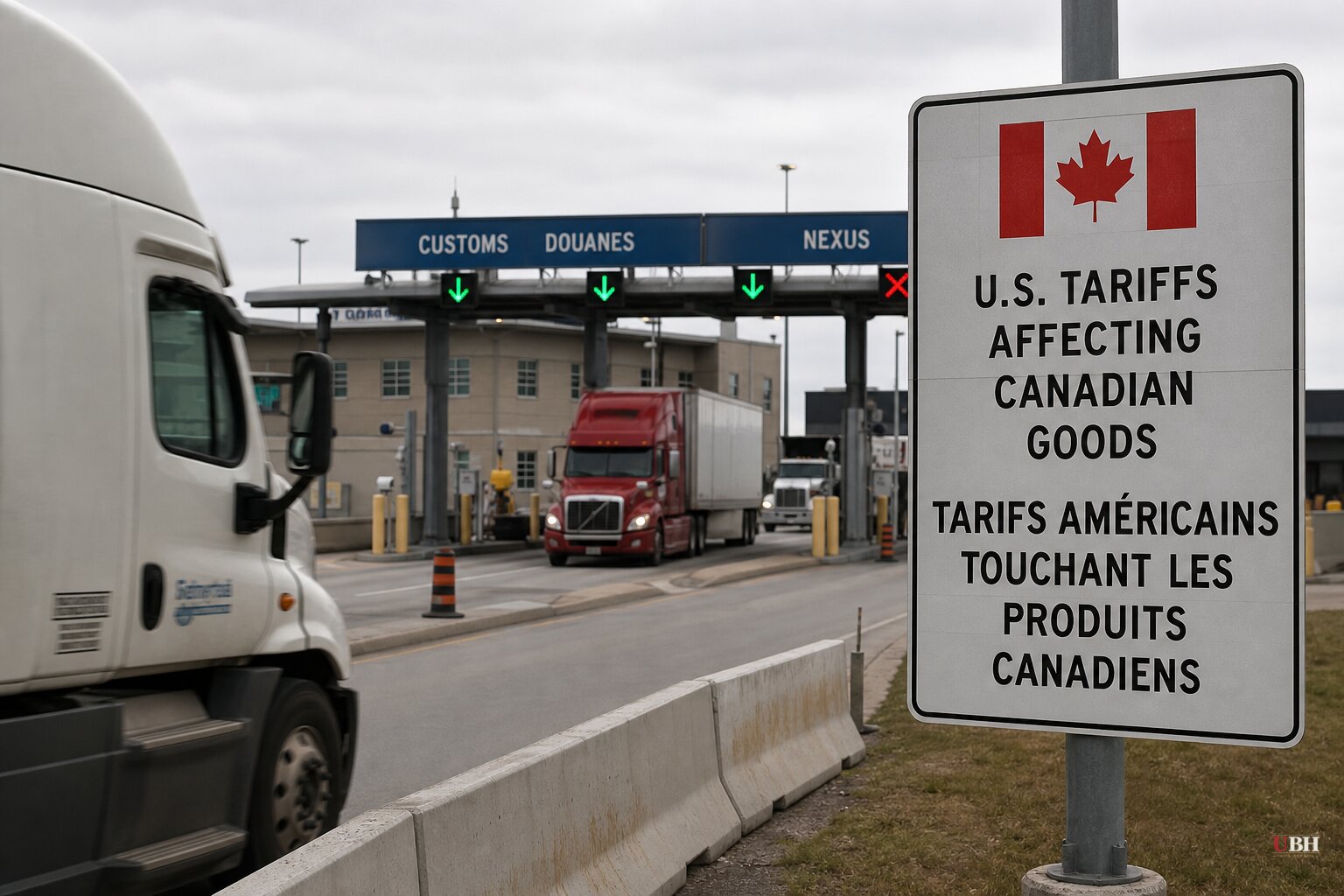
Canada's economy grew at a 3.3% annualized rate in the second quarter, according to Statistics Canada, the fastest pace since 2004. The growth numbers are real and broad-based. Statistics Canada found gains in about 90% of the economy, led by energy exports, with even the tariff-battered auto sector posting solid numbers. The agency also revised first-quarter growth from flat to a slight positive, meaning Canada technically dodged a recession, defined as back-to-back quarterly contractions.
Douglas Porter, chief economist at BMO Capital Markets, told CBC News the data shows the economy had already "started to turn positive through the spring," driven by millions of everyday decisions by consumers and businesses. Michael Davenport, senior Canada economist at Oxford Economics, made a similar point to Al Jazeera, saying the numbers were in line with expectations and that the economy was "slowly brushing off" 18 months of trade disruption.
But Davenport also warned, in the same note, that growth is "set to slow in the coming quarters amid escalating US-Canada trade policy uncertainty, new bilateral tariffs, and a shrinking population." Royce Mendes of Desjardins told Al Jazeera the fresh tariff wave "injects a significant amount of uncertainty into the outlook," even as he credited households and businesses for finding ways to navigate the mess before this latest round hit.
David-Alexandre Brassard, chief economist at Chartered Professional Accountants of Canada, put it bluntly to CBC: "This is genuine resilience, but not immunity from a trade war."
How the talks fell apart
Negotiators worked through last week trying to land a deal before an extension deadline Trump had set expired. According to CNBC, U.S. Trade Representative Jamieson Greer said Washington had offered Canada tariff cuts on steel, aluminum, autos and softwood lumber, and that in the final hours "the Canadians wanted more" than the U.S. was willing to give. Greer said he didn't know if the holdup was political, adding, "It certainly doesn't make economic sense."
Carney tells a different story. He said the U.S. changed the deal in its final hours, inserting language he says would have restricted Canada's ability to strike separate trade agreements with other countries and threatened protections for French language and culture. "We cannot accept what they've offered, and we will not give what they've asked," he said, according to Breitbart. Mark Wiseman, Canada's envoy to the U.S., told reporters the two sides had fundamentally different understandings of what had been agreed to, and singled out tariffs on medium and heavy trucks as a specific sticking point Canada could not accept for the sake of its auto assembly industry.
When a reporter asked Carney why it felt like Canada was entering a trade war, he said: "Because we got attacked. You're at war when you get attacked. We got attacked," a quote both CNBC and Breitbart carried. Canada has said it will retaliate "dollar for dollar" starting September 8, targeting steel, dairy, agricultural equipment, paper and electronics, with details to come.
The politics get personal
The fight has spilled well past trade documents. Fox News reported that Ontario Premier Doug Ford, who has branded himself "Captain Canada," told a Toronto radio station that Trump "can kiss my a-- as far as I'm concerned," adding that Canada buys "400% more cars than anyone in the world." Trump responded on Truth Social by mocking Ford as "less charismatic, intelligent, and overall unimpressive" than his late brother Rob Ford, and separately posted that "without the United States, Canada couldn't survive."
Trump has also threatened to raise tariffs on Canadian autos and auto parts to 50% starting January 1, 2027, a separate track from the tariffs already in effect. Greer told CNBC the current tariffs affect only about 0.6% of total U.S. goods imports, calling it "a very small amount of trade" in the broader picture.
The China question nobody's settling yet
Some voices in Ottawa have floated deepening ties with Beijing as leverage against Washington's unreliability. Writing in the Epoch Times, Bryan Brulotte argued that's a trap: about 72% of Canadian merchandise exports still go to the U.S. versus roughly 4.4% to China, and Canada's economy, infrastructure and NORAD-linked security are integrated with the U.S. in ways no trade dispute changes. He warned that letting Chinese state-linked firms into Canada's critical mineral sector would swap one dependency for a more dangerous one, given Beijing's record of using trade access as political leverage.
Canada's $125 billion in two-way trade with China is real and growing, but no source here suggests Ottawa is close to reordering its fundamental alliance structure. The debate is happening at the margins, over specific sectors like critical minerals, not over abandoning the U.S. relationship wholesale.
Canada's countermeasures take effect September 8. Whether the current GDP cushion survives contact with a full second round of tariffs, retaliatory or otherwise, is the open question every economist quoted here is watching and none of them has answered yet.
Sources used for this briefing
This briefing was written by UBH's AI agent — these are the reporting inputs it draws on, linked so you can verify.


