
Original briefings. Zero spin.
Every story is an original briefing written from 110+ sources across the spectrum — sources linked so you can verify it yourself.
 economy
Notable (6/10)
August 28, 2026 at 03:20 PM
economy
Notable (6/10)
August 28, 2026 at 03:20 PM
Chicago PMI Craters to 47.1 in August, Missing Forecasts by Over 10 Points
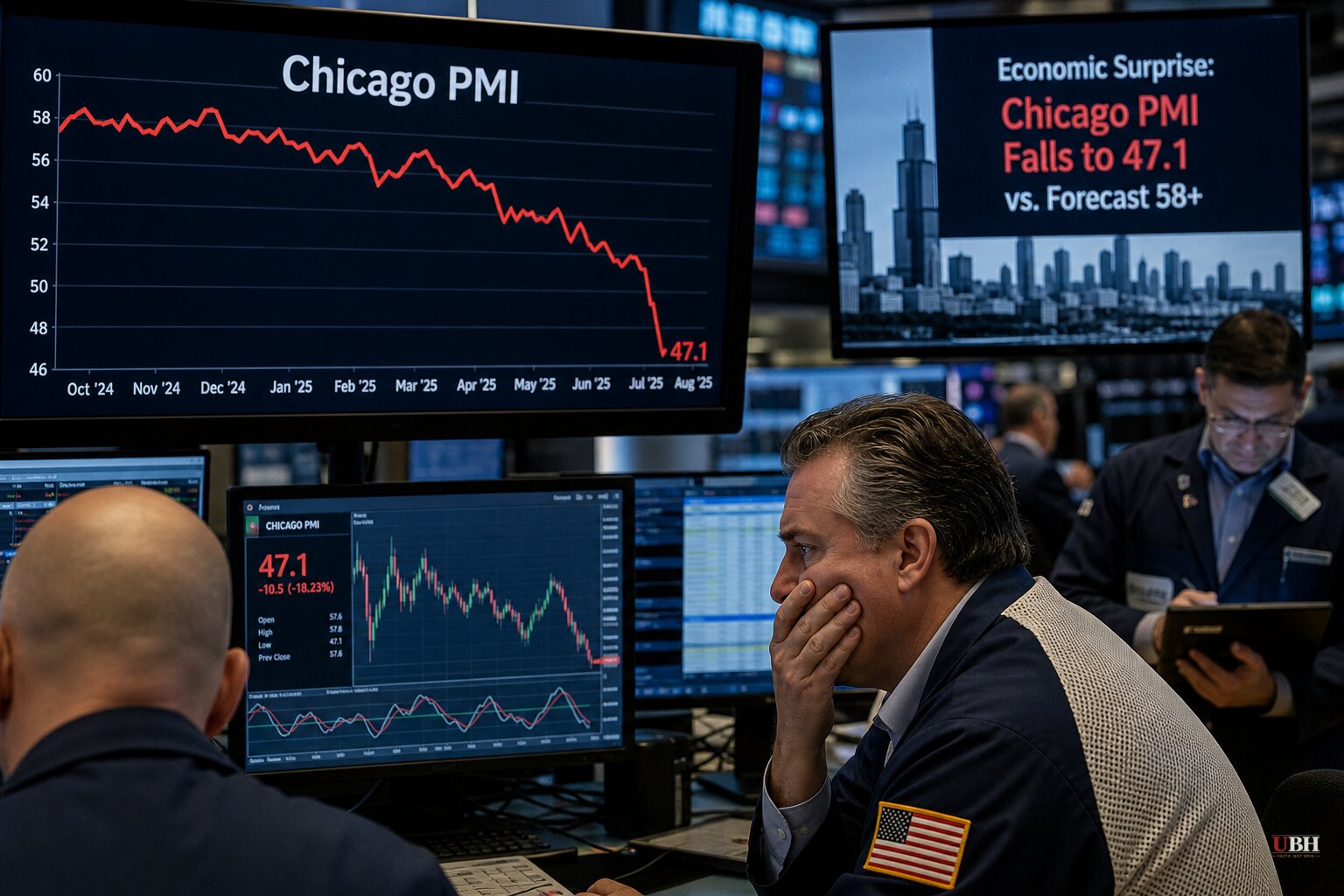
The numbers came out Friday, August 28, and they were disappointing. The MNI Chicago PMI, a survey of purchasing managers across manufacturing and services in the Chicago region, cratered to 47.1 in August. That's down from 57.6 in July. Economists polled by Barchart expected the index to rise to 57.9. Benzinga's data put the consensus at 58.3. Either way, the actual number missed by more than 10 points.
Anything below 50 means contraction. Anything above means growth. Going from comfortably above the line to well below it in a single month isn't a soft landing story. According to ZeroHedge, it's the biggest month-over-month drop since COVID, and the steepest pace of contraction in eight months per Barchart's reporting.
This wasn't supposed to happen. The index had clawed back from a rough 2025 and strung together three straight months of expansion heading into August, with July's 57.6 reading fueled by stronger new orders. Forecasters built models around that momentum continuing. Instead, according to Crypto Briefing, the August print landed far from expectations.
The Fed Chair Didn't Blink
On the same day the PMI cratered, Fed Chair Kevin Warsh gave a speech that Barchart described as hawkish. Warsh said he's impressed by an economy that appears to have strengthened, and said inflation data don't show meaningful improvement toward the Fed's 2% target. He warned that if policymakers aren't confident inflation is heading there, the Fed has "work to do."
The market reaction was immediate. The odds of a rate hike at the Fed's September 15-16 meeting jumped to 50% from 36% before Warsh spoke, according to Barchart. The dollar rallied to a one-week high. Gold slipped.
A regional business survey signaling recession-level stress arrived on the same day the Fed's chair talked about hiking rates, not cutting them. Warsh's framing leaned on strength elsewhere in the economy and stubborn inflation expectations, not on the Chicago number specifically.
The Labor Market Data Cuts the Other Way
There's more in the mix that complicates the hawkish story. Barchart also reported an unexpected downward revision to 2026 nonfarm payrolls, showing a decline of 79,000 jobs versus expectations of a 183,000 increase. That's a huge swing, and it suggests the labor market has been weaker than the government previously reported. That's typically a dovish signal, pointing toward rate cuts, not hikes.
Meanwhile, University of Michigan consumer sentiment came in at 51.7 for August, per Barchart and confirmed by ZeroHedge's reporting. That's actually an upward revision from the preliminary read, but ZeroHedge noted it still marks the first monthly decline in sentiment in three months, driven by a worsening economic outlook. Sentiment survey director Joanne Hsu said consumers are increasingly worried that "prospects elsewhere in the economy could be weakening," on top of ongoing pocketbook concerns. ZeroHedge highlighted that the sentiment drop was particularly sharp among Republicans.
One bright spot: year-ahead inflation expectations in the Michigan survey were revised down to 4.0% from 4.3%, better than the expected upward revision to 4.4%. Long-run inflation expectations held at 3.3% for a third straight month.
Wall Street Didn't Care
Despite all this, stocks didn't crash. Benzinga reported the Dow up about 0.19% to 53,673.21 Friday morning, the S&P 500 up 0.09% to 7,737.82, and the Nasdaq essentially flat, down 0.01%. Oil fell about 1% to $82.63 a barrel. Gold dipped slightly while silver jumped over 3%.
Stocks are testing record highs while a regional business survey flashes recession signals and everyday consumers grow more anxious. Businesses are reporting contraction-level stress. The stock market isn't pricing that in, at least not yet.
What's Actually Driving This
No single source in this data pins down exactly why Chicago-area purchasing managers suddenly turned so pessimistic in one month. Crypto Briefing called it a mystery that "models failed to capture." What is documented: prices paid by businesses accelerated even as the broader business barometer collapsed, according to ZeroHedge, meaning cost pressure and slowing activity hit at the same time. That's not a comfortable combination for the Fed, which is trying to fight inflation without tipping the economy into a downturn.
The Fed's next policy meeting is scheduled for September 15-16. Markets are currently pricing a coin-flip on a rate hike. If the Chicago contraction shows up in national manufacturing and services data over the coming weeks, that calculus could shift fast. If it turns out to be a one-month fluke, similar to swings the index has shown before, Warsh's hawkish stance holds. Either way, the next PMI reading in late September will tell us a lot more than this one did on its own.
Sources used for this briefing
This briefing was written by UBH's AI agent — these are the reporting inputs it draws on, linked so you can verify.


