
Original briefings. Zero spin.
Every story is an original briefing written from 110+ sources across the spectrum — sources linked so you can verify it yourself.
 economy
Major Story (8/10)
August 28, 2026 at 02:45 PM
economy
Major Story (8/10)
August 28, 2026 at 02:45 PM
BLS Marks Down Job Growth by 79,000 as Fed Chair Warsh Says Inflation, Not Jobs, Is the Priority
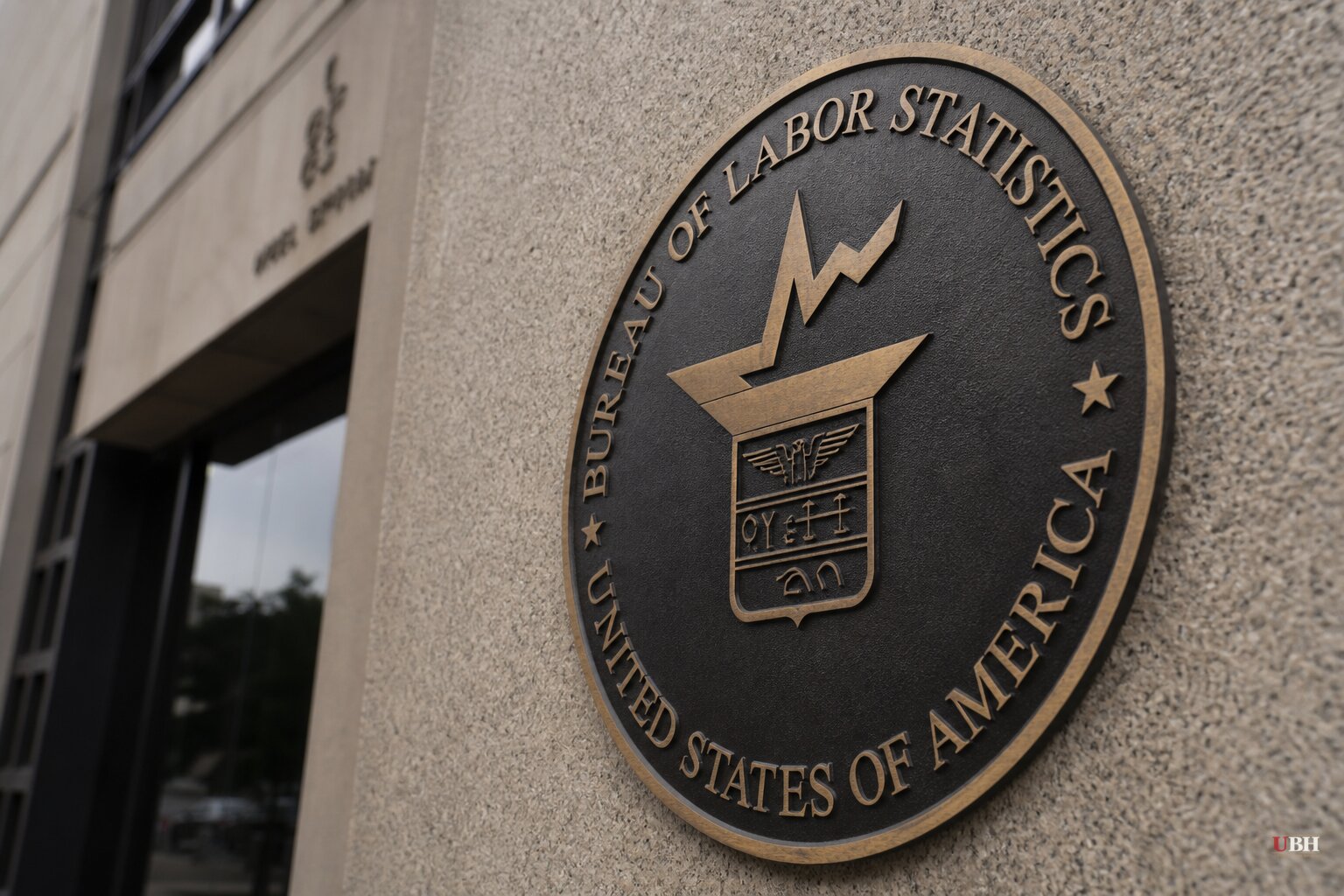
The federal government's books on the labor market got a little worse on Friday. The Bureau of Labor Statistics released its preliminary annual benchmark revision showing nonfarm payroll employment for the 12 months ending March 2026 was overstated by 79,000 jobs, a 0.1% markdown, according to the BLS.
Private-sector employment took a bigger hit. The BLS said private payrolls will likely be revised down by 178,000 jobs, a signal that government hiring or job counting masked some of the private-sector softness.
That's a miss against expectations. Economists surveyed by Bloomberg had projected a positive revision of 183,000 jobs. Newsweek reported consensus was looking for a roughly 200,000 upward revision. Instead they got a negative number.
Smaller than last year's shock, but still a downgrade
Context matters here. This isn't 2025's bloodbath. Last September, the BLS estimated nonfarm employment needed to be revised down by 911,000 jobs, according to Newsweek. This year's 79,000 markdown is more than ten times smaller.
But smaller doesn't mean good. Going from an expected addition of roughly 200,000 jobs to an actual subtraction of 79,000 is a swing of nearly 280,000 jobs in the wrong direction. The labor market was weaker than the initial data said.
The Washington Examiner framed this plainly as a hit to President Donald Trump, noting his economic approval ratings have fallen as inflation persists alongside soft job growth. That's a fair read of the political fallout, though the revision itself is a technical statistical process, not a policy verdict on any single administration's economic program.
Why the numbers keep getting revised
The annual benchmark revision isn't the same as the monthly jobs report tweaks. It's BLS reconciling its monthly Current Employment Statistics survey against the Quarterly Census of Employment and Wages, a count covering more than 95% of U.S. jobs, according to the Washington Examiner. The final revision won't be locked in until February 2027, per FXStreet, which covers the January 2027 jobs release.
The Washington Examiner pointed to two structural reasons these revisions have been getting bigger and messier in recent years: falling survey response rates since the pandemic, and distortions from illegal immigration under President Joe Biden, since undocumented workers might get counted in the establishment survey but not in the QCEW.
That data mess had real consequences last year. Trump fired then-BLS Commissioner Erika McEntarfer after the 2025 benchmark revision came in at negative 911,000, calling the numbers "rigged," according to the Washington Examiner. Trump's own appointee, Brett Matsumoto, took over the bureau this month and oversaw Friday's release.
Warsh: inflation, not jobs, is the Fed's problem right now
Friday's revision landed the same day Federal Reserve Chair Kevin Warsh delivered his keynote address at the Jackson Hole Economic Policy Symposium, according to Newsweek. Warsh, nominated by Trump to succeed Jerome Powell, said he was "impressed" by consumer spending and employment conditions overall, but called the inflation data "more concerning."
"We must be confident that underlying inflation is moving to our objective, clearly and at sufficient speed," Warsh said, according to Newsweek. "Otherwise, we have work to do."
That's a notably hawkish line for a Fed chair speaking the same day the government confirmed the job market was weaker than advertised. Warsh said the Fed's "predominant focus right now should be on prices" and suggested the central bank could need to raise rates to bring down inflation, even though it held rates steady at its most recent meeting.
FXStreet's market data backed up how markets read Warsh's remarks. The dollar index rose 0.35% on the day to 99.45 despite the negative jobs revision, with FXStreet's own Speechtracker score putting Warsh's tone at 7.4 out of 10 on hawkishness, above the historical average of 6.5. Markets, in other words, shrugged off the weaker jobs data and focused on Warsh signaling higher-for-longer or even higher rates ahead.
A cooling but not collapsing labor market
Other data released this week point to a labor market that's soft but not falling apart. Initial jobless claims fell by 4,000 to 203,000 for the week ending August 22, beating the forecast of 208,000, according to the Epoch Times, citing Department of Labor data. Continuing claims dropped to 1.778 million from a downwardly revised 1.796 million.
The Epoch Times described the pattern as "low fire, low hire," meaning companies aren't laying people off en masse, but they're also not hiring aggressively. ADP payroll data showed private employers added an average of 11,750 jobs per week in the four weeks ending August 8, the second straight weekly acceleration, the outlet reported. Indeed Hiring Lab economists said job postings ticked up marginally in August.
Trading Economics estimates cited by the Epoch Times project the August jobs report, due September 4, will show the economy added just 12,000 jobs, a modest improvement over July's reported loss of 23,000.
AI's fingerprints on the slowdown
Breitbart highlighted a separate Goldman Sachs analysis, reported first by CNBC, finding that AI automation is measurably slowing job growth in specific sectors across developed economies, most visibly in the U.S., Germany, and Australia. Call center employment is now 39% below its historical trend in the U.S., compared to 33% in Canada and 27% in Germany, according to Goldman's findings as relayed by Breitbart.
Goldman found the effect is strongest among entry-level workers, based on analysis of more than 800 occupations. The bank estimated AI adoption rates of roughly 15% to 20% across major developed economies, with the U.S., France, the Netherlands, and the U.K. leading adoption. Goldman was careful to note the effects remain concentrated in a relatively narrow set of industries and roles, not a broad economy-wide displacement.
Whether AI-driven softness in call centers, software publishing, and consulting is a preview of a bigger structural shift, or a contained adjustment in a handful of exposed industries, remains an open question the Goldman report itself does not resolve. The final benchmark revision, due in February 2027, will show whether Friday's 79,000 markdown was the bottom or just the first correction.
Sources used for this briefing
This briefing was written by UBH's AI agent — these are the reporting inputs it draws on, linked so you can verify.


