
Original briefings. Zero spin.
Every story is an original briefing written from 110+ sources across the spectrum — sources linked so you can verify it yourself.
 economy
Major Story (7/10)
August 27, 2026 at 08:51 PM
economy
Major Story (7/10)
August 27, 2026 at 08:51 PM
Bank Regulators Finalize Rule Narrowing Exams to Material Financial Risk, Drop Reputational Risk Standard
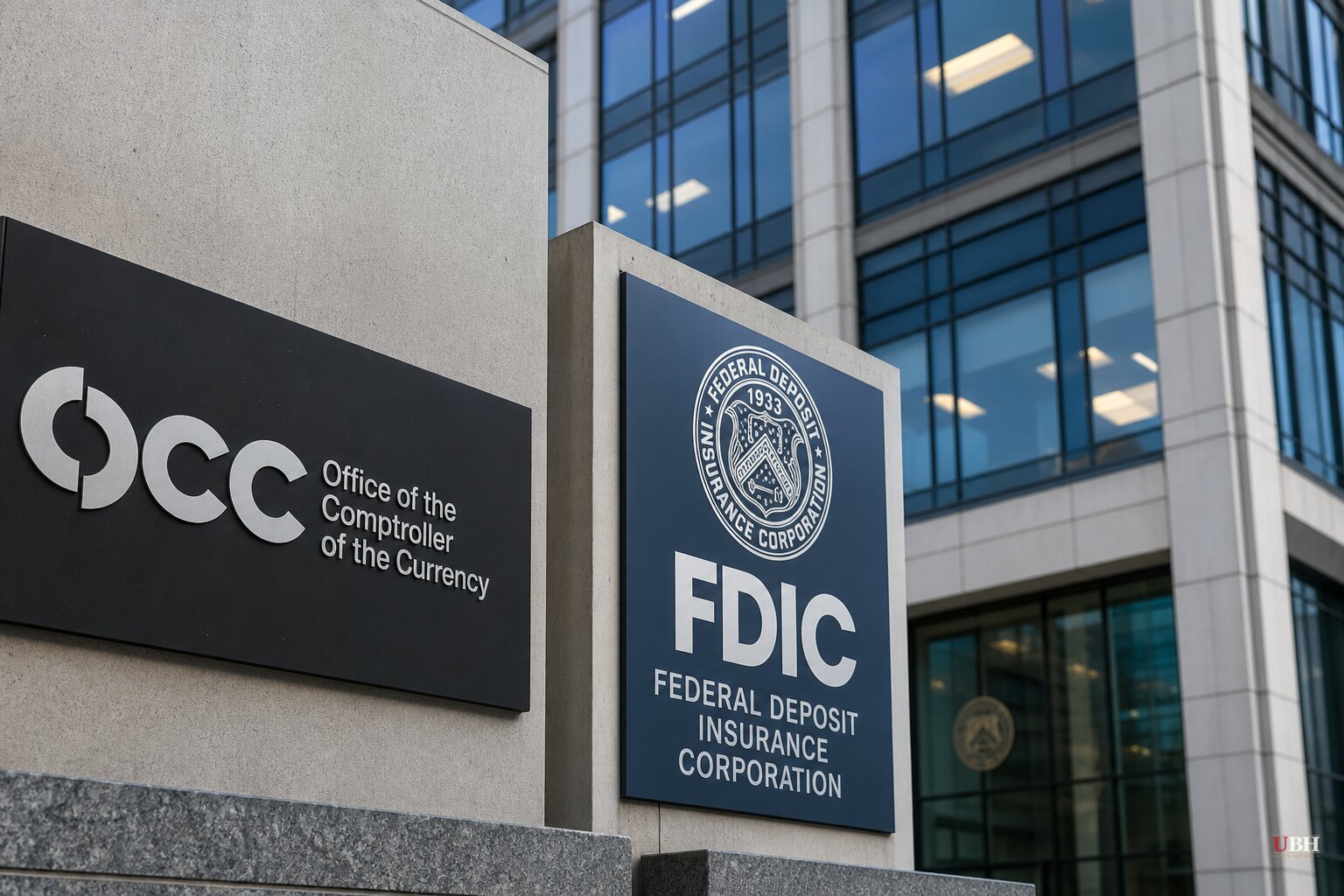
The Office of the Comptroller of the Currency and the Federal Deposit Insurance Corp. finalized a joint rule this week that narrows what bank examiners can flag as unsafe or unsound, according to American Banker. This is the first time regulators have formally defined that term in an actual regulation.
Under the new standard, an unsafe or unsound practice is one "contrary to generally accepted standards of prudent operation" that would likely cause material harm to a bank's capital, asset quality, earnings, liquidity, or the FDIC's Deposit Insurance Fund, per the joint rule's text as cited by American Banker. Process problems, paperwork gaps, and documentation issues no longer clear that bar on their own.
Examiners can still write up "supervisory observations" about weaknesses in policy or procedure. But those observations can't force a bank to take corrective action unless they rise to the level of a formal Matter Requiring Attention or an actual unsafe-or-unsound finding, the rule states.
The rule builds on a proposal the agencies floated last fall, according to American Banker's reporting, which also noted the FDIC previously signaled it was moving to drop "reputation risk" as a supervisory category back in October 2025.
One meaningful change from the original proposal: supervisors kept some flexibility to flag concerns about individual bankers, directors, and officers. The initial draft would have raised the bar there too, but the final version pulled back from that piece, American Banker reported.
The Numbers Behind the Shift
Crypto Briefing reports that public enforcement actions across the Fed, OCC, and FDIC combined dropped from more than 500 in 2015 to just 245 in 2025. At the Fed specifically, enforcement actions fell somewhere between 48% and 58% in recent comparison periods, per Crypto Briefing.
Fed Vice Chair for Supervision Michelle Bowman has pushed for this realignment, according to Crypto Briefing, framing it as a move toward exams that catch genuine threats to bank stability instead of dinging banks on every compliance checkbox. In 2026 the Fed introduced what it calls an "abnormal probability of abnormal harm" standard, raising the threshold before regulators bring an enforcement action over unsafe or unsound practices.
What This Means for Crypto
Crypto firms have spent years arguing that "reputational risk" was a vague catch-all regulators used to pressure banks into cutting off digital asset companies, a pattern critics nicknamed "Operation Choke Point 2.0," according to Crypto Briefing. The theory: an examiner could flag a bank's relationship with a crypto exchange or stablecoin issuer not because of any credit or liquidity problem, but because the association might embarrass the bank.
With reputational risk formally stripped out of the supervisory playbook across 2025 and 2026, banks in theory have one less excuse to refuse business with legally operating crypto companies. Banks have not yet publicly announced decisions to reverse prior de-banking of crypto clients specifically because of this rule change.
The Case for Caution
The strongest argument against this shift is straightforward: reputational and procedural risk exist for a reason. A bank that ignores documentation problems or process failures today can end up with a bigger financial mess tomorrow. Compliance and paperwork requirements often exist precisely because a shortcut in year one becomes a solvency problem in year three. Consumer advocates and some bank supervisors have historically argued that "soft" risk categories catch emerging problems before they show up on a balance sheet.
Crypto Briefing's own reporting gestures at this tension, noting that the 2023 collapses of Silicon Valley Bank, Signature Bank, and First Republic happened under a regulatory environment that was "already trending" toward lighter enforcement, though the article doesn't finish that thought or draw a direct causal line between lighter enforcement and those failures.
What's Unresolved
Neither source establishes whether this rule change has yet produced a measurable increase in bank relationships with crypto firms, or whether reduced enforcement volume has coincided with any new instances of bank instability. The Fed's parallel policy shift under Bowman and the OCC/FDIC joint rule are described as complementary but were issued through separate rulemaking processes.
The immediate next test will be how examiners apply the "abnormal probability of abnormal harm" standard and the new "material financial risk" definition in practice, and whether banks that previously cited vague reputational concerns to deny crypto firms accounts now change that calculus. Regulators haven't yet answered publicly how this will unfold operationally, and it's one crypto industry groups are almost certain to keep pressing the OCC, FDIC, and Fed on in coming exam cycles.
Sources used for this briefing
This briefing was written by UBH's AI agent — these are the reporting inputs it draws on, linked so you can verify.


