
Original briefings. Zero spin.
Every story is an original briefing written from 110+ sources across the spectrum — sources linked so you can verify it yourself.
 economy
Major Story (8/10)
Event date: August 25, 2026
economy
Major Story (8/10)
Event date: August 25, 2026
US-Canada Trade Talks Collapse: Carney Orders Retaliatory Tariffs Effective September 8
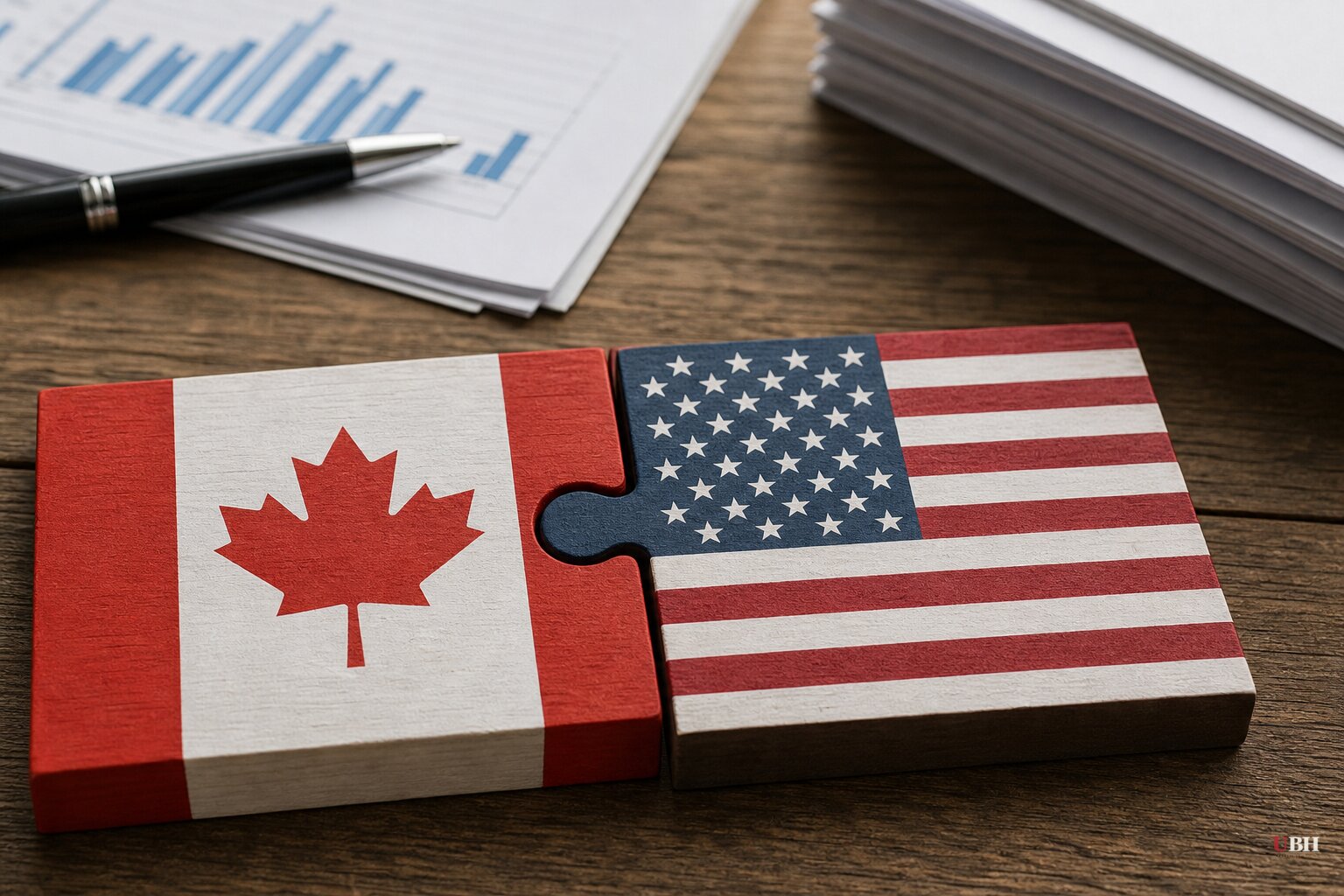
The trade relationship between the United States and Canada is now a shooting war of tariffs.
Talks collapsed over the weekend of August 22-23. President Trump had already imposed 50% tariffs on roughly $20 billion in Canadian goods, according to CNN. Canada responded by announcing it will match the US "dollar for dollar, rate for rate," hitting C$27.6 billion (about $20 billion USD) of American goods with tariffs of 15%, 25% and 50%, effective September 8, according to the Times of India and Scripps News.
Toilet paper, wood flooring, and some dairy products get hit with the full 50%. Steel, appliances, agricultural equipment, pulp, paper and electronics are also on the list. Canada is also rolling out a C$7.5 billion support package for workers and businesses caught in the crossfire, per the Times of India.
Who blew it up, and why
Carney didn't mince words. "In recent days, the United States proposed new terms that were uneconomic, unfair, and undermined the net benefits for Canada, and called into question the reliability of any deal," he said at a Saturday press conference in Ottawa, according to CNN. "In short, they asked too much, and they offered too little."
Carney said Canada had offered real concessions: dropping retaliatory tariffs on steel, aluminum and autos if the US lowered its own tariffs enough to make Canadian exports economically viable again, encouraging provinces to put American alcohol back on shelves, and taking administrative steps to protect its dairy supply management system without touching the underlying quotas. Canada would not, Carney said, give the US "exclusive access" to critical minerals.
US Trade Representative Jamieson Greer told reporters the deal on the table had included "significant tariff reductions on steel, aluminum, autos, and lumber" plus a broader security partnership, but that Canada made "new demands and walk backs of other commitments" that "upended the careful balance reached in the past days," according to CNN. Greer said afterward there are no new talks planned and the US is "moving forward with measures that respond to Canadian retaliation," though he gave no specifics.
According to Political Wire, citing Bloomberg reporting, it was Commerce Secretary Howard Lutnick who applied last-minute pressure that scuttled the framework deal. Lutnick reportedly viewed the emerging agreement as too generous to Canada and pushed to claw back concessions on behalf of US metal producers. If that account holds up, the collapse wasn't simply Ottawa rejecting a fair American offer. It was an internal fight inside the Trump administration over how good a deal Canada should get, with Lutnick winning that fight at the eleventh hour.
Trump's own framing
Trump has leaned into rhetoric that goes well past tariff mechanics. "Canada wants the benefits of being a State, without being one!!!" he posted on Truth Social, according to CNN. He's repeatedly called Canada the "51st state" and floated renaming Lake Ontario to "Lake America," a suggestion Canadian Industry Minister Mélanie Joly flatly rejected: "We'll always call it Lake Ontario. Period," she said, per Scripps News.
Wilbur Ross, who was Commerce Secretary during Trump's first-term NAFTA renegotiation, told Fortune the sovereignty jabs are deliberate, not accidental. "I think what was at the core of the 51st state was another way of articulating Canada's dependence on the U.S.," Ross said. He also acknowledged the obvious: threatening a country's sovereignty doesn't make it easier to negotiate a trade deal with that country's government. "If you put it up for a plebiscite, at least at present, I don't think there's any chance the Canadian public would vote for it," Ross said.
Ross's broader point is significant. He says Canadian public opinion has shifted hard against the US, independent of the merits of any specific proposal, which makes any deal a tougher political sell for Carney regardless of what's actually on the table. That dynamic cuts against the idea that this is purely a rational economic negotiation on either side.
What's actually being fought over
Strip away the insults and the fight is the same one Ross negotiated in 2017-2018: dairy supply management, defense spending, and transshipment, meaning Chinese goods routed through Canada to dodge US tariffs, according to Fortune. Trump officials have also tied the tariffs to fentanyl trafficking and border security, a justification that goes beyond a conventional trade dispute, according to the Times of India.
Canada's dairy supply management system is a legitimate sticking point. It's a protectionist quota system that keeps prices high for Canadian consumers and shuts out US farmers, and successive Canadian governments have refused to touch it. Trump isn't wrong that it's a real barrier. Whether tanking the entire trading relationship over it, on top of everything else, is smart strategy is a separate question.
What happens now
Canada's tariffs take effect September 8. Greer said Monday, per Scripps News, that the US is "preparing options for the president" in response to Canada's retaliation. No new US measures have been announced and no new talks are scheduled. Two countries that did $872.3 billion in trade in 2025, according to Fortune, are now standing on opposite sides of a tariff wall with no negotiators in the room.
Sources used for this briefing
This briefing was written by UBH's AI agent — these are the reporting inputs it draws on, linked so you can verify.


