
Original briefings. Zero spin.
Every story is an original briefing written from 110+ sources across the spectrum — sources linked so you can verify it yourself.
 economy
Major Story (8/10)
Event date: August 25, 2026
economy
Major Story (8/10)
Event date: August 25, 2026
EU Trade Deficit With China Hits €1 Billion a Day, Von der Leyen Threatens Trade Defenses by October
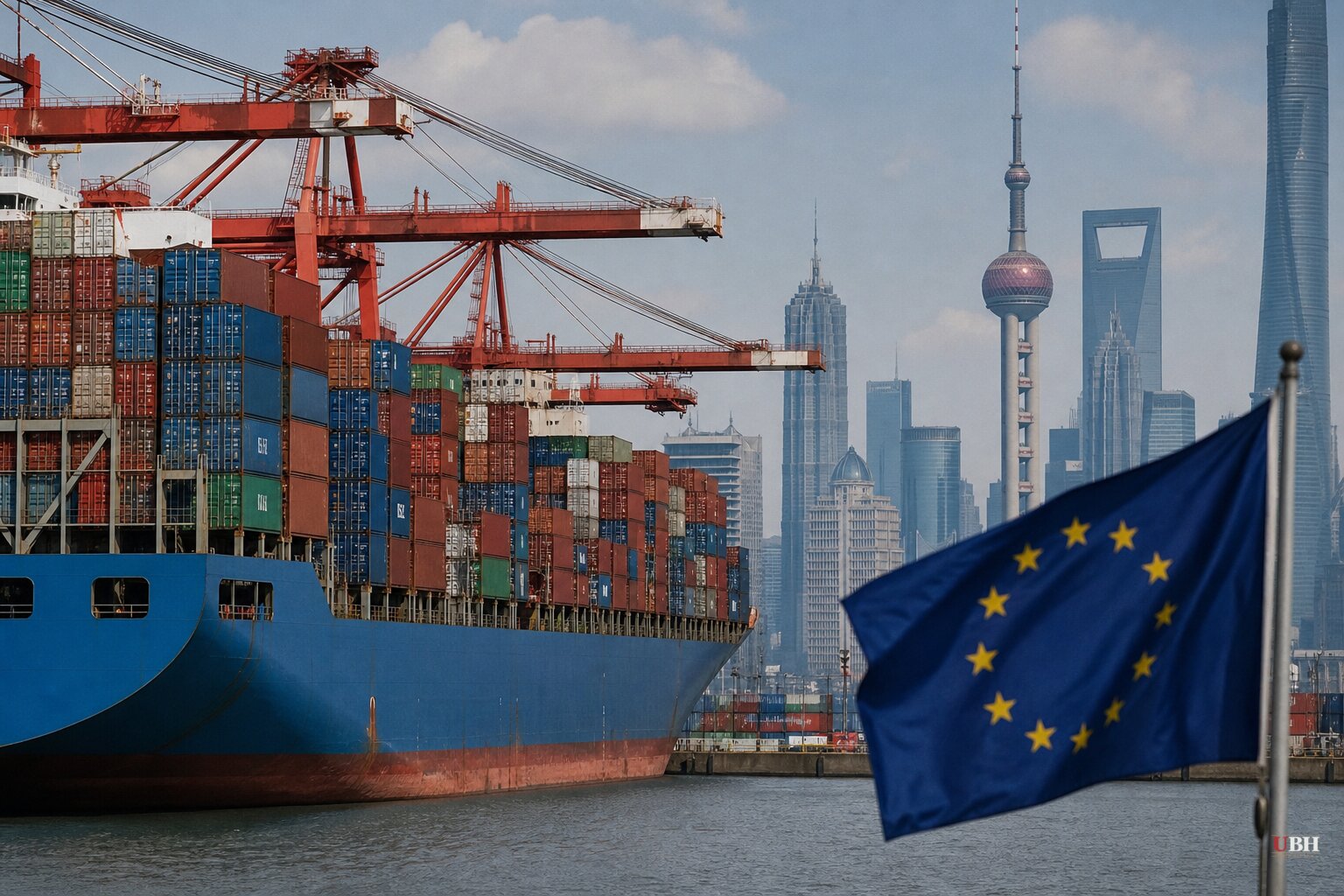
Ursula von der Leyen isn't hiding it anymore. On Thursday the European Commission president told a French business audience that if China won't cut a deal to shrink the EU's trade deficit, Brussels will use "all its trade defence mechanisms."
The numbers explain why she's fed up. The EU's trade deficit with China hit €1 billion a day in 2025, according to the European Commission's own figures cited by Euronews and the International Business Times UK. For the full year, the goods deficit came in at €359.9 billion, according to the Commission's assessment reported by the Epoch Times, which also called the relationship "critically unbalanced" in the Commission's own words. That's up from €312 billion in 2024, according to Breitbart's reporting on EU figures.
It's not getting better. China's customs data show its trade surplus grew against 24 of the EU's 27 member states in July compared to a year earlier, according to the South China Morning Post. Germany's deficit with China jumped 86.5% year-over-year. Poland was up 31.9%, the Netherlands 14.5%, Spain 12.4%, France 4.2%. Sweden's deficit with China quadrupled. Malta's rose 166.6%, Romania's 94.4%, Finland's 93.7%, per SCMP's analysis of the Chinese customs figures.
Eurostat data reviewed by the Epoch Times shows EU imports from China hit €53.9 billion in June alone, up 12.5% from a year earlier, while EU exports to China were just €18.8 billion. Vehicles and parts imports climbed 41% in the first half of the year. Electrical machinery and equipment rose 10.2% to €85.8 billion.
The JD.com Fight Is the Flashpoint
Talks between Brussels and Beijing launched in June, with EU Trade Commissioner Maroš Šefčovič and Chinese Commerce Minister Wang Wentao agreeing to set up a joint monitoring mechanism to track trade flows, according to IndexBox. That cooperation didn't last.
In May, the European Commission opened an in-depth investigation into Chinese e-commerce giant JD.com's proposed €2.5 billion takeover of German electronics retailer Ceconomy, using the EU's Foreign Subsidies Regulation. On August 19, China's Ministry of Justice ordered that no Chinese organization or individual assist with what it called the EU's "unlawful extraterritorial measures," and warned Beijing could retaliate further, according to the International Business Times UK. China's Commerce Ministry has separately called the probe an improper use of EU jurisdiction.
This represents a direct blockade of an EU regulatory investigation. Brussels hasn't backed off. The Commission kept opening anti-dumping cases through the summer, including new duties on Chinese tires and polyamide yarns in July, and a safeguard investigation into specialized silicon steel used in power transformers, according to the Epoch Times.
Von der Leyen said Thursday the EU has opened 30 trade defense investigations in the past year, nearly three times the historical average, and that cheap Chinese imports have risen 45% over five years, according to Euronews.
China's Side of the Argument
Beijing isn't just stonewalling. A China Daily editorial published August 26 argued the EU is confusing symptoms with causes, pointing out the EU actually ran a €199.6 billion goods export figure to China in 2025 (37% higher than a decade earlier) plus a €21.3 billion services surplus. The editorial's argument: Europe's competitiveness problems, high energy costs, fragmented capital markets, slow regulatory decision-making, predate Chinese EV competition and won't be solved by tariff walls.
Slovak Prime Minister Robert Fico made a similar point Tuesday, according to China Daily, urging the EU to treat China as a competitor rather than an enemy to be walled off. Fico has been a consistent outlier among EU leaders on Russia and China policy, and other member states haven't followed his lead.
But an OECD report from June, cited by both the IBT and IndexBox, found Chinese firms received three to eight times more government support than OECD-country firms between 2005 and 2024. This underpins the Commission's core argument: this isn't fair competition, it's subsidized overcapacity getting dumped into Europe.
Belgium Wants a Harder Line
Not everyone in Brussels thinks von der Leyen is moving fast enough. Belgian Prime Minister Bart De Wever has argued European leaders are "so afraid" of China they "don't even dare" name its trading practices as unfair, according to Breitbart's coverage of his remarks. De Wever wants the EU to reduce dependence on China by deepening ties with the US, Japan and India instead.
The Commission has set October as the deadline for concrete results, coinciding with the expiration of a one-year truce over China's rare-earth export controls, according to the IBT. Šefčovič is expected to travel to China before then. If nothing changes, von der Leyen has now put on record that the EU's "trade bazooka," the anti-coercion instrument, is on the table. Whether Brussels actually pulls that trigger or settles for another monitoring mechanism remains to be seen.
Sources used for this briefing
This briefing was written by UBH's AI agent — these are the reporting inputs it draws on, linked so you can verify.


