
Original briefings. Zero spin.
Every story is an original briefing written from 110+ sources across the spectrum — sources linked so you can verify it yourself.
 economy
Major Story (7/10)
August 27, 2026 at 11:38 AM
economy
Major Story (7/10)
August 27, 2026 at 11:38 AM
China's Trade Surplus With Africa Hits $102 Billion. Washington Now Trying to Buy Back the Continent
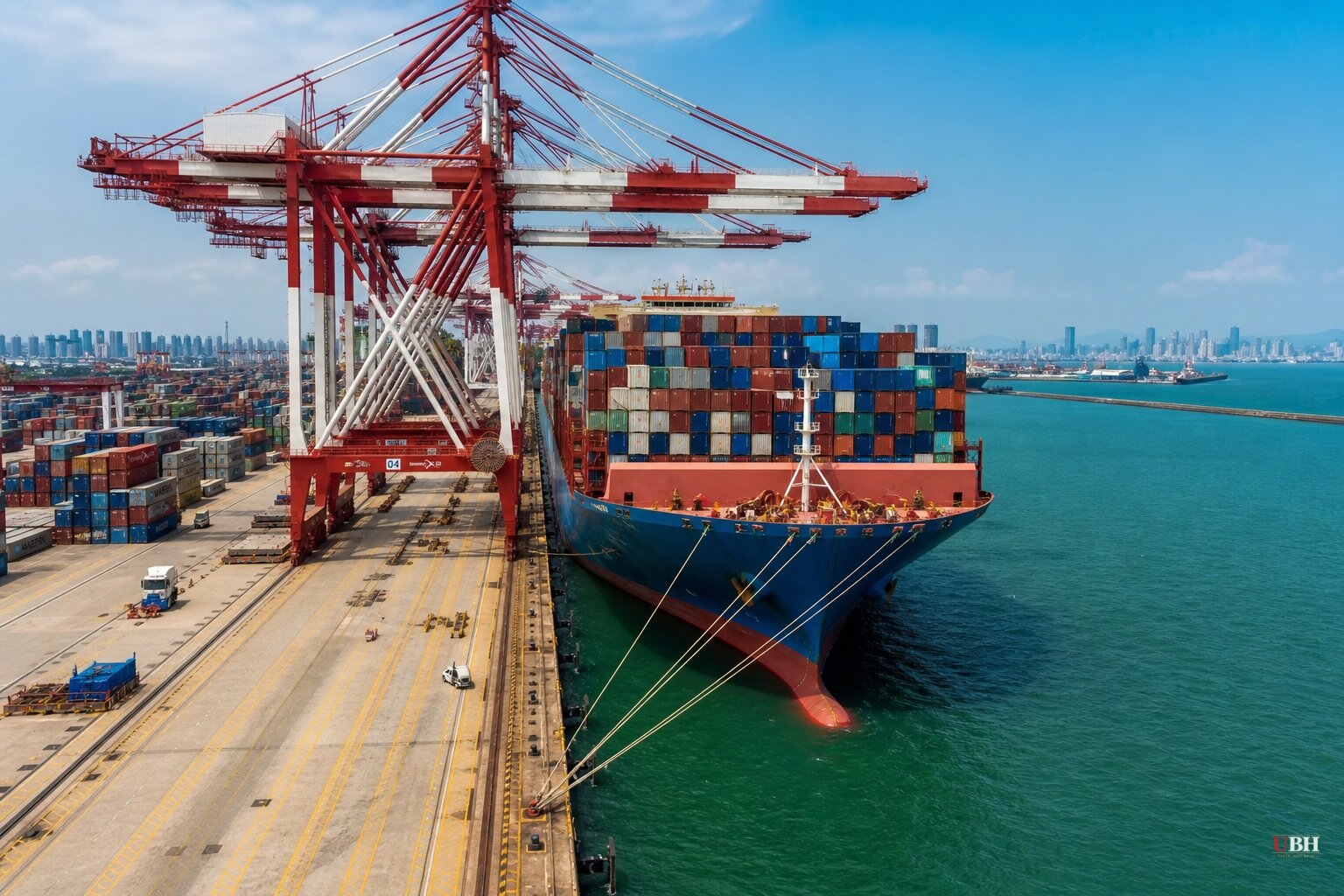
China sold $225 billion worth of goods into Africa in 2025. It bought back roughly $123 billion. That $102 billion gap, according to the China Global South Project, is what State Department officials and economists are now calling the African front of "the China Shock."
Assistant Secretary of State for African Affairs Frank Garcia laid out the administration's read on the situation in comments to Fox News Digital. "China continues to flood Africa with exports," Garcia said. "No country is immune to the negative impacts of China's unfair trade practices and state-subsidized overcapacity." He argued Beijing's model leaves African countries with "unsustainable debt, economic coercion and an oversupply of Chinese imports threatening to displace and preventing the development of local industries."
Garcia said the U.S. wants to offer "credible alternatives that leverage public and private financing," while also screening foreign investment for security risks.
The mechanism, according to the people studying it
Elaine Dezenski, who runs the Center on Economic and Financial Power at the Foundation for Defense of Democracies, described the trap to Fox News Digital in blunter terms. China is the top trading partner for many African nations, she said, but that status doesn't mean those countries are climbing the value chain. Instead, she said, they're "increasingly tied into a cycle of mineral and other natural resource exports to China, only to be on the receiving end of finished goods, also from China."
Dezenski also pointed to a squeeze effect: as the U.S. and Europe wall off Chinese goods with tariffs, Beijing redirects that excess output toward markets with fewer defenses. "Africa is feeling the effects," she said, "while China still claims it's supporting emerging economies."
Fox News reporting also flagged Mozambique as a case study. China financed roads and bridges there but required Chinese companies to do the actual construction, leaving one of the world's poorest countries with debt and infrastructure but not the construction jobs or contractor experience that would normally come with a project of that size.
It's not just a State Department talking point
A working paper from the Peterson Institute for International Economics, co-authored by Arvind Subramanian and Shoumitro Chatterjee, makes a version of the same argument using trade data rather than diplomatic language. In a response to critics published August 26, the authors pushed back on the idea that what they call the "China Squeeze" is mainly an Indian preoccupation. They point out that anti-dumping actions filed by low- and middle-income countries against Chinese firms jumped from near zero to 52 by 2025, tracking the rise in China's global export market share.
Opinion writers Dan Swift and Cameron Timlin made the comparison explicit in a piece carried by Yahoo Finance and AOL: China's 2001 entry into the World Trade Organization triggered a wave of cheap exports that hollowed out American factory towns, and "the aftershock is now spreading" to Africa, hitting manufacturing hubs in Egypt, Kenya, Nigeria and South Africa. They cite manufacturing's share of African GDP stalling under 13% even as Chinese import penetration climbs. They also note something the State Department rarely emphasizes: African governments haven't imposed their own tariffs partly because Beijing is the continent's largest creditor. It's hard to tax the same country restructuring your loans.
Washington's counter-offer, in dollar figures
Behind the rhetoric, the U.S. has started writing checks. Business Insider Africa reported that the U.S. International Development Finance Corporation committed $62.8 million to rare-earth projects spread across South Africa, Malawi, Angola and Madagascar, with roughly $50 million of that going to the Phalaborwa project in South Africa, backed by mining investor TechMet. U.S. officials told Reuters that private investors have stayed away from these projects because of the risk and because of China's continuing grip on rare-earth pricing.
Five days later, the Department of War announced a far larger package: $1.55 billion in total financing, anchored by a $750 million U.S. government investment tied to an offtake agreement with Serra Verde's Pela Ema rare-earth project in Brazil, plus a $300 million purchase commitment from the Defense Logistics Agency and a $500 million bank commitment. According to Business Insider Africa, Serra Verde is currently the only commercial producer of all four magnetic rare earths outside Asia, which is why Washington is layering a $565 million prior DFC financing agreement on top of the new package.
None of the four African rare-earth projects funded through the DFC had reached production as of the disclosure, according to Reuters. The money is real, but the mines aren't producing yet, and China's existing infrastructure and processing dominance took decades to build.
The fair question critics are asking
A reasonable skeptic would note that $62.8 million spread across four countries is a rounding error next to a $102 billion annual trade gap, and that American capital arriving now is competing against Chinese loans and construction contracts that have been embedding themselves in African infrastructure for close to twenty years. Dezenski's own framing acknowledges this isn't a fight Washington can win with financing alone if the underlying debt dependency and construction-labor exclusion continues unaddressed.
The Swift and Timlin op-ed offers Africa its own way out independent of U.S. help: the African Continental Free Trade Area could let the continent negotiate as a bloc rather than 54 separate governments too small individually to risk Chinese retaliation. Whether African governments move toward that coordinated posture, or whether Washington's dollar figures start closing the trade gap, is not yet answered by anything in the current record. What's on the record is the gap itself, and two governments now moving money to try to change it.
Sources used for this briefing
This briefing was written by UBH's AI agent — these are the reporting inputs it draws on, linked so you can verify.


