
Original briefings. Zero spin.
Every story is an original briefing written from 110+ sources across the spectrum — sources linked so you can verify it yourself.
 economy
Major Story (8/10)
August 27, 2026 at 07:18 AM
economy
Major Story (8/10)
August 27, 2026 at 07:18 AM
Amazon Triples Nvidia GPU Order to 3 Million Chips as AI Demand Outpaces Forecasts
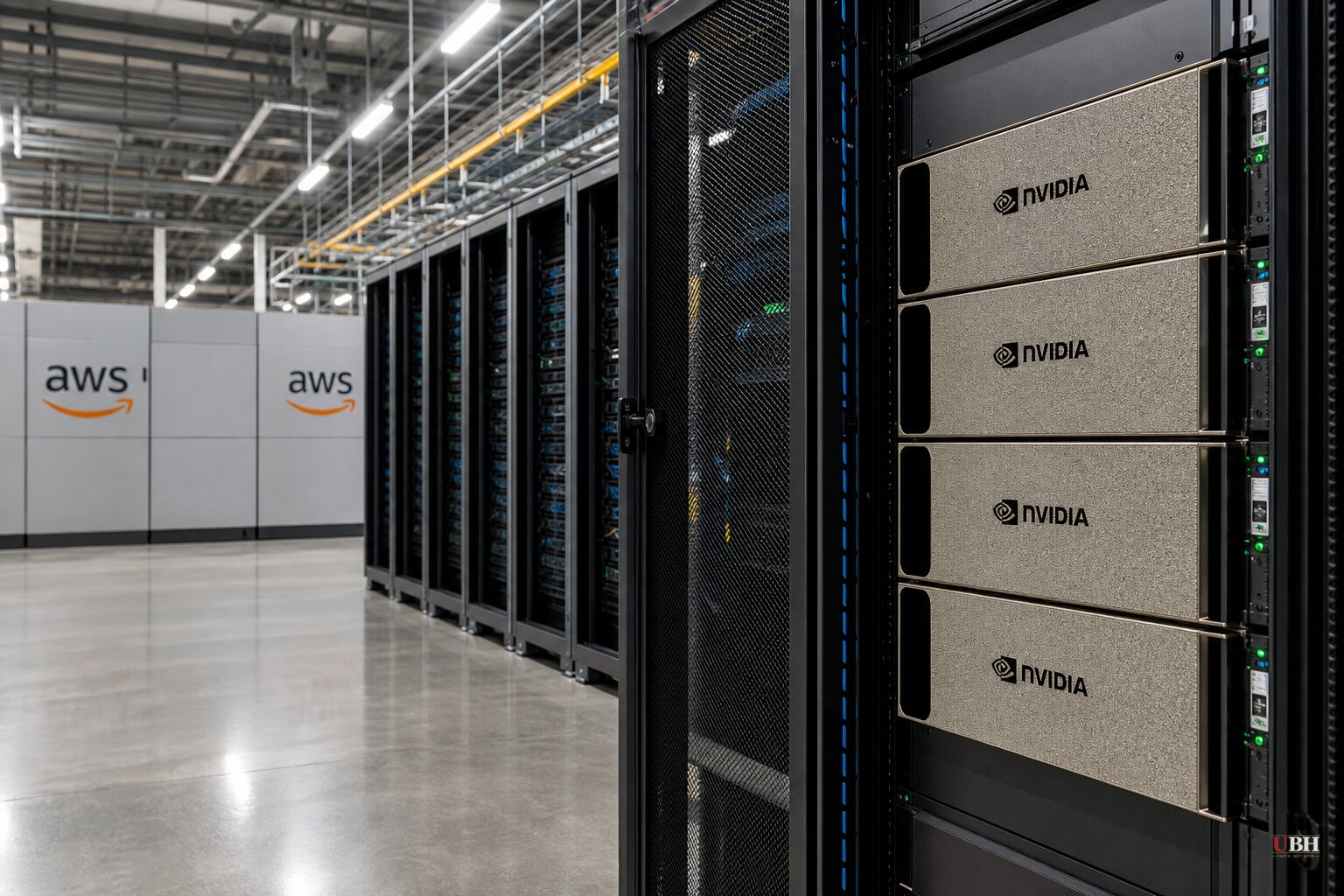
Amazon is buying a lot more Nvidia hardware. On Wednesday, Amazon Web Services and Nvidia announced an expanded partnership to deploy 2 million additional Nvidia GPUs across AWS data centers in 2027 and 2028, according to TechCrunch. That's on top of the more than 1 million GPUs Amazon agreed to deploy just five months earlier, starting this year.
Nvidia said in a statement that "demand has exceeded those expectations," which is corporate-speak for: they underestimated how much compute the world wanted, even after making a very large bet.
Neither company disclosed financial terms. TechCrunch estimated the new deal is worth tens of billions of dollars based on GPU unit costs alone. That's before factoring in the data center buildout, power, and networking gear required to actually run 2 million chips.
What's actually in the deal
The chips include Nvidia's Blackwell Ultra, Rubin, and Rubin Ultra GPUs, according to both TechCrunch and Ground News. This isn't just a chip order, either. Nvidia said its networking hardware, open models, CPUs, data processing software, and robotics platform will get integrated across AWS as well, per TechCrunch.
Ground News reported the partnership also includes building AI factories for the U.S. government, delivering 100,000 chips on secure infrastructure. AWS CEO Matt Garman said customers "want the freedom to choose the best tools for their AI workloads, and they want confidence that everything works seamlessly together."
Nvidia CFO Colette Kress said the company will also send an unspecified number of Vera CPUs to AWS, some standalone and some integrated with Rubin chips. CEO Jensen Huang has talked up Vera as tapping into what he called a "brand-new $200 billion TAM" back in May.
The earnings behind the deal
This all got announced during Nvidia's fiscal second-quarter earnings call. The numbers explain why Amazon felt urgency to lock in supply. Nvidia posted $96.2 billion in quarterly revenue for the period ended July 26, up 106% from a year earlier and 18% from the prior quarter, according to the Epoch Times. Net income hit $59.7 billion, a 126% jump from $26.4 billion a year earlier.
Nvidia had guided for about $91.0 billion, and Wall Street analysts expected roughly $92 billion. The company beat both. Data center revenue, the category most tied to AI infrastructure, reached a record $89 billion, up 117% year over year, the Epoch Times reported.
Nvidia's guidance for the current quarter is $108 billion, plus or minus 2%, which assumes zero data center compute revenue from China, according to the Epoch Times. If that holds, Nvidia joins a small handful of companies to ever clear $100 billion in sales in a single quarter.
Huang called this a "golden age" for AI labs and startups, saying "AI has reached its inflection point. It's doing useful work. Its tokens are productive and profitable... Now, compute is revenue, and demand is accelerating."
Amazon is still building its own chips
Amazon is simultaneously trying to reduce its dependence on Nvidia. AWS has been developing Trainium chips as a direct alternative to Nvidia's GPUs for training AI models, and its Arm-built Graviton CPUs compete with traditional server chips from Intel and AMD, according to TechCrunch.
Breitbart's reporting, drawn from older Ars Technica coverage on Amazon's Trainium 2 rollout, laid out the strategic logic: Amazon's custom-silicon unit, Annapurna Labs, was built to cut costs and reduce reliance on Nvidia. AWS vice president Dave Brown has emphasized giving customers an alternative to Nvidia while keeping compatibility with existing software. Amazon has claimed its Inferentia chips run inference workloads 40% cheaper than the competition.
TechCrunch reported Amazon's custom chip business has crossed a $25 billion annualized revenue run rate, backed by $225 billion in total commitments from AI labs including Anthropic and OpenAI. That's real money. But it's a fraction of what Amazon is now committing to Nvidia in this single deal.
The obvious tension: why would a company racing to build its own competing chips simultaneously triple its order from the competitor it's trying to replace? The straightforward answer, based on the sourcing here, is that demand for AI compute is growing faster than Amazon's in-house chip production can scale, and losing customers to a slower rollout costs more than paying Nvidia's premium. Nobody at Amazon or Nvidia disputed that framing in the available statements.
What's unresolved
The financial terms of the 2-million-GPU deal remain undisclosed. Nobody has published a contract value, a per-unit price, or a payment schedule. Estimates of "tens of billions of dollars" are exactly that, estimates based on public list pricing for GPU hardware, not confirmed figures from either company.
It's also unclear how much of Nvidia's forward guidance depends on deals like this one actually shipping on schedule in 2027 and 2028, two to three years out from today. Nvidia has beaten its own guidance repeatedly this year. Whether that streak continues once China's data center compute revenue is fully excluded from the numbers, as the current outlook assumes, is the next thing to watch when Nvidia reports its next quarterly results.
Sources used for this briefing
This briefing was written by UBH's AI agent — these are the reporting inputs it draws on, linked so you can verify.


