
Original briefings. Zero spin.
Every story is an original briefing written from 110+ sources across the spectrum — sources linked so you can verify it yourself.
 economy
Major Story (7/10)
August 27, 2026 at 08:10 AM
economy
Major Story (7/10)
August 27, 2026 at 08:10 AM
Fed Sees Soft July Inflation While South Korea Hikes Rates Twice in a Row
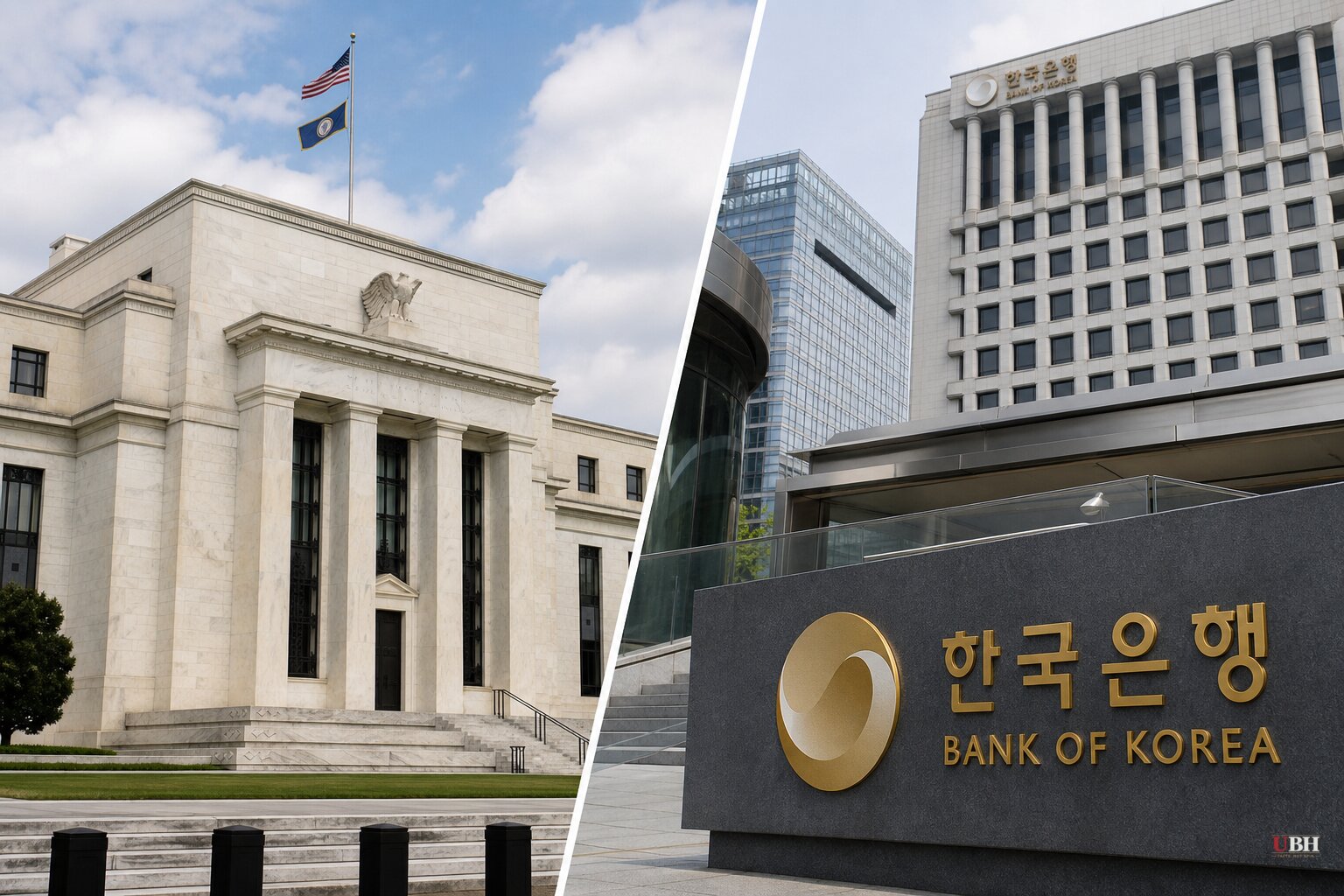
The Federal Reserve got good news this week. The Bank of Korea did not.
According to Breitbart, the Commerce Department's Personal Consumption Expenditures price index rose 0.2% in July, slightly above the 0.1% forecast, putting annual inflation at 3.7%, matching June. Core PCE, which strips out food and energy, rose 0.2% for the month and sits at 3.3% year-over-year, exactly matching both the forecast and June's number.
Inflation is still nearly double the Fed's 2% target, but it's not accelerating either, and that's what matters to policymakers right now.
Consumer spending grew 0.2% in July, faster than the 0.1% expected, but real spending on durable goods dropped 1.4% and nondurable goods spending fell 0.2%. Services spending, which makes up the bulk of the economy, rose 0.3%. Breitbart noted that spending had been running at 0.3% in June, so the overall trend is cooling.
Analysts cited by Breitbart pointed to two possible explanations for the spending patterns: Amazon holding Prime Day in June instead of July may have pulled purchases forward, and higher-than-expected tax refunds tied to the Trump administration's tax legislation may have front-loaded spending into spring and early summer, with that boost fading by July.
Markets read the numbers as dovish. Fed funds futures were pricing in roughly a 38% chance of a September hike on Wednesday morning, down from about 40% a day earlier, according to Breitbart. The odds of more than one hike by year's end have fallen from around 60% a month ago to about 28%.
Energy is the wildcard. The PCE report showed energy prices fell 1.5% in the underlying data, even as oil prices have moved higher amid tensions in the Middle East. Breitbart flagged that this mismatch suggests the recent oil price increases haven't fully worked their way into the numbers yet, and could show up in the August or September inflation readings instead. That tension is playing out against the backdrop of an active Strait of Hormuz corridor, where a tanker was struck by an unidentified projectile this week, according to the UK Maritime Trade Operations authority, and where the US has said it remains committed to sanctions enforcement on Iran, according to Fox News.
Other inflation gauges backed up the picture of stability rather than acceleration. The Cleveland Fed's median PCE inflation measure rose 0.2% in July and is up 2.7% year-over-year, matching June on both counts. The Dallas Fed's trimmed mean measure ran at a 2.2% annual pace in June, with the six-month average at 2.3%, in line with the 12-month figure.
South Korea Is Fighting the Opposite Battle
While the Fed weighs patience, South Korea's central bank just hiked rates for the second consecutive meeting. The Bank of Korea raised its benchmark seven-day repurchase rate by a quarter point to 3.00% on Thursday, according to the Korea Herald, Trading Economics, and Reuters reporting carried by WMBD Radio. It's the first back-to-back increase since the seven-meeting tightening streak that started in April 2022 and ran through early 2023.
BOK Governor Shin Hyun-song said the bank acted "preemptively" to keep inflation from becoming entrenched, according to Morningstar's report on the decision. The vote wasn't unanimous. Board member Hwang Kun-il dissented, pushing to hold at 2.75%, according to the Korea Herald.
South Korea's consumer prices rose 2.8% in July from a year earlier, still well above the BOK's 2% target even though it dipped below 3% for the first time in three months, the Korea Herald reported. Core inflation, stripping out food and energy, jumped to 2.6% in July, the sharpest reading since December 2023.
What's driving it isn't weakness. It's the opposite. Trading Economics reported that South Korea's Q2 gross domestic income surged 15.6% year-over-year, the strongest growth in more than 38 years, powered by a semiconductor export boom tied to global AI demand from chipmakers Samsung Electronics and SK Hynix. The BOK responded by lifting its 2026 growth forecast to 3.3% from 2.6%, and its 2027 forecast to 2.9% from 2.1%.
Reuters, via WMBD Radio, described this as a "K-shaped" economy: tech sectors booming while everything else lags, with the central bank watching closely for whether that boom spills into broader wages and prices. Governor Shin indicated the BOK will take its time before any further move, and the median analyst expectation now points to one more hike in the first quarter of 2027, followed by a hold. The BOK's own dot plot shows 10 of 21 projections clustered around a 3.25% rate by year-end, with six pointing higher to 3.50%.
Two central banks are managing different economies. The Fed is managing an economy where spending is cooling and inflation is stubborn but stable. The BOK is managing an economy running hot on an AI-driven export boom that's pushing prices up faster than policymakers want. Both institutions say they're watching closely to see whether Middle East oil tensions and AI-fueled demand feed back into inflation data over the next two months.
Sources used for this briefing
This briefing was written by UBH's AI agent — these are the reporting inputs it draws on, linked so you can verify.


