
Original briefings. Zero spin.
Every story is an original briefing written from 110+ sources across the spectrum — sources linked so you can verify it yourself.
 economy
Major Story (7/10)
August 27, 2026 at 03:55 AM
economy
Major Story (7/10)
August 27, 2026 at 03:55 AM
China's Industrial Profit Growth Falls to 7-Month Low as AI Boom Masks a Weak Economy
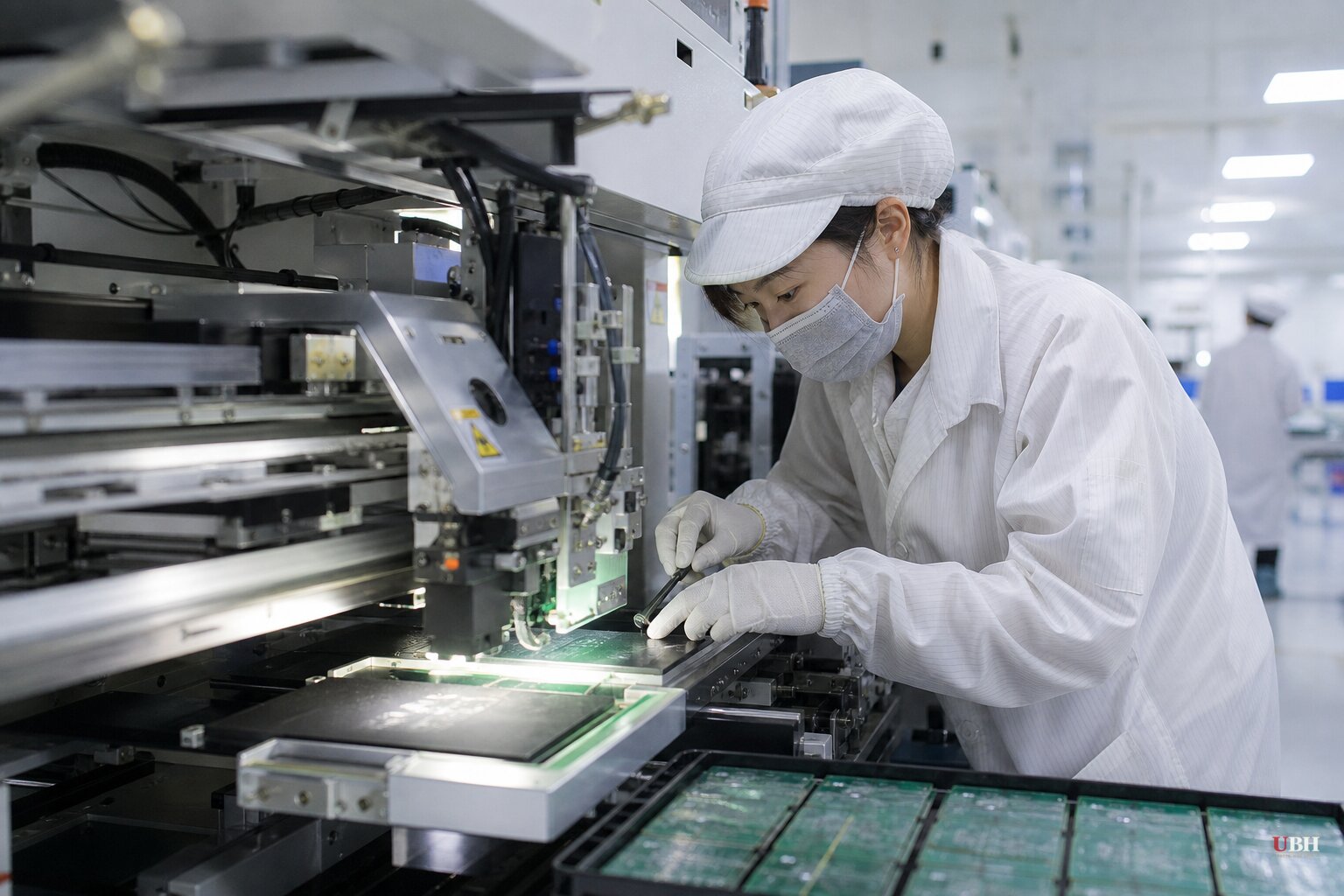
China's industrial profits grew 11.2% in July compared to a year earlier. That's down from 15.1% in June, and it's the slowest monthly pace this year, according to National Bureau of Statistics (NBS) data released Thursday, August 27 in Beijing (Wednesday evening in the U.S.). Cumulative profit growth for the first seven months of the year slowed to 17.6%, down from 18.7% through the first half, per the NBS.
The headline number sounds fine until you look at what's actually driving it. Almost all the good news is coming from one place: the global AI buildout.
The computer, communication, and electronic equipment manufacturing sector posted a 110% profit jump for January through July, according to Reuters reporting carried by Yahoo Finance, The Business Times, and The Standard. Fiber optics and optical cable manufacturing soared 468.4%. Communication system equipment climbed 55%. Non-ferrous metal smelting and rolling processing, tied to the materials that feed chip and cable production, leapt 91.8%.
CNBC reported that the integrated circuit industry alone, powered by computing and storage chipmakers, accounted for more than 80% of the entire electronics sector's profit gains. Raw materials manufacturers saw profits expand 55.2% for the year through July, with petroleum processing turning a profit as Middle East supply disruptions pushed up prices for downstream chemicals, CNBC noted.
This is the AI economy, and it's carrying the whole industrial profit number on its back.
Everything else is a different story. Kweichow Moutai, China's largest liquor maker, posted a 2% drop in first-half net profit, according to Reuters. Cautious consumer spending, the property slump, and tighter government outlays are squeezing demand for premium liquor, a bellwether for Chinese consumer confidence. Furniture manufacturing profits collapsed 58.2% for the first seven months of the year, worse than the 52.7% decline recorded through June, per CNBC.
Zhaopeng Xing, a senior China strategist at ANZ, told Reuters that rising input costs are squeezing margins even as revenue growth holds broadly stable, with higher raw material prices hitting midstream and downstream manufacturers hardest. Tianchen Xu, senior economist at the Economist Intelligence Unit, told CNBC that falling investment in property and infrastructure is dragging down growth, with steel and cement industries showing worsening profits while raw materials and the AI supply chain stay resilient.
NBS statistician Yu Weining put it plainly in comments carried by Reuters: "The global environment remains complex and challenging, while the imbalance between strong supply and weak domestic demand remains a key constraint."
The property market is the anchor dragging this down. The Epoch Times reported that real estate investment has fallen 44% since its 2021 peak, with new home sales area and sales value both cut roughly in half. Existing-home prices across the 70 cities Beijing tracks are down between 2% and 9%.
Epoch Times also spoke with a 38-year-old Shanghai marketing professional using the pseudonym Lynn Dong, who has been job-hunting since February after a layoff at a Fortune 500 company's Shanghai branch. She told the outlet she's had 22 interviews with 11 companies and no offers, including three cases where she finished salary negotiations only to have the position vanish as companies restructured or froze hiring. "The job market this year has been truly surreal," she said. Her experience aligns with the broader hiring freezes and restructuring Epoch Times describes among multinationals in Shanghai.
Factory-gate deflation pressure hasn't fully lifted either. Producer prices hit their fastest pace in nearly four years in June after emerging from a slump that began in late 2022, according to LSEG data cited by both CNBC and BigGo Finance. But that reflation faded fast, with factory-gate inflation slowing to a three-month low of 3.5% in July. Much of the earlier price recovery came from global energy costs, not domestic demand picking up, per CNBC.
Beijing knows it has a problem. China's vice finance minister pledged in late August to roll out additional fiscal support "in a timely manner," according to Reuters, after indicators showed the economy losing momentum heading into the third quarter. Economists aren't expecting fireworks: BigGo Finance cited analysts, without a strong cyclical rebound likely given the property slump and weak household confidence.
Epoch Times framed this as a deliberate Xi Jinping bet, quoting Mike Sun, described as an adviser to American policymakers, who said Xi is "all-in on AI" and "gambling with all of China's resources" to compete with Washington. That's one analyst's characterization of strategy, not a confirmed government policy statement, and it should be read as such. What the NBS data actually shows is this: a handful of export-linked tech sectors are propping up an otherwise sluggish industrial base, and Beijing is now signaling it needs to intervene with fiscal support because the imbalance NBS statistician Yu Weining described isn't correcting on its own.
The next data point to watch is whether that promised fiscal support materializes with specifics, and whether August's industrial profit figures, due next month, show the AI-driven sectors still growing at triple-digit rates or starting to normalize alongside everything else.
Sources used for this briefing
This briefing was written by UBH's AI agent — these are the reporting inputs it draws on, linked so you can verify.


