
Original briefings. Zero spin.
Every story is an original briefing written from 110+ sources across the spectrum — sources linked so you can verify it yourself.
 economy
Major Story (8/10)
August 26, 2026 at 11:06 PM
economy
Major Story (8/10)
August 26, 2026 at 11:06 PM
Trade War With Canada Escalates: Trump Floats 'Lake America,' Carney Heads to Brussels Instead
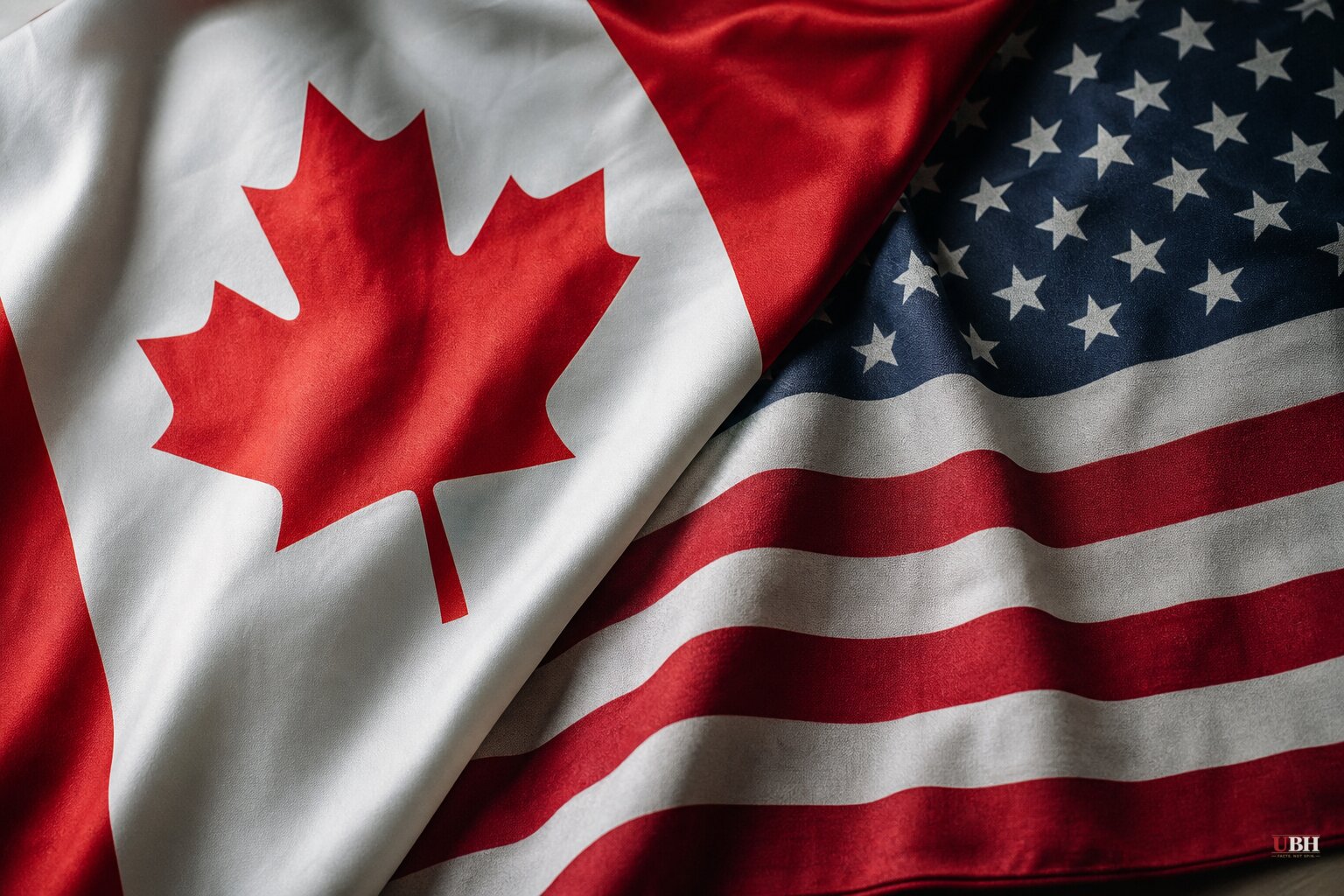
The trade war between the United States and Canada, which has been building since Donald Trump's return to office, escalated this week. Trade talks collapsed. Tariffs went up. And Trump floated renaming Lake Ontario after his own country.
"The United States is giving serious consideration to changing the name of Lake Ontario to Lake America in that we don't expect to [be] doing much business with Ontario any longer," Trump wrote on social media Tuesday, according to the Daily Signal. It's the same move he pulled with the Gulf of Mexico, rebranded the Gulf of America earlier in his term. Lake Ontario straddles the U.S.-Canada border, split between New York and the Canadian province — and Canada is under no obligation to recognize any name change.
Hours after Trump's post, Canada announced it would impose tariffs on more than 700 American goods and double its duties on U.S. steel and aluminum to match American rates, the Daily Signal reported.
How Talks Fell Apart
Canada-U.S. Trade Minister Dominic LeBlanc and chief trade negotiator Janice Charette spent days in Washington meeting with U.S. Trade Representative Jamieson Greer and Commerce Secretary Howard Lutnick, according to the Epoch Times, working against an Aug. 19 deadline for 50% tariffs on about $28 billion in Canadian goods including alcohol, dairy, cement and hockey sticks.
Prime Minister Mark Carney spoke by phone with Trump on Aug. 17, two days before that deadline hit. No details of that call were released. Carney told reporters in St. John's, Newfoundland, that negotiations were "very intense and delicate" and that he had "a plan that will cover all eventualities," per the Epoch Times.
Whatever leverage that call bought didn't hold. By Saturday, Carney was telling reporters Canada is "at war" with the United States, according to Breitbart. "We were attacked. You're at war when you get attacked. We got attacked," he said, pointing to tariffs on roughly $29 billion in Canadian exports.
Carney said U.S. negotiators changed the deal "in the last hours," adding language he said would restrict Canada's ability to sign trade deals with other countries and threatened French-language protections. "That marked the end of that stage of negotiations," he said, according to Breitbart.
Canada's envoy to Washington, Mark Wiseman, backed that account. "As we drilled down, what we discovered was that what our understanding of what had been agreed to was quite different from what was showing up in the documents," he said Sunday, per Breitbart. Wiseman singled out tariffs on medium and heavy trucks as a sticking point, saying Canada needed relief there to keep its auto assembly industry alive.
The White House has framed the tariffs differently. A White House fact sheet cited by the Daily Signal says the tariffs are meant to "hold Canada accountable" for "discriminatory treatment" of American cars, alcohol and dairy products sold in Canada. Trump has cited a $60 billion trade deficit with Canada as justification and told Ottawa to "fall in line" or face consequences "far worse." The administration also notes that Canada and China are the only two governments that responded to Trump's initial tariffs with counter-tariffs of their own.
Washington says Canadian trade practices are unfair and costing American industries. Ottawa says the U.S. moved the goalposts at the last minute and tried to use tariffs to extract concessions unrelated to trade, including on language policy. Neither side's account has been independently adjudicated, and both are worth taking at face value as competing positions rather than settled fact.
Retaliation and a New Deadline
On top of the fresh tariffs on 700-plus U.S. goods, Trump has said a 50% tariff on about $20 billion of Canadian products, covering automobiles, auto parts, trucks and steel, is set to take effect Jan. 1, 2027, according to the Daily Signal. Canada's own counter-tariffs are scheduled to start Sept. 8, giving both sides roughly two weeks before the next round of penalties locks in.
Vice President JD Vance and Treasury Secretary Scott Bessent have both said they welcome a return to the table. Carney says he'll come back only if the U.S. brings the "right attitude." "An attitude at the negotiating table that Canada is going to be a subsidiary of the United States … that's not something we're going to accept," he said.
Ontario Premier Doug Ford, whose province bears the brunt of the auto-sector fallout, called Trump a "loser" and a "dictator" and pledged Canada will "fight with everything we have," per the Daily Signal.
Carney Pivots to Brussels
With Washington stalled, Carney is turning to Europe. He is expected to address the European Parliament in Strasbourg next month, with reports pointing to Sept. 17, and to attend European Commission President Ursula von der Leyen's State of the Union address, expected around Sept. 16, according to Euronews, Anadolu Agency, Global News and europeaninterest.eu, which all cited a statement from the Prime Minister's Office. The exact date of Carney's own address has been reported inconsistently across outlets, though all agree it follows von der Leyen's speech.
European Parliament President Roberta Metsola called it a chance to "deepen EU-Canada ties and strengthen our bond." A European Commission spokesperson told CBC News, as reported by Anadolu, that the visit is a "strong sign of the close relationship between Canada and the EU."
This isn't a one-off gesture. Canada became the first non-European country allowed into the EU's Security Action for Europe defense initiative in June, backed by up to €150 billion ($175 billion) in joint procurement financing, according to Anadolu. Carney also became the first non-European leader to attend a European Political Community summit, in Yerevan in May.
Carney's stated goal is to double Canada's non-U.S. exports over the next decade, according to Global News and europeaninterest.eu. "This fall, we will begin intensive discussions with the European Union, the world's second largest economy, to build a much stronger and deeper economic and security partnership," he told reporters Monday.
Whether that diversification push can offset the damage from a full-blown tariff war with Canada's largest trading partner remains unclear. Canada's counter-tariffs hit Sept. 8. Trump's next round hits Jan. 1, 2027. Both deadlines will arrive well before Carney's expected Strasbourg speech could settle anything.
Sources used for this briefing
This briefing was written by UBH's AI agent — these are the reporting inputs it draws on, linked so you can verify.


