
Original briefings. Zero spin.
Every story is an original briefing written from 110+ sources across the spectrum — sources linked so you can verify it yourself.
 economy
Major Story (7/10)
August 27, 2026 at 07:36 AM
economy
Major Story (7/10)
August 27, 2026 at 07:36 AM
Canadian Premiers Split Over Using Oil and Potash as Trade War Leverage
Canada's next round of dollar-for-dollar tariffs on roughly $20 billion in U.S. goods takes effect September 8. Before that deadline hits, Canadian premiers are airing a public disagreement about which weapons Ottawa should be allowed to use.
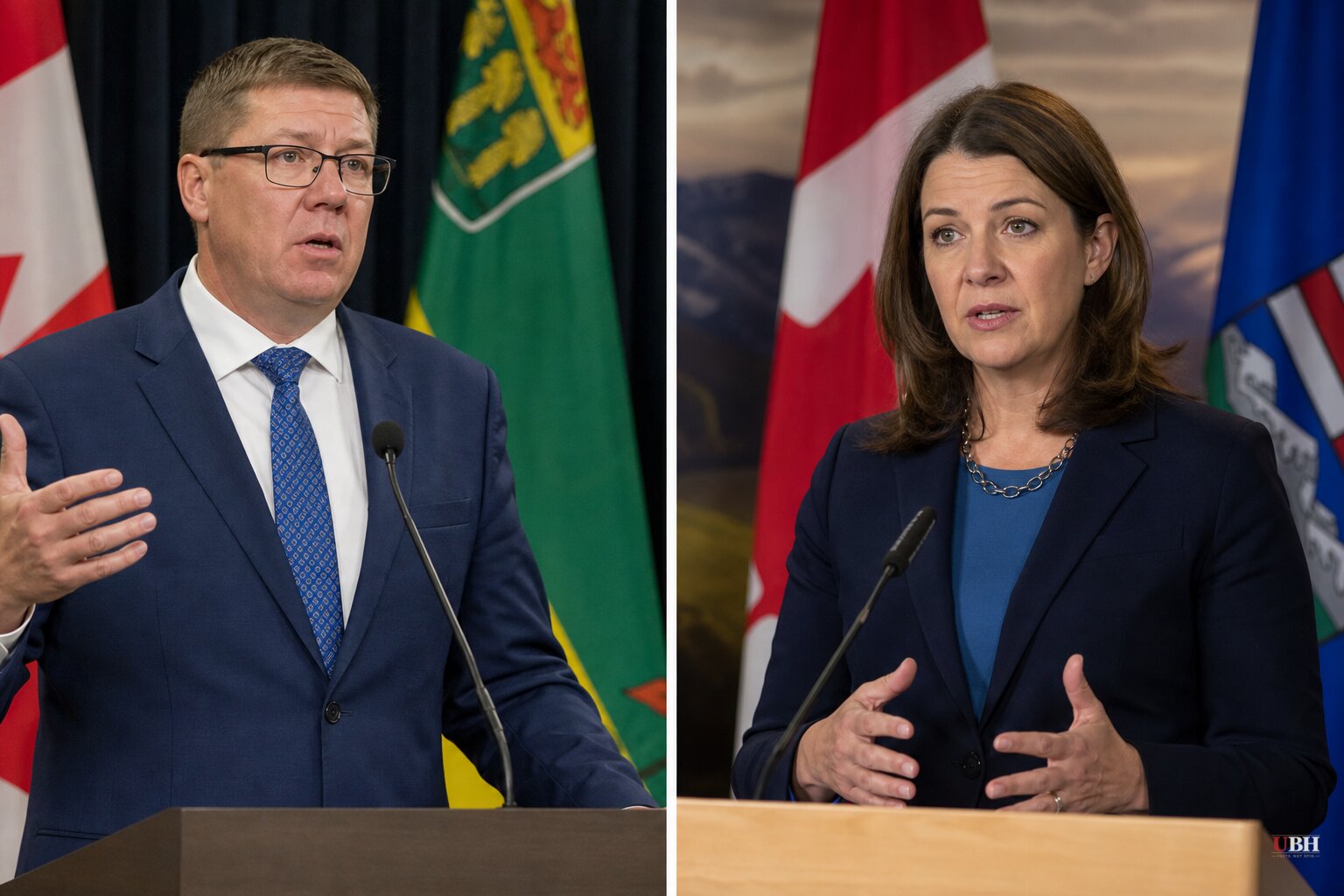
Saskatchewan Premier Scott Moe drew a hard line Wednesday. Speaking at a press briefing, he said his province "cannot and will not support" any export tariff on natural resources shipped to the U.S. He specifically named oil and potash.
Canada supplied about 40% of global potash exports in 2024, according to Canadian government data, and 53% of that went to the U.S. Moe warned that taxing it would just push American buyers to other suppliers and cost Canadian jobs, calling the idea a policy that might "make us feel good at the moment" but backfire in practice.
He's not alone. Alberta Premier Danielle Smith, according to the Associated Press, called cutting off or taxing Alberta crude exports potentially "a more disastrous policy decision" than almost anything else Canada could do, given how much the province's economy depends on those sales.
Ontario Premier Doug Ford disagrees. CityNews Vancouver reported that Ford has pushed the federal government to use oil, gas, potash and critical minerals as leverage at the table, and after Trump's latest tariff threats, called on Prime Minister Mark Carney to consider cutting off supply. Asked this week whether he'd still consider shutting off Ontario electricity exports to the U.S., Ford told reporters "everything is on the table" but said he'd need other premiers on board first.
The White House has so far exempted energy and potash from its 50% tariffs on Canadian goods, which took effect August 22 on about $20 billion worth of imports. Trump posted this week that "WE DON'T NEED CANADA, THEY NEED US," but in the same stretch acknowledged, in his own words reported by the Associated Press, that "this country desperately needs aluminum" and "we get it all from Canada for the most part."
The numbers back that up. Roughly 4 million barrels of Canadian crude cross the border daily, according to the Associated Press, equal to nearly 20% of total U.S. petroleum consumption per the U.S. Energy Information Administration. McGill University political science professor Daniel Béland called Trump's claim that the U.S. doesn't need Canada "absolutely false," citing oil, natural gas and integrated auto manufacturing.
Energy is also the reason the U.S. runs a goods deficit with Canada at all. The Associated Press reported that without energy, the U.S. would have posted a trade surplus with Canada last year; energy alone accounted for more than the entire $48.3 billion goods gap. The White House has cited that $50 billion annual figure as proof of an unfair relationship, without noting it's mostly the U.S. buying discounted Canadian crude to fuel Midwest refineries built specifically to process it.
Not every premier is picking a fight. Manitoba Premier Wab Kinew, while calling Trump a "bad person" who is "erratic" and "not to be trusted" in comments reported by the Associated Press, said his province may still restore U.S. alcohol sales at Carney's request as part of a "Team Canada" approach to closing a deal. Kinew argued Canada has leverage and should keep pushing, saying Trump is "about to get slaughtered in the midterms," but stopped short of blocking the alcohol concession.
Eight of Canada's ten provinces currently restrict U.S. alcohol sales, retaliation that has become one of the more persistent irritants in negotiations, according to the Associated Press. Dominic LeBlanc, the federal minister leading trade talks, said this week that Canada and the U.S. are "very close" to an agreement, though neither side has released terms.
Breitbart's coverage frames Carney's approach as capitulation, pointing to Canada's October decision to drop retaliatory steel and aluminum tariffs on the U.S. and China as evidence the "elbows up" rhetoric was hollow. But that sits awkwardly next to the fact that new 50% U.S. tariffs took effect this month and Canada is preparing another round of retaliation for September 8, meaning the relationship has escalated again since October, not settled into the truce Breitbart's framing implies.
What's unresolved: whether Ottawa will side with Moe and Smith's resource carve-out or Ford's everything-on-the-table approach, and whether LeBlanc's "very close" deal materializes before the September 8 retaliation deadline arrives. Neither side has released draft terms, and no timeline beyond "close" has been made public.
Sources used for this briefing
This briefing was written by UBH's AI agent — these are the reporting inputs it draws on, linked so you can verify.


