
Original briefings. Zero spin.
Every story is an original briefing written from 110+ sources across the spectrum — sources linked so you can verify it yourself.
 economy
Major Story (8/10)
August 27, 2026 at 05:44 AM
economy
Major Story (8/10)
August 27, 2026 at 05:44 AM
Canada Targets Battleground States With New Tariffs as Trump Doubles Down on Auto Duties
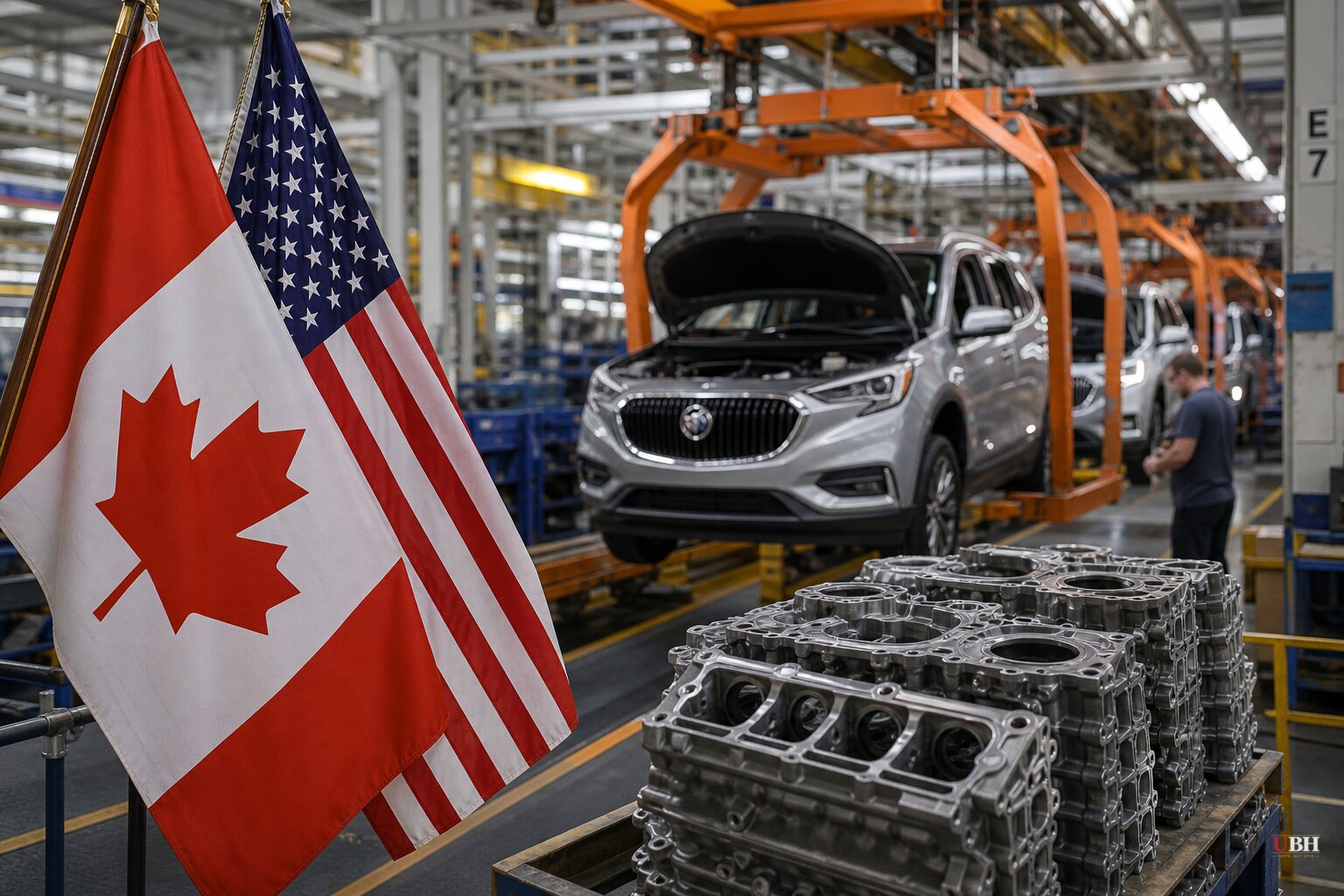
Canada isn't hiding the ball. Industry Minister Melanie Joly said outright on Tuesday, August 25, that Canada's new retaliatory tariffs are built to pressure specific American states. "We are picking products that will target states in the U.S.," Joly said, according to CBS News. "We're being wise and strategic to put political pressure, and that's why we think it's the right thing to do right now."
Canada's admission about interfering in U.S. domestic politics through trade policy is unusually blunt for a foreign government. It's working exactly as designed to generate headlines about vulnerable Senate races.
The numbers: Canada is slapping tariffs of up to 50% on roughly $27.6 billion (CA$20 billion in earlier figures cited by CBS News) worth of American goods starting September 8, according to the CBC. The list covers more than 800 product categories, per CBS News, and more than 700 by Courthouse News Service's count, hitting everything from cheddar cheese and dairy to steel, aluminum, tools, appliances, and farm equipment.
Why These States, Specifically
William Ridley, an economist at the University of Illinois Urbana-Champaign, told Courthouse News Service the tariff list isn't random. "They're not just casting out a wide net; they're going after products that are exported from politically sensitive or battleground states," Ridley said. "I think the goal here is to impose pressure or impose pain from a political angle of attack."
Michigan, Indiana, Ohio, Alaska, and Maine are the states most likely to feel it, according to Courthouse News and PBS. Michigan and Indiana have large manufacturing sectors shipping steel, aluminum, and auto parts north. Wisconsin and Vermont dairy producers are exposed too. North Dakota trades more with Canada than any other state by share of its economy, but CBS News notes its exports are mostly soybeans and wheat, which are exempt from the new duties.
Ridley added that while President Trump himself may not weigh political fallout heavily, "Republicans in particular are aware of what this might do to their electoral prospects."
Frédérick Gagnon of the Raoul-Dandurand Chair was more skeptical that Trump cares about state-level politics at all. "I honestly don't know if this is the kind of argument, the kind of issue that influences the president of the United States," Gagnon told Courthouse News.
The Collapse That Started It
Trade talks between Washington and Ottawa broke down on August 21. New U.S. tariffs of 50% on about $20 billion in Canadian goods took effect August 22, after being delayed a few days to allow last-ditch negotiations, according to the Epoch Times. Those U.S. duties hit roughly 5% of Canadian exports, covering dairy, alcohol, honey, and hockey sticks.
Prime Minister Mark Carney said he told his team to walk away because the American offer "asked too much and offered too little." His three sticking points, per the Epoch Times: Washington's refusal to include medium- and heavy-duty trucks in tariff relief, U.S. demands to restrict Canada's French-language content and labeling rules, and American attempts to limit Canada's ability to strike trade deals with other countries.
Carney didn't specify exactly what the U.S. wanted restricted on outside trade deals. He also said U.S. negotiators pushed threats against "Quebec culture" during the 11th-hour talks, according to Breitbart.
Trump's framing is the mirror image. "Canada has been ripping off the United States of America for years," he wrote on Truth Social, citing a $60 billion trade deficit and calling Canada's tariffs on U.S. dairy and farm products unsustainable.
On Monday, August 24, Trump escalated further, announcing that tariffs on Canadian cars, trucks, auto parts, and steel will jump from 25% to 50% starting January 1, 2027, absent a deal.
Vance's Pitch in Maine
Vice President JD Vance took the argument directly to voters in Brewer, Maine, on Monday, arguing Canada treats Chinese goods better than American ones. "They treat Chinese goods more fairly than they do the goods that come from the people of Maine: It's insanity," Vance said, according to Fox News. He said the U.S. had been close to a deal before Canada brought "unreasonable last-minute demands."
Maine's Republican Sen. Susan Collins, one of the most endangered incumbents this cycle, broke with the administration. "Imposing new tariffs on Canada is a mistake," Collins said while campaigning, according to PBS, pointing to lobsters, blueberries, and lumber as Maine exports at risk.
Michigan Democratic Senate nominee Abdul El-Sayed went further, accusing Trump of "escalating a trade war with Canada for his own vanity" and calling his GOP opponent, former Rep. Mike Rogers, a "rubber stamp." A third of Michigan's exports go to Canada, per PBS.
Marc Short, a former adviser to Vice President Mike Pence, called the situation "a political trap for Republicans," telling PBS that lawmakers from agricultural states face pressure to defend their voters even at the risk of crossing Trump.
The Cost Is Already Landing
This isn't theoretical for businesses. Derek Friesen, who owns PhiBer Manufacturing in Manitoba, told the CBC that his company imports trailer frames from Iowa. Starting September 8, those frames face new tariffs. Friesen said the frames make up 70% of his sales, and the price hike could make the trailers unsellable. "Farms can't absorb another big increase like that," he said.
Ontario Premier Doug Ford has floated cutting electricity exports to the U.S. as further leverage, after previously imposing a 25% surcharge on electricity sold to three American states, according to Breitbart. Trump warned of "far worse" retaliation if Ford follows through.
Trump's own trade team is trying to lower the temperature publicly. His top trade official told PBS, "This is something where we don't actually expect a huge impact," a notably calmer tone than the president's own Truth Social posts predicting Canada will come crawling back because "WE DON'T NEED CANADA, THEY NEED US."
Canada's counter-tariffs take effect September 8. The 50% U.S. auto and steel tariffs are set for January 1, 2027, unless a new deal gets done before then. Whether Collins, Rogers, and other border-state Republicans can survive the political fallout in November's midterms remains the open question neither side has an answer to yet.
Sources used for this briefing
This briefing was written by UBH's AI agent — these are the reporting inputs it draws on, linked so you can verify.


