
Original briefings. Zero spin.
Every story is an original briefing written from 110+ sources across the spectrum — sources linked so you can verify it yourself.
 economy
Major Story (7/10)
Event date: August 25, 2026
economy
Major Story (7/10)
Event date: August 25, 2026
Putin Lets State Seize Damaged Refineries as Ukraine's Drone Strikes Pile Up, While India Chases $100 Billion in Russia Trade
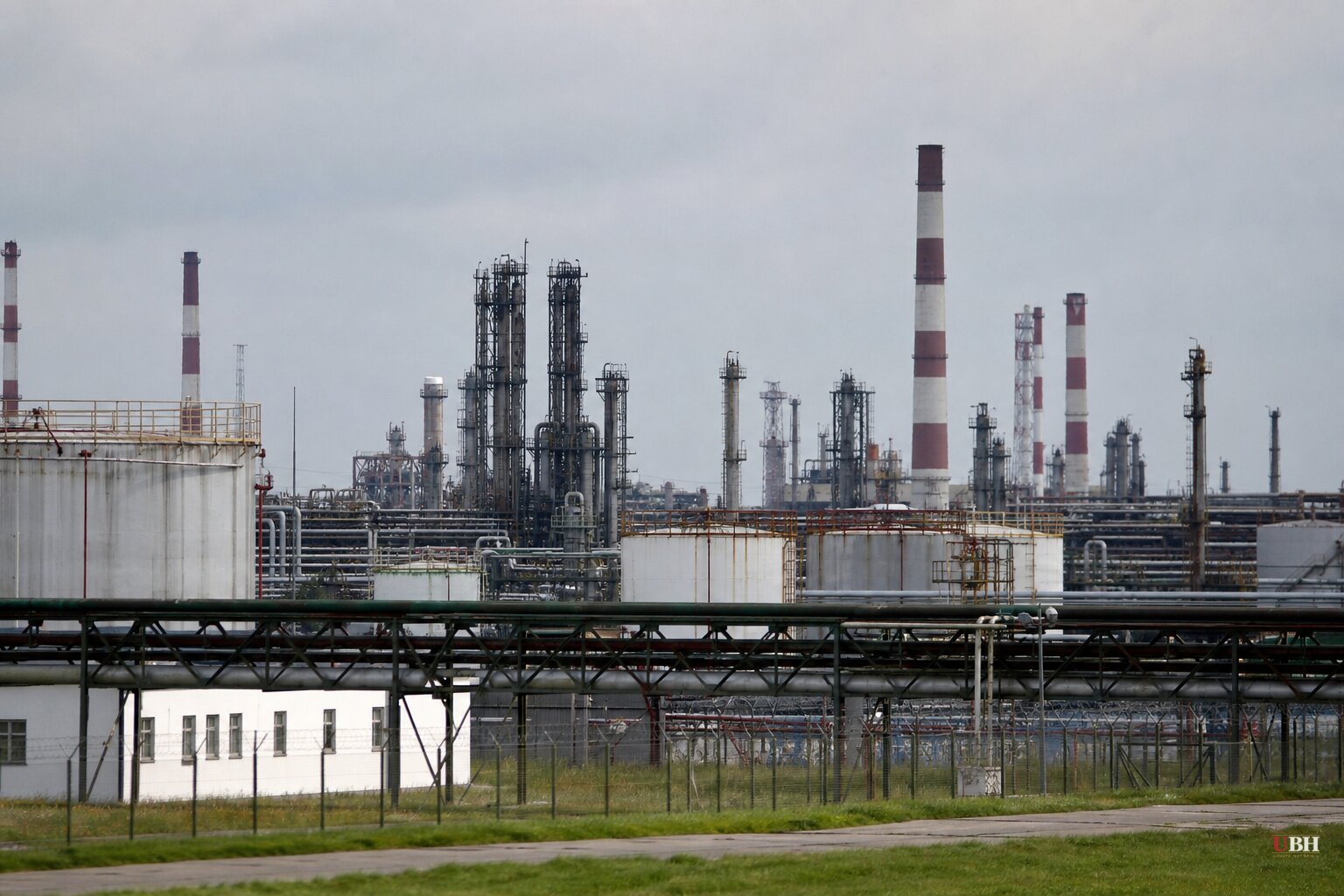
Vladimir Putin signed a decree on August 24 giving the Russian state authority to temporarily take control of critical infrastructure whose private owners fail to protect it from drone attacks or rebuild it afterward, according to the Associated Press and Epoch Times. The decree took effect Monday and covers energy facilities, industrial sites, communications infrastructure, and logistics hubs.
Kremlin spokesman Dmitry Peskov told reporters Tuesday that Russia faces "an obvious threat of drone attacks" and that business owners often don't take anti-drone safety seriously enough. "Given the threat to vital economic infrastructure, we must take measures," he said, according to the AP.
First Deputy Prime Minister Denis Manturov, who also signed the decree, was explicit that this is not nationalization. "This mechanism does not envisage widespread application, targeted and carefully considered decisions will be made at the highest level," Manturov said Aug. 24, according to Russian state news agency TASS as cited by Epoch Times. He said the state will manage security fixes at troubled enterprises, not seize ownership or dispose of assets.
The decree allows the state to take over property, shares, and financial assets, with the specific exception of the power to sell or dispose of that property, per Epoch Times' reading of the text. Moscow can run the place. It just can't flip it. For now.
Why Now: Refineries Getting Hit Again and Again
The timing lines up with a stretch of major losses for Russia's energy sector. Ukraine's General Staff said its forces struck the Afipsky oil refinery in Krasnodar region overnight into Tuesday, sparking a fire, according to the AP. Krasnodar Gov. Veniamin Kondratyev confirmed the fire. A separate strike hit the Novoshakhtinsk refinery in Rostov region and halted operations there, according to Rostov Gov. Yuri Slyusar.
Those aren't isolated incidents. Epoch Times reported Ukrainian forces have hit the Afipsky plant several times in recent months as part of a broader campaign against Russian refineries, including the Ryazan refinery, one of the country's largest, plus oil platforms in the Caspian Sea and warehouses belonging to Russian e-commerce giants Wildberries and Ozon.
Russian political analyst Abbas Gallyamov, a former Putin speechwriter, offered a blunt read on Telegram: refinery owners hit three to five times are increasingly reluctant to keep paying for repairs. "Why spend billions if they're going to get hit again tomorrow?" he wrote, as quoted by the AP. His take on the decree's real function: it's an ultimatum. Fund the rebuild yourself, or the state takes it over.
That's a plausible read given Russia's fiscal position. The AP noted the government has already raised taxes and increased domestic borrowing to manage its budget deficit as the war drags into its fifth year. Taking over profitable-but-damaged assets could bring in revenue. But taking on the repair bill for facilities that keep getting bombed could become a financial sinkhole for the state instead of private owners.
Meanwhile, India Is Doubling Down on Russian Trade
While Ukrainian drones were hitting refineries, Indian External Affairs Minister S. Jaishankar was in Moscow this week for the 27th session of the India-Russia Inter-Governmental Commission, co-chaired with Manturov. The message from New Delhi is clear: more trade, not less.
Jaishankar told the commission that bilateral trade in goods grew from roughly $13 billion in 2021-22 to nearly $60 billion in 2023-24, according to India Shipping News. Angel One and The Tribune India cited more recent Indian government figures putting 2025-26 trade above $60 billion, with both countries targeting $100 billion by 2030. Manturov said trade rose 8% in the first half of 2026.
The trade imbalance has ballooned right alongside the trade volume, from $6.6 billion to over $50 billion, according to India Shipping News. India buys enormous volumes of discounted Russian crude, but Russia doesn't buy nearly as much back. Jaishankar called fixing that gap "one of our foremost priorities" and pushed for removing non-tariff barriers, strengthening payment systems, and finishing the long-running free trade talks between India and the Russia-led Eurasian Economic Union.
Those FTA talks, which started in August last year, are now at an "advanced stage," Manturov told Jaishankar, according to Angel One. The two sides are also discussing local-currency settlement to route around Western sanctions on the dollar-based system, joint hydrocarbon extraction projects, and cooperation on non-ferrous metals and mining, per Angel One and russiaspivottoasia.
A sanctions bill targeting countries that buy Russian oil has cleared the U.S. Senate, according to russiaspivottoasia, and India has consistently defended its Russian crude purchases as a matter of energy security for its 1.4 billion people, not political alignment with Moscow. Whether Washington actually enforces steep tariffs on India over that oil, and whether India's $100 billion target survives contact with U.S. sanctions law, is not yet resolved. Putin is scheduled to visit India next month for the BRICS summit, where trade and a possible Su-57 stealth fighter deal are expected to come up, according to russiaspivottoasia. Ukraine's drone campaign is now hitting Russia's economy where it actually hurts: the ability to sell oil to buyers like India in the first place.
Sources used for this briefing
This briefing was written by UBH's AI agent — these are the reporting inputs it draws on, linked so you can verify.


