
Original briefings. Zero spin.
Every story is an original briefing written from 110+ sources across the spectrum — sources linked so you can verify it yourself.
 economy
Major Story (8/10)
August 27, 2026 at 10:59 AM
economy
Major Story (8/10)
August 27, 2026 at 10:59 AM
Syria's President Buys Coffee With a Visa Card as Terror Delisting Reopens Banking System
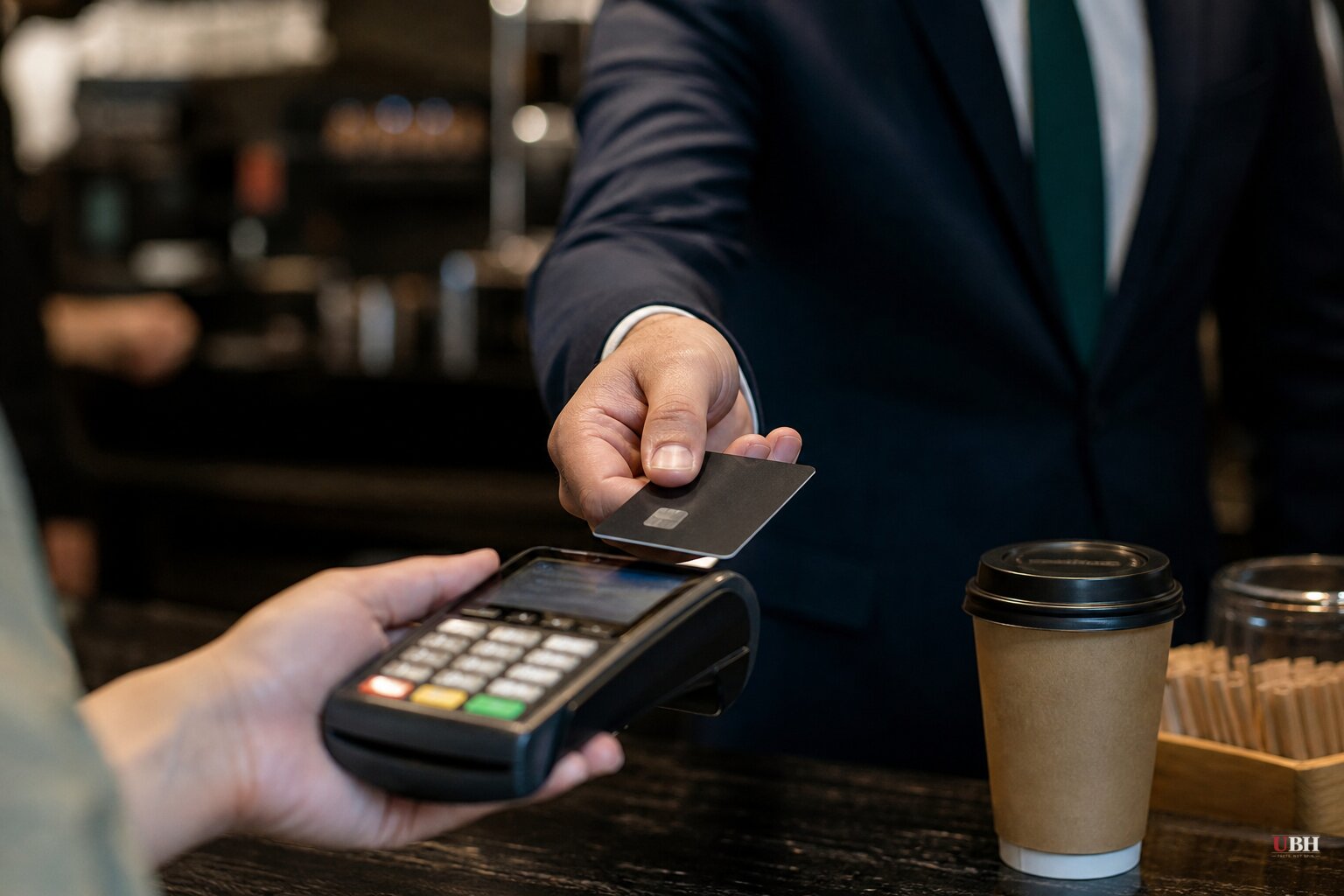
Since Secretary of State Marco Rubio formally rescinded Syria's designation as a state sponsor of terrorism on Monday, August 24, the policy shift has moved from paperwork to the checkout counter. Syrian President Ahmed al-Sharaa was filmed this week tapping a Visa card to pay for coffee in Damascus's Old City, standing next to central bank governor Abdelkader Husriyeh, according to Euronews. The government's own account posted the video with a simple caption: "For more than 15 years, this simple transaction was impossible."
Syria had been on the terrorism blacklist since 1979, a designation that survived both Hafez al-Assad and his son Bashar. It outlived the civil war, the 2011 SWIFT lockout, and even most of the sanctions regime built around it. Rubio's rescission, which followed a 45-day congressional notification period triggered by President Donald Trump's July 8 letter to lawmakers, was the last major legal switch left to flip, according to the Epoch Times.
Rubio didn't undersell it. "This action unlocks new potential for Syria's economic revitalization and progress," he wrote on X, calling it "another historic step by President Trump to give the Syrian people a path to prosperity," per Fox News. Alongside the terrorism delisting, the administration also removed Hay'at Tahrir al-Sham, the Islamist faction that led the offensive toppling Assad in December 2024, from the specially designated global terrorist list.
Banking comes next
The symbolism is obvious, but the substance is in the banking pipes. Breitbart reported that Syria's central bank governor, Abdelkader Husriyeh, announced the country's first international SWIFT transfer since being locked out of the system in 2011, a commercial transaction between a Syrian bank and an Italian bank. Husriyeh said Italian firms went first because Italian construction companies already have people in Syria bidding on reconstruction contracts.
Husriyeh also said Syrian and U.S. officials held a virtual meeting this week, with several major American financial institutions reportedly participating. His stated targets: get U.S. banks to open representative offices in Syria, and get direct U.S.-Syria bank transactions running. "I think the latter can happen in a matter of weeks," he told Breitbart.
The U.S. Treasury has confirmed American banks can now service Syrian clients, process payments through Syrian banks, and set up correspondent banking relationships, according to Euronews. Treasury Secretary Scott Bessent framed the goal plainly: fostering "additional investment in Syria to promote political and economic stability."
What changed and what didn't
The comprehensive U.S. sanctions program on Syria was terminated in mid-2025, and Congress repealed the Caesar Act, the toughest secondary-sanctions law on the books, in a December 2025 defense bill, according to both Euronews and ua.news. Monday's action was narrower but load-bearing. It killed the terrorism designation that had kept banks and investors skittish even after the broader sanctions came off.
Restrictions haven't vanished entirely. Sanctions remain on associates of ousted dictator Bashar al-Assad, on human rights abusers, and on people tied to the captagon drug trade, per Euronews and ua.news. Syria also remains on the Financial Action Task Force's grey list over money-laundering concerns, a designation that keeps some international compliance departments cautious regardless of what Washington does.
Tellimer, a Dubai-based emerging-markets research firm, called the delisting "effectively, a green light" for reconstruction investment, predicting banking, tech, and telecom sectors stand to benefit most from restored SWIFT access, according to Euronews.
The trust question
Al-Sharaa led Hay'at Tahrir al-Sham, a group with roots in al-Qaeda's Syrian branch, before becoming president. Breitbart's coverage flagged this directly, noting Western leaders "have been hesitant to trust Syrian officials with past links to groups like al-Qaeda and the Islamic State, especially with the threat of religious warfare and ethnic cleansing hanging over Syria's minority populations." That's a legitimate concern. Rubio's own statement tried to address it by pointing to Syria's formal entry into the Global Coalition to Defeat ISIS in November 2025 and operations disrupting ISIS, al-Qaeda, and Iran-aligned networks, per Fox News. Whether that track record holds up is a live question, not a settled one, and it will get tested as Western capital actually starts flowing rather than just clearing legal hurdles.
Foreign Minister Asaad al-Shaibani called the delisting the "last obstacle" to rebuilding Syria's economic life, per the Epoch Times. Speaking Wednesday at the 63rd Damascus International Fair, al-Sharaa told business representatives from nearly 60 countries that Syria is "at the beginning of a long and sustainable road," according to Yeni Şafak. The European Union lifted its own economic sanctions on Syria in May 2025, while keeping arms and repression-technology restrictions in place and extending measures against former regime figures through June 2027, per ua.news.
The next concrete marker to watch: whether a U.S. bank actually processes a direct transaction with a Syrian bank in the coming weeks, the timeline Husriyeh himself set.
Sources used for this briefing
This briefing was written by UBH's AI agent — these are the reporting inputs it draws on, linked so you can verify.


