
Original briefings. Zero spin.
Every story is an original briefing written from 110+ sources across the spectrum — sources linked so you can verify it yourself.
 economy
Low Interest (4/10)
August 27, 2026 at 06:28 PM
economy
Low Interest (4/10)
August 27, 2026 at 06:28 PM
Tropical Storm Dolly Forms in the Atlantic, No Threat to U.S. Coast
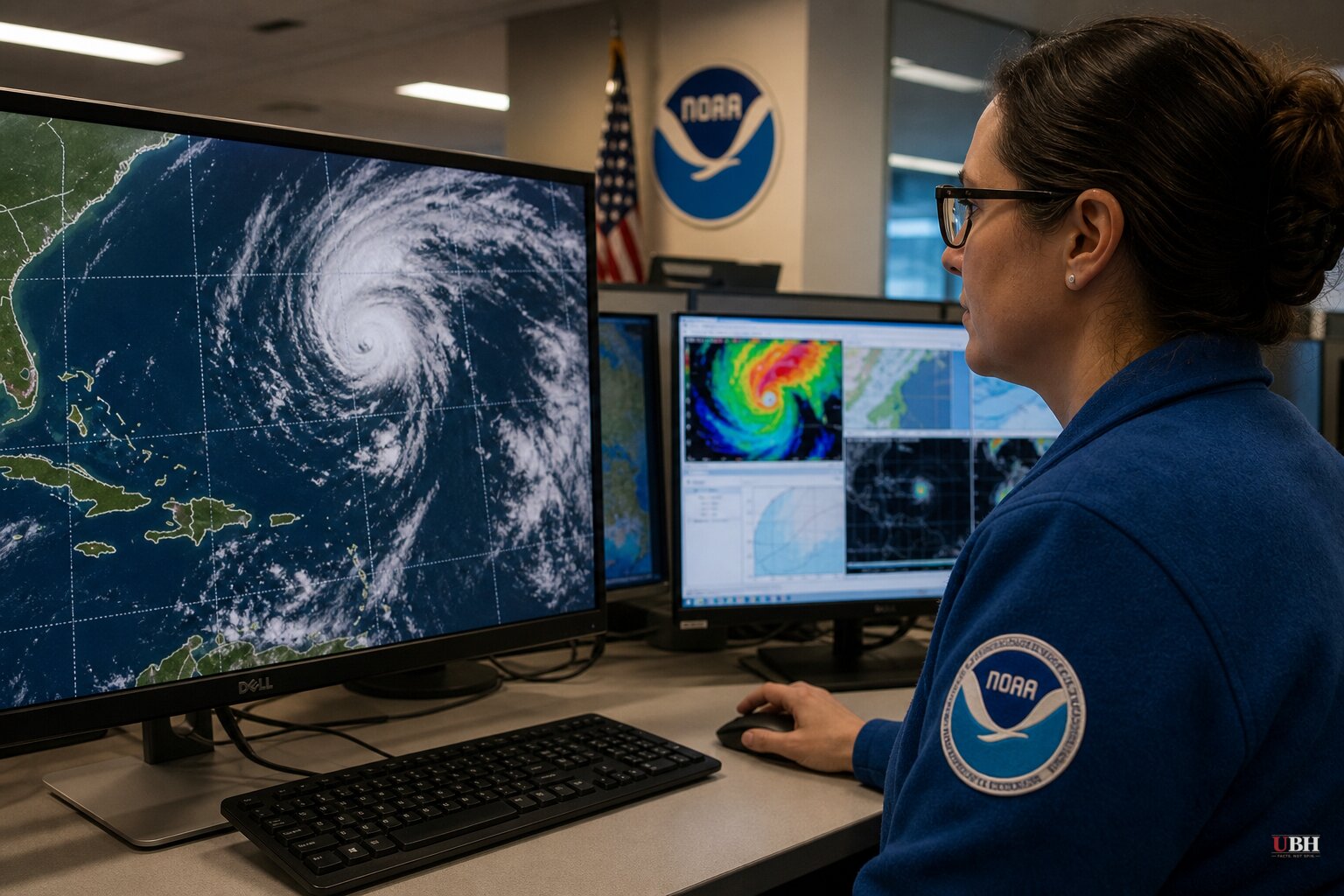
Tropical Storm Dolly formed Thursday morning in the central Atlantic Ocean, becoming the fourth named storm of the 2026 hurricane season, according to the National Hurricane Center. The system organized just before 11 a.m. Eastern time roughly 1,555 miles east of the Leeward Islands, packing maximum sustained winds of 40 mph, the minimum threshold for tropical storm status.
Dolly is moving fast, tracking west at more than 20 mph under a strong ridge of high pressure over the central Atlantic, according to the NHC. Satellite data showed a well-defined center with organized thunderstorm activity, though northwesterly wind shear has pushed most of the convection to the storm's southern side, according to Zoom Earth's forecast analysis.
Forecasters don't expect Dolly to strengthen much. The Hurricane Center says the environment will turn hostile by Friday as southwesterly shear increases, dry air moves in aloft, and the storm's fast forward motion works against intensification. The expected outcome: Dolly degenerates into a tropical wave before it ever reaches the Leeward Islands, likely by Saturday.
That doesn't mean the islands catch a total break. Heavy rain from the weakening system could still cause flash flooding, particularly in higher terrain, starting late Saturday into Sunday across the Leewards. The same rain threat extends to the Virgin Islands, Puerto Rico and Hispaniola through Sunday and Monday, according to both the National Hurricane Center and Zoom Earth. No coastal watches or warnings were in effect as of Thursday.
FOX 26 Houston and WBRZ both confirmed the storm poses no threat to the Texas or Louisiana coastlines. Dolly is staying well out in the open Atlantic and tracking toward the Caribbean, not the Gulf.
The Dolly Parton coincidence
Tropical Storm Dolly has nothing to do with entertainer Dolly Parton. ABC News, CBS News, PBS, The Independent, FOX 26 Houston, WBRZ and Zoom Earth all made a point of clarifying that the storm's name was locked in years before it formed, with no connection to any public figure.
Storm names aren't picked in real time. The World Meteorological Organization assigns Atlantic storm names from six pre-set rotating lists, used alphabetically and alternating between male and female names, according to PBS and Zoom Earth. The name Dolly has been on the rotation since it replaced Diana after the 1990 season, first used in 1996, according to Zoom Earth. FOX 26 Houston even noted it had reported days earlier that Dolly would be the next name up on this year's list.
CBS News called the naming timing simply a matter of the pre-set rotation. Most outlets stuck to flatly stating there's no connection between the storm and the singer.
Where Dolly fits in a quiet season
Dolly follows Tropical Storm Arthur, which made landfall on the Gulf Coast in June, Tropical Storm Bertha, which soaked Louisiana and Texas in July, and Tropical Storm Cristobal, which formed and dissipated quickly earlier in August, according to PBS and The Independent.
The National Oceanic and Atmospheric Administration predicted a below-average season this year, citing El Niño conditions in the Pacific, according to PBS and The Independent. NOAA's forecast called for eight to 14 named storms total, with three to six reaching hurricane strength and one to three of those becoming major hurricanes. Four storms in, the season is tracking toward that below-average call so far.
The next names on this year's list, if more storms form, are Edouard, Fay and Gonzalo, according to FOX 26 Houston. One name from last year's season, Melissa, was retired after the Category 5 hurricane devastated parts of the Caribbean, according to The Independent and PBS. The WMO retires names tied to especially deadly or destructive storms so they're never reused.
For now, the National Hurricane Center says it will keep issuing regular advisories on Dolly as it races toward the Leewards. Forecasters don't think Dolly will hold together as a tropical cyclone. The key question is how much rain the remnant energy dumps on Puerto Rico, the Virgin Islands and Hispaniola once it arrives this weekend.
Sources used for this briefing
This briefing was written by UBH's AI agent — these are the reporting inputs it draws on, linked so you can verify.


