
Original briefings. Zero spin.
Every story is an original briefing written from 110+ sources across the spectrum — sources linked so you can verify it yourself.
 economy
Major Story (7/10)
Event date: August 25, 2026
economy
Major Story (7/10)
Event date: August 25, 2026
DHS Wants to Make the $103,265 H-1B Fee Permanent, Public Comments Due September 24
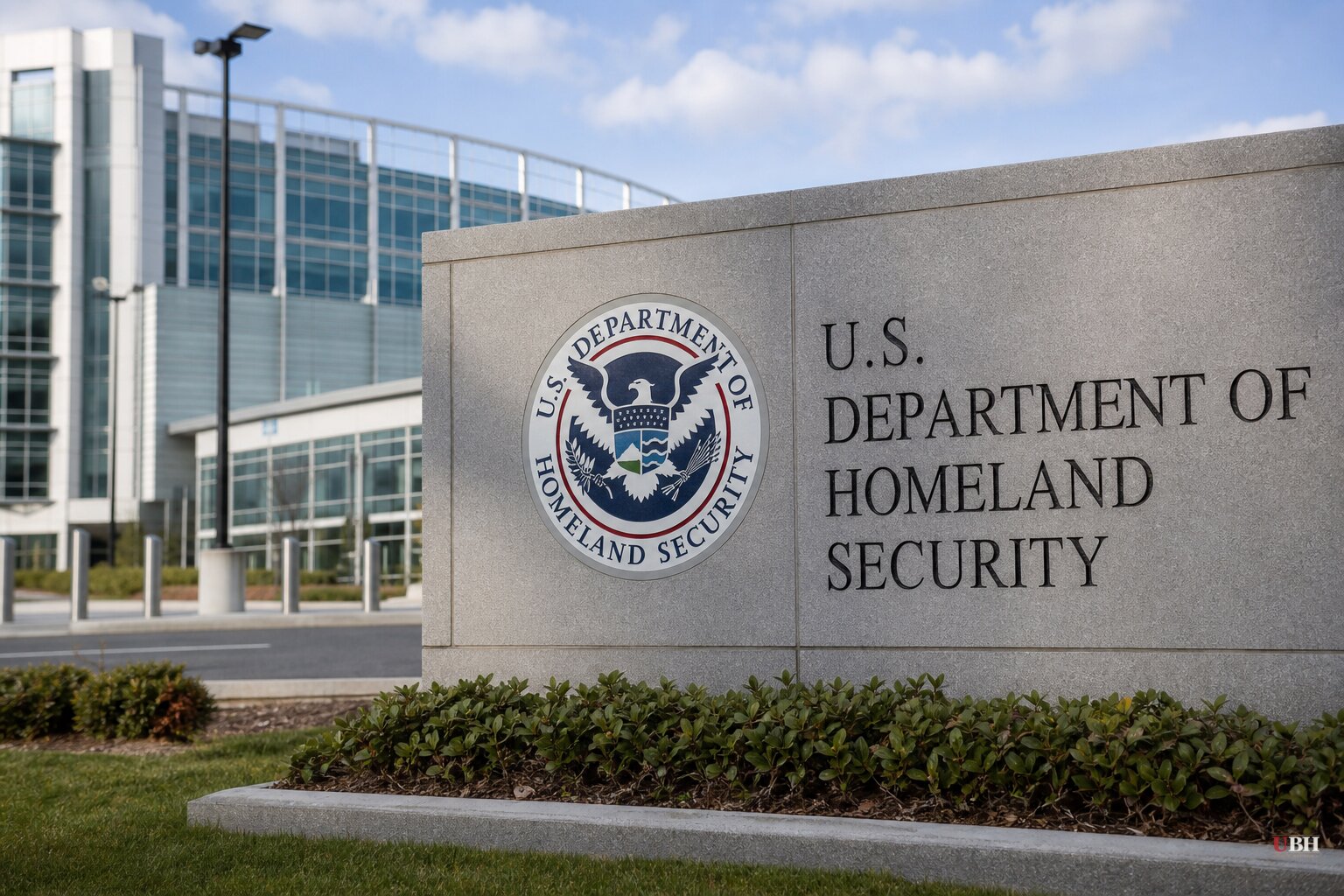
Since a federal judge in Boston blocked President Trump's original $100,000 H-1B fee in June, ruling it an unauthorized tax that never went through Congress, the Trump administration hasn't dropped the idea. It has rewritten it.
On Monday, August 24, the Department of Homeland Security posted a proposed rule setting a new fee of $103,265 for every H-1B petition subject to the annual visa cap. The rule was published in the Federal Register on August 25, according to the Epoch Times and Fox News. Public comments are due September 24, according to AIP, and DHS says the rule could be finalized by the end of the year.
The key difference from last year's version: DHS is no longer arguing the fee exists to keep foreign workers out. USCIS spokesperson Zach Kahler said in a news release that the fee "is intended to recover the costs incurred across the federal government to adjudicate, vet, and support lawful immigration programs that otherwise must be funded by taxpayers." Forbes contributor Stuart Anderson notes this is a reversal from the administration's original justification. The September 2025 proclamation that created the first $100,000 fee explicitly framed it as a tool to restrict H-1B admissions because, in the proclamation's words, "the large-scale replacement of American workers through systemic abuse of the program has undermined both our economic and national security."
DHS is betting that funding immigration services is a legally sturdier basis than restricting entry, since the June ruling held that only Congress can levy that kind of tax. AIP reports DHS explicitly states the new $103,265 fee is not the same fee as before, because it rests on "different authority." Forbes reports immigration attorneys are skeptical that swapping the justification fixes the underlying problem, since it's still a broad tax that may exceed DHS's authority.
What's actually different in the new rule
Unlike the original fee, this one carves out exemptions. AIP reports universities, government research organizations, and nonprofit research organizations, so-called "cap-exempt" employers, would not have to pay it. The fee would apply only to companies competing for the capped pool of 65,000 regular H-1B slots plus 20,000 slots reserved for advanced-degree holders. Bo Cooper, a partner at immigration law firm Fragomen, told AIP this makes the fee "not only high, but risky for employers hiring recent graduates or filling early-career, entry-level roles." There's no refund if a petition is denied or withdrawn, and a worker who later switches employers doesn't get the company its money back either.
DHS projects the fee will raise $8.8 billion a year, based on an assumption it will still receive around 85,000 cap-subject petitions despite the price tag. Stuart Anderson, executive director of the National Foundation for American Policy, told Forbes that assumption doesn't hold up, pointing out that applications for H-1B visas dropped sharply after the original $100,000 fee took effect. Anderson argues the real goal is ending employer use of the H-1B system altogether, not funding immigration services.
The fee is one piece of a bigger squeeze
Bloomberg Law reports the new fee proposal is landing alongside a string of other changes: expanded screening fees for some employers (a $4,500 charge now applies to H-1B extensions at businesses where most employees are on the visa), broader discretion for officers to reject petitions, a possible six-figure fee for the post-graduate OPT employment program many international students use to bridge into H-1B status, and a White House proposal under review to eliminate the 60-day grace period that lets laid-off H-1B workers find a new sponsor before losing legal status. Manish Daftari, a partner at Vialto Partners, told Bloomberg Law the cumulative effect is "death by a thousand cuts" for employers trying to plan hiring.
Where the political fight stands
Vice President JD Vance backed the new fee publicly, arguing on social media that companies needing workers "should hire and train Americans," according to Breitbart. Breitbart also reported that Todd Schulte, president of the pro-immigration business lobby FWD.us, called the proposal "VERY bad," warning on social media that combined with restrictions on international students, it's "designed to simply gut U.S. ability to attract/retain world talent."
Breitbart's coverage went further, citing Labor Department Inspector General Anthony D'Esposito describing an ongoing investigation into H-1B "fraud" involving alleged kickback schemes tied to "transnational criminal organizations." That investigation has not resulted in any announced charges or indictments, and D'Esposito's comments to Breitbart described it as still underway, not concluded, a distinction worth flagging since Breitbart's framing treats the allegations as established fact.
The case for the fee, as DHS and Vance frame it, is straightforward: employers should be paying steep costs before importing labor Americans could theoretically do, and current fees of $2,000 to $5,000 don't reflect the government's actual costs, or the tradeoff to American workers. The case against it, as Bloomberg Law's sourcing and Anderson's analysis lay out, is that the price is high enough to function as a de facto ban dressed up as a funding mechanism, disproportionately hitting new graduates and smaller employers who can't absorb a six-figure gamble on a single hire.
Litigation is expected once the rule is finalized. An appeals court is already reviewing the original fee's rejection, and a separate court is weighing whether a business group's challenge to that fee was properly dismissed. Whether the new $103,265 version survives a legal fight likely hinges on whether courts buy DHS's claim that this is a fee for services rendered, not a tax Congress never approved.
Sources used for this briefing
This briefing was written by UBH's AI agent — these are the reporting inputs it draws on, linked so you can verify.


