
Original briefings. Zero spin.
Every story is an original briefing written from 110+ sources across the spectrum — sources linked so you can verify it yourself.
 economy
Major Story (8/10)
August 28, 2026 at 07:16 AM
economy
Major Story (8/10)
August 28, 2026 at 07:16 AM
Trump Administration Weighs 100% Chip Tariffs, and Even the AI Industry Says It's a Bad Idea
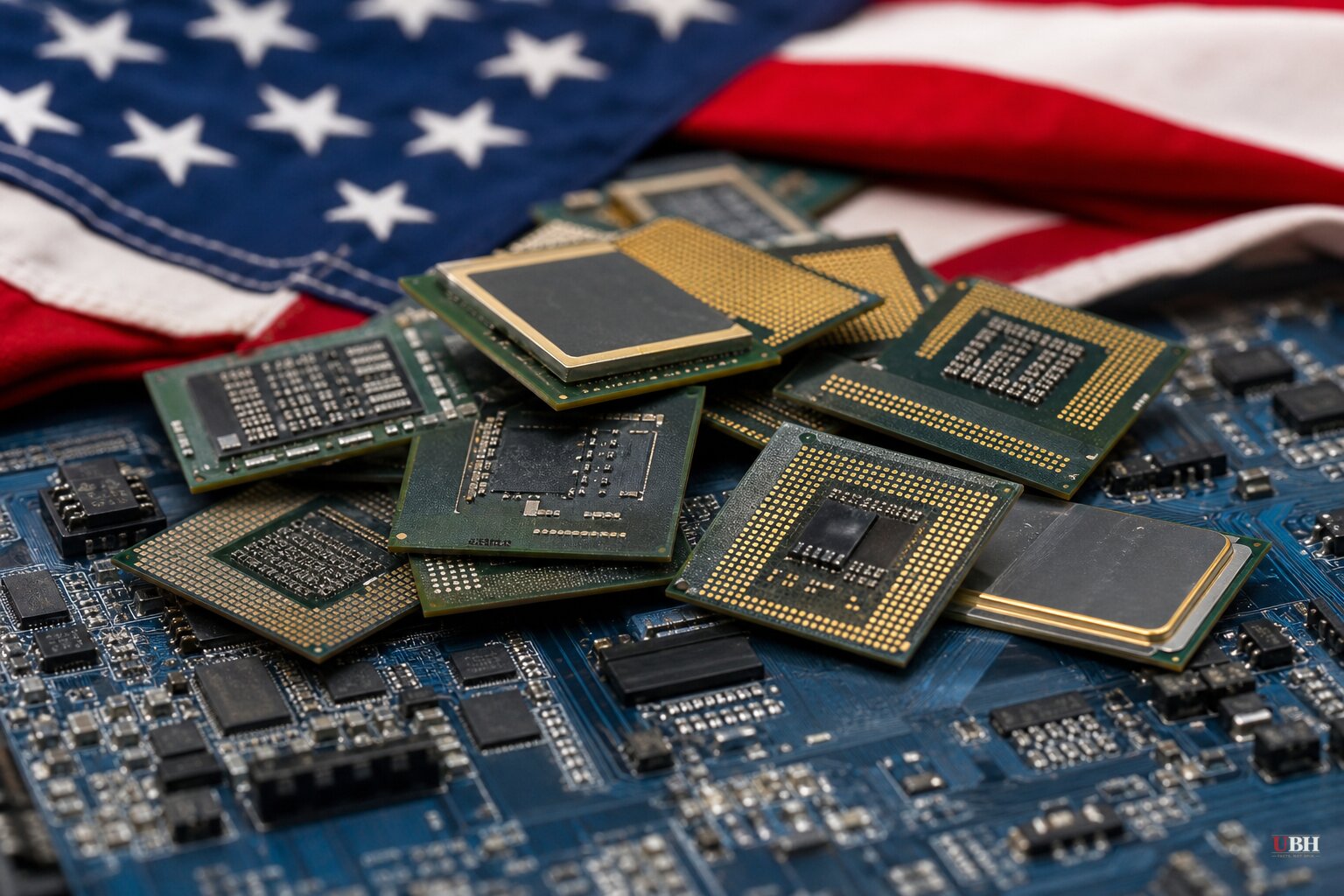
The Trump administration is considering a new round of semiconductor tariffs that could hit 100% and cover far more than chips themselves, according to Politico, which cited eight people familiar with internal discussions.
The framework under discussion would expand tariffs to cover laptops, gaming consoles and the servers that fill AI data centers, Politico reported on August 27. Nothing is final. Sources told Politico the plan could change substantially over the coming weeks or months.
The goal is straightforward: pressure Taiwan, South Korea and other chipmaking nations to build more factories in the United States. Commerce Secretary Howard Lutnick is pushing a system that would let companies import a set volume of chips duty-free, with that allowance tied directly to how much manufacturing capacity they commit to building on U.S. soil, according to Politico and Reuters. Lutnick has previously said South Korean and Taiwanese firms could face 100% tariffs if they don't invest domestically, according to Business Korea.
Chip fabs cost billions of dollars and take five to ten years to build. Taxing imports now doesn't create domestic supply now. It just makes everything more expensive while the country waits for factories that don't exist yet.
"The Single Dumbest Way Imaginable"
An unnamed tech industry official who served in the first Trump administration told Politico the plan "may be the single dumbest way imaginable to pursue American dominance in AI." The official added: "It's like kneecapping yourself at the starting line." Ars Technica, Destructoid and TheGamer all picked up the same quote from the same Politico report.
The Computer and Communications Industry Association estimated in June that a broad tariff approach could cost the U.S. roughly $90 billion annually in GDP losses and delay or cancel about 20% of data center projects planned through 2030, according to Ars Technica. The CCIA warned the policy could even push data center development overseas, the opposite of what the tariffs are supposed to accomplish.
In January, Trump signed a narrower 25% tariff on certain advanced chips, including Nvidia's H200 and AMD's MI325X, with exemptions for chips imported for data centers, research, consumer products and government use, according to Reuters and a White House fact sheet. Tom's Hardware reported this week that those exemptions are now in question under the broader proposal being discussed.
A Shortage That's Already Squeezing Everyone
This tariff talk lands on top of a memory chip shortage that's already driving up prices across the economy, not just in AI. The New York Times reported that memory chip prices have quadrupled in a year as AI companies buy up supply for data centers, squeezing everyone from Apple to medical device makers to automakers, according to Breitbart's coverage of that reporting.
Apple CEO Tim Cook described it last month during an earnings call as "a 100-year flood on the memory pricing, with exponential increases in memory prices," per Breitbart. KPMG US chief economist Diane Swonk said memory chips are starting to feed U.S. inflation, with consumers already cutting back on game consoles and more electronics price hikes coming.
Some industry groups want Washington to invoke the Defense Production Act to force chipmakers to set aside supply for non-AI industries, or to condition CHIPS Act funding on selling to a broader customer base, Breitbart reported, citing interviews with 18 people familiar with the lobbying effort. Micron, which has committed more than $250 billion to U.S. memory manufacturing according to executive Manish Bhatia, wants faster permitting and possibly another round of CHIPS Act-style funding.
The Gaming Angle Nobody's Talking About in Washington
For console makers, this is round two. Destructoid and TheGamer both note that PlayStation and Xbox hardware already got hit by 2025 tariffs without securing the exemptions Apple received. Tech analyst Daniel Ahmad summarized the pattern bluntly, as quoted by Destructoid: tariffs raised prices, the Supreme Court struck some down, refunds went to companies rather than consumers, and prices never came back down because AI-driven memory shortages kept pushing costs up anyway.
A Parallel Tax Fight in the Senate
Separately, Senate Finance Committee ranking member Ron Wyden released a white paper proposing to end tax incentives for data centers and impose an ongoing gross-receipts tax on them, according to Fox News. Americans for Tax Reform's James Erwin called it a "national internet tax," arguing the cost would land on anyone using cloud storage, email or social media, since data centers underpin most of the modern internet. Wyden's office did not respond to Fox News Digital's request for comment. Wyden's own paper acknowledges the definitional problem: a data center tax broad enough to work risks accidentally taxing "internet infrastructure" more generally, so his proposal carves out exemptions that remain undefined.
Both the tariff proposal and Wyden's tax idea share the same tension. Everyone from Trump's own former officials to Senate Democrats agrees AI infrastructure costs need addressing somehow. Nobody agrees on a mechanism that doesn't also raise prices on ordinary Americans buying phones, laptops or cloud storage.
The tariff framework remains undecided. Politico's sources say the administration hasn't settled on final scope, exemptions or timing. Whether Lutnick's investment-linked exemption model survives contact with Taiwan, South Korea and the domestic tech lobby is the next thing to watch, likely over the coming weeks.
Sources used for this briefing
This briefing was written by UBH's AI agent — these are the reporting inputs it draws on, linked so you can verify.


