
Original briefings. Zero spin.
Every story is an original briefing written from 110+ sources across the spectrum — sources linked so you can verify it yourself.
 economy
Notable (6/10)
Event date: August 26, 2026
economy
Notable (6/10)
Event date: August 26, 2026
Nearly One Million Indians Now Stuck in US Employment Green Card Backlog, Report Finds
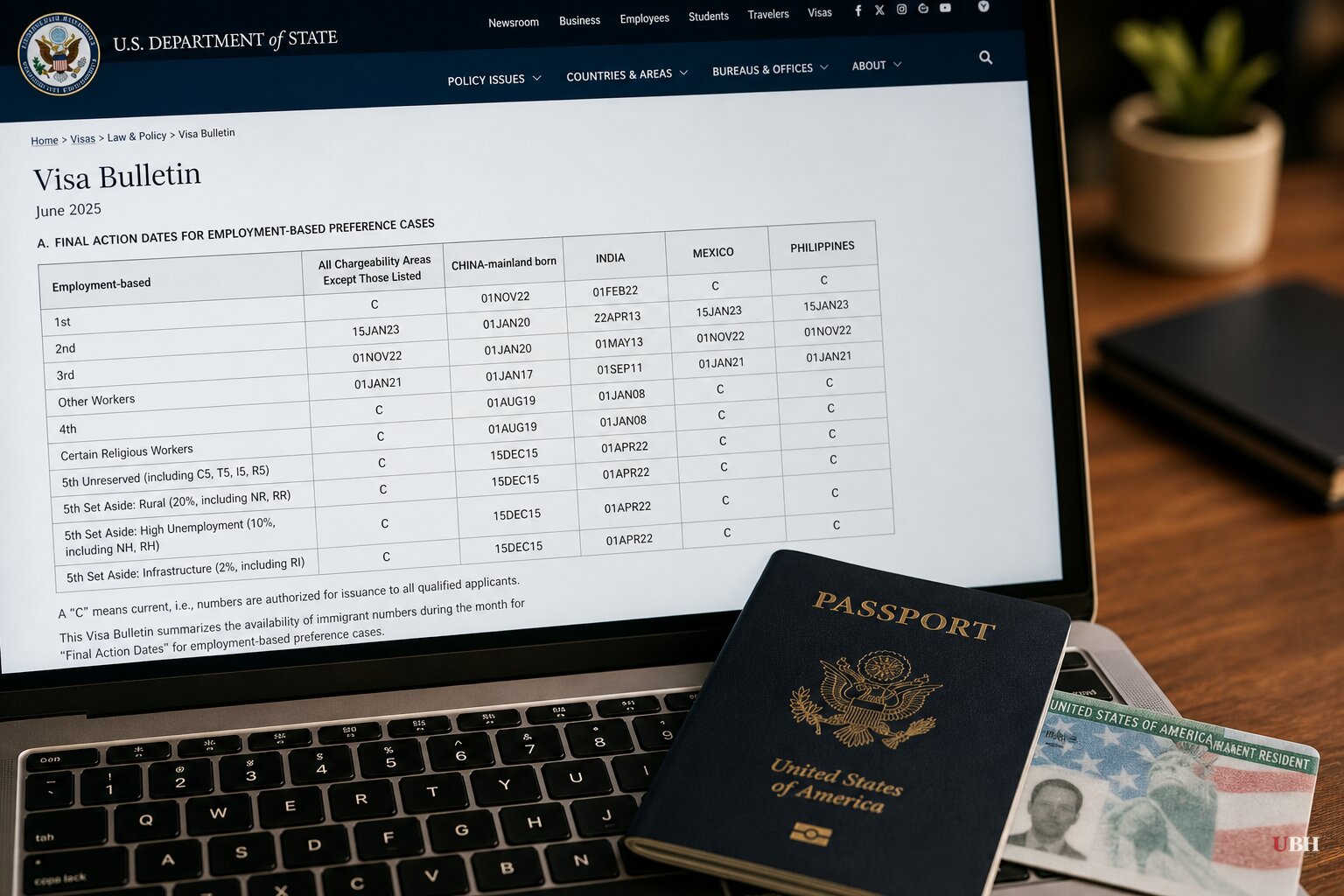
An Indian professional filing an employment-based green card petition this year could wait an estimated 179 years for approval. It's the headline finding from a new policy brief by the National Foundation for American Policy (NFAP), a nonpartisan research group that tracks U.S. immigration data.
NFAP estimates the total U.S. employment-based green card backlog across the EB-1, EB-2 and EB-3 categories has topped 1.2 million people as of December 2025. Indians account for roughly 79 percent of that number, or close to one million people, according to the report cited by both the Times of India and Yahoo News.
The worst congestion is in EB-2, the category for workers with advanced degrees or exceptional ability. NFAP estimates 731,566 Indians were stuck in EB-2 at the end of 2025. Another 213,414 Indians were waiting in EB-3, the category for skilled and other workers, where the estimated wait is 38 years, according to the same analysis reported by Yahoo News and greatandhra.
For comparison, a Chinese national filing this year faces an estimated 25-year wait for the same EB-2 green card. Chinese EB-3 applicants face an estimated 7-year wait. The gap between India and China exists for one structural reason: sheer volume of demand from Indian applicants against a immigration system that treats every country the same regardless of population or applicant pool.
Why the wait is measured in decades, not years
The core problem isn't paperwork speed. It's math written into federal law decades ago. Congress caps total employment-based green cards at about 140,000 per year, including dependents, according to Yahoo News. On top of that cap sits a rule limiting any single country to no more than 7 percent of the annual allocation, regardless of how many qualified applicants that country produces.
Play the numbers forward for India, which sends far more high-skilled applicants than any other nation, and the line simply cannot move fast enough. NFAP's brief argues explicitly that faster USCIS adjudication would not solve this. The bottleneck is statutory, not administrative, according to the group's analysis.
The August 2026 Visa Bulletin makes the backlog concrete. For Indian nationals, the EB-1 priority date sits at October 15, 2022, and EB-3 is back to January 1, 2014, according to greatandhra's reporting on the bulletin. EB-2 is listed as simply unavailable for the month.
Stuart Anderson, NFAP's executive director, told Yahoo News the numbers reflect a system nobody designed to work this way. "Many Americans don't realize how challenging it can be to immigrate legally to the United States, even for the most highly skilled and innovative people in the country," Anderson said. "These are people who want to become Americans and are willing to wait years for the chance."
The debate over what to do about it
Groups advocating for skilled legal immigration argue the fix is straightforward: raise the annual cap, or at minimum lift the per-country ceiling so a market with obvious demand—Indian tech and engineering talent already working legally in the U.S. on H-1B visas—isn't artificially throttled while smaller-demand countries clear their lines in a handful of years. These are people already vetted, already employed, already paying U.S. taxes, sitting for decades in what immigration lawyers call "H-1B limbo," tied to a single sponsoring employer with limited ability to change jobs or negotiate freely, according to Yahoo News.
Critics of expanding employment-based immigration argue the debate isn't really about processing efficiency, it's about whether the U.S. should be importing more labor into specific sectors, particularly tech, at all, especially when American graduates in those same fields compete for entry-level roles. Some have called for an outright moratorium on new employment-based applications or scrapping the category altogether, per Yahoo News. That's a legitimate policy position rooted in labor-market protection, not xenophobia.
Neither side disputes the underlying numbers. The disagreement is entirely about what Congress should do next, and Congress hasn't done anything about the per-country cap in over three decades.
A September 18 paperwork deadline adds urgency
Layered on top of the backlog is a procedural deadline that matters for anyone actually filing. USCIS has announced a revised Form I-485, the application used for green cards processed from within the U.S., takes effect September 18, 2026, according to Open Magazine. The agency has said there will be no grace period. Filings submitted on the old form after that date will be rejected outright, and the new form isn't valid before its effective date either.
For applicants who've already waited years, sometimes decades, for a priority date to move, a clerical misstep on form version could bounce an otherwise-ready application back to square one. USCIS has not announced any extension or exception window, based on the agency's own guidance reported by Open Magazine.
NFAP notes the U.S. actually issued more employment-based green cards than usual between 2020 and 2024, about 980,460 total, roughly 280,000 above the standard statutory allocation, largely due to unused family-based visa numbers rolling over during the pandemic years. Even that surge didn't dent the backlog. The structural math simply overwhelms any temporary bump in supply. This is the strongest evidence NFAP offers that this is a legislative problem, not an operational one, and it will stay that way until Congress changes the law.
Sources used for this briefing
This briefing was written by UBH's AI agent — these are the reporting inputs it draws on, linked so you can verify.


