
Original briefings. Zero spin.
Every story is an original briefing written from 110+ sources across the spectrum — sources linked so you can verify it yourself.
 economy
Major Story (7/10)
Event date: August 25, 2026
economy
Major Story (7/10)
Event date: August 25, 2026
SK Gas Pays $5.3 Million to Skip the Line at the Panama Canal, Shattering Record Set Weeks Earlier
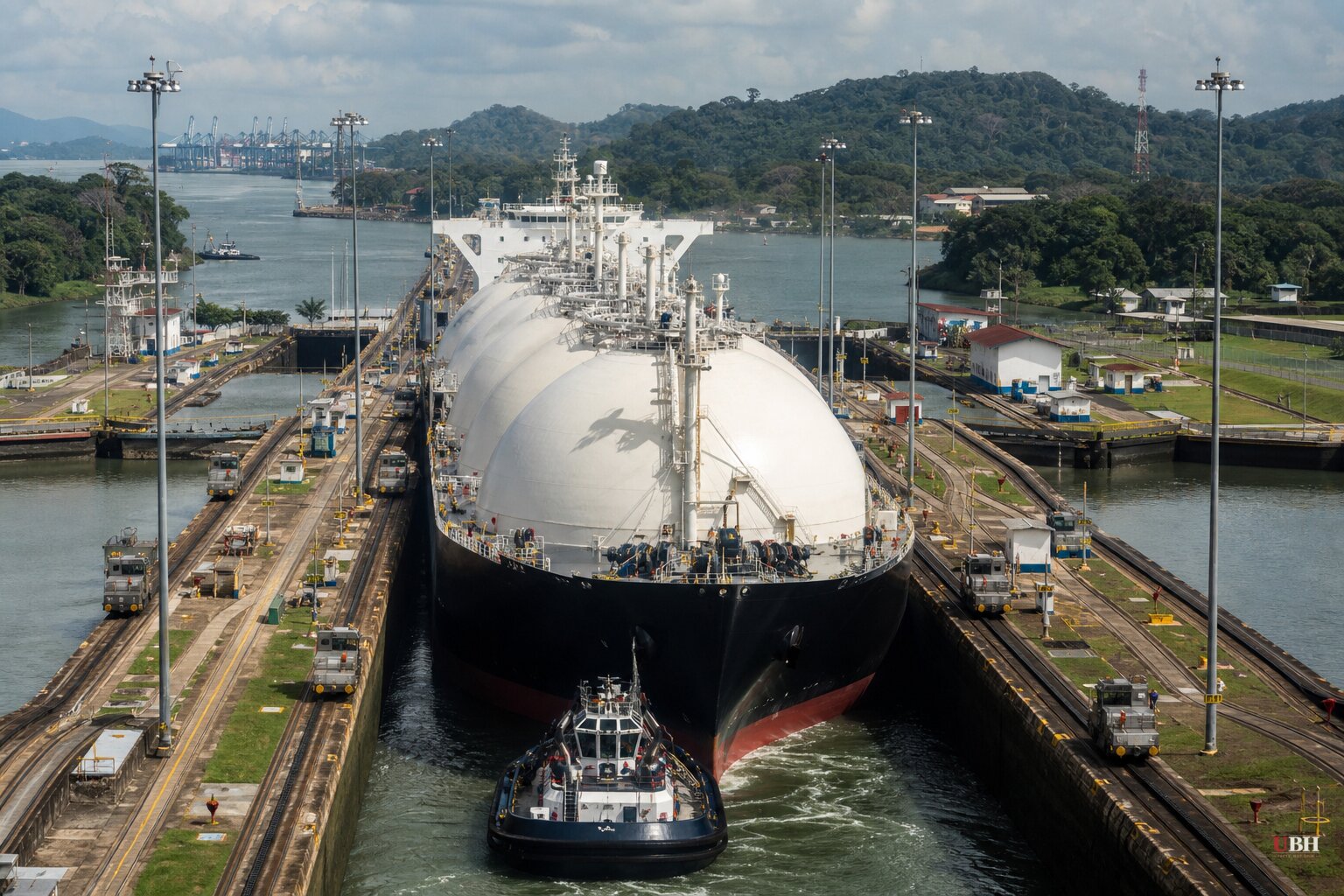
A liquefied petroleum gas tanker just paid more to skip a line than most people pay for a house.
South Korean company SK Gas agreed to pay $5.3 million for its vessel, the G. Spirit, to get priority passage through the Panama Canal on September 1, according to Bloomberg reporting carried by gCaptain. That bid, determined through the canal authority's auction system, broke the previous record of $4.6 million set earlier in August by another SK-linked vessel, per Bloomberg.
For context: the average auction price between October 2025 and February 2026 was around $55,000, according to the Panama Canal Authority. SK Gas paid nearly 100 times that.
Two problems, same waterway
The price spike traces to two separate causes stacking on top of each other, and neither is in dispute across the sources.
First, the war in Iran. Jamie Smyth, U.S. energy editor at the Financial Times, told NPR that with the Strait of Hormuz effectively closed, shipping traffic that would normally avoid Panama has piled into the canal instead. Wait times for vessels without reservations have stretched to as long as 11 days, according to data analytics firm Argus Media, cited by both Bloomberg and Business Korea.
Second, El Niño. Panama declared an emergency over the weather pattern this week, according to Euronews and TRT World, as a regional drought drains the freshwater reservoirs that feed the canal's lock system. Rainfall deficits on Panama's Pacific side have hit 60%, with 11 watersheds already under water stress, per Euronews.
The canal authority is responding by tightening the taps. Daily transits will drop from 36 to 34 starting September 3, then fall further to 32 later in the month, according to Euronews and TRT World. In 2023, low water levels forced the canal to cut transits from 38 to 22 per day.
Why bidding wars keep breaking records
Ricaurte Vasquez, administrator of the Panama Canal Authority, gave the clearest breakdown of what's driving the numbers in an interview with gCaptain, republished by DataPortuaria. He said the share of vessels showing up without a reservation has jumped from roughly 10% to 20-25% of traffic.
"We are facing a significant number of vessels coming without reservation," Vasquez said. "So those who do not have a reservation wait, and most of them are the ones who pay high prices in order to get the auction slot."
The competition for those slots has gotten absurd. Vasquez told gCaptain that one auction drew 18 bidders for a single slot, compared to a normal 2-3 bidders per day. Before the Iran war, auction slots ranged from $135,000 to $140,000. By March and April, they'd climbed to about $385,000. Now they're in the millions.
Vasquez defended how the system works: "The allocation has always followed market rules." The auction isn't rigged or opaque. It's a straightforward bidding process open to anyone who wants to pay for priority. Vessels that don't want to pay can wait in line instead. Nobody is being denied passage, they're just paying market price to jump ahead.
Who actually pays for this
About 70% of everything moving through the Panama Canal is either coming from or going to the United States, according to CNN, citing figures on canal usage. Roughly three-quarters of cargo through the canal either originates or is destined for the U.S., according to Smyth's reporting for the Financial Times.
Shipping companies aren't absorbing these fees. MSC, one of the world's largest shipping lines, announced a new surcharge of $376 per 45-foot container starting next month, Smyth told NPR. That cost gets passed to "large, multinational retailers," Smyth said, naming Walmart and Amazon as examples, along with trading companies shipping grain, soybeans, and LNG products like propane and butane out of the U.S.
Smyth told NPR: "It's the American consumer who will ultimately pay."
Benjamin Gedan, senior fellow and director of the Latin American program at the Stimson Center, put it similarly to CNN: "The ripple effects are significant through supply chains and all the way to consumer prices at stores."
What's unresolved
El Niño is expected to intensify through the rest of 2026, with effects potentially lasting into May 2027, according to Euronews. NOAA declared the official start of this El Niño in June, and it's expected to peak between October and December, per CNN's reporting.
The drought side of this equation isn't close to over. The Iran war's effect on Hormuz traffic could ease or worsen depending on geopolitics outside anyone's control. The canal authority's own tightening of transit slots in September will collide with whatever demand the war keeps funneling toward Panama. Whether that produces another record-breaking auction bid before the year is out is the open question nobody, including Vasquez, has an answer for yet.
Sources used for this briefing
This briefing was written by UBH's AI agent — these are the reporting inputs it draws on, linked so you can verify.


