
Original briefings. Zero spin.
Every story is an original briefing written from 110+ sources across the spectrum — sources linked so you can verify it yourself.
 economy
Major Story (8/10)
August 29, 2026 at 01:11 AM
economy
Major Story (8/10)
August 29, 2026 at 01:11 AM
Trump Announces Deal Giving US Majority Control of 65 Billion Barrels of Venezuelan Oil
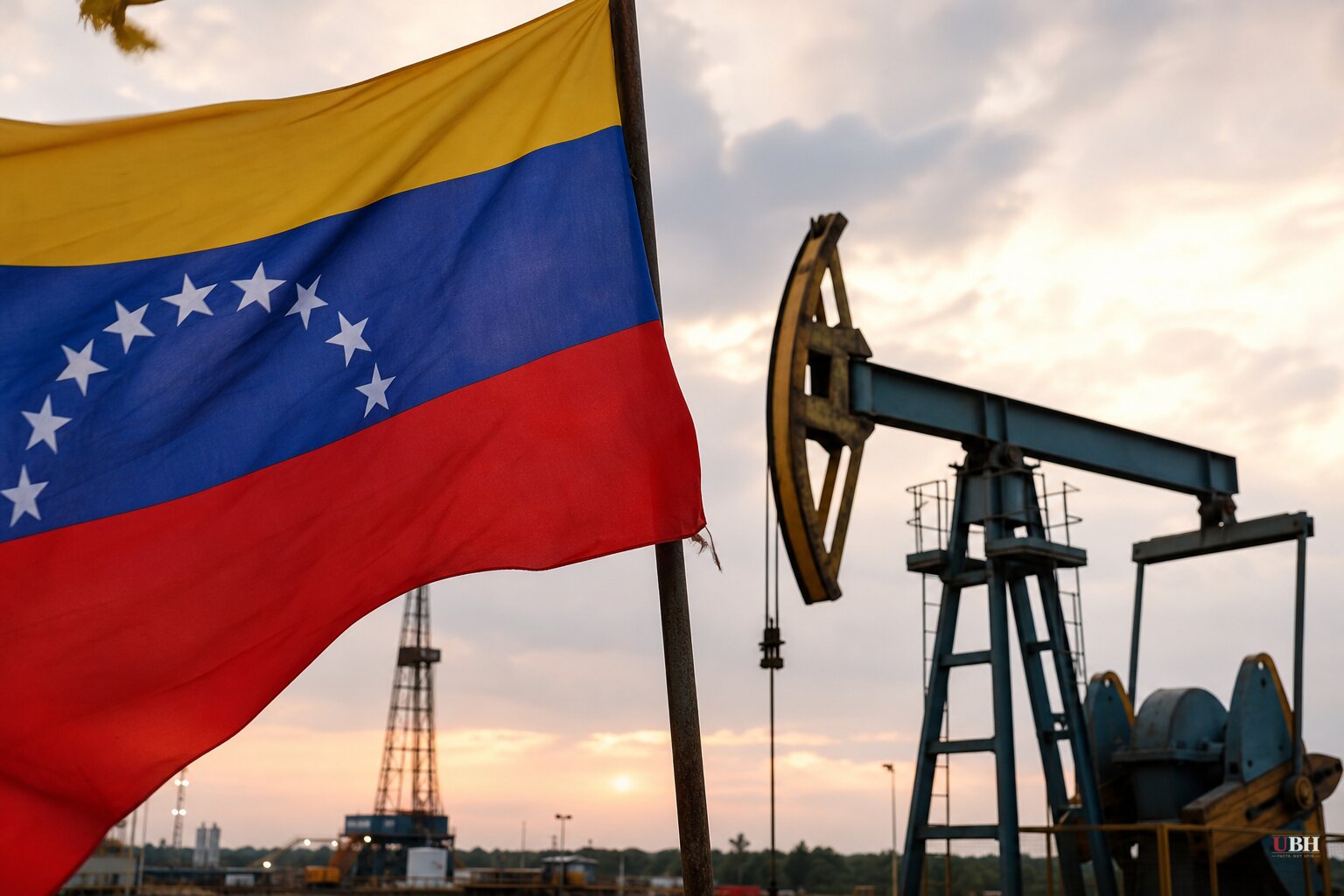
President Trump announced Friday evening that the US has struck what he called "THE BIGGEST OIL DEAL IN WORLD HISTORY" with Venezuela, securing majority American control of more than 65 billion barrels of the country's oil reserves.
Trump posted the announcement on Truth Social, crediting Secretary of State Marco Rubio, Defense Secretary Pete Hegseth, and Venezuela's interim President Delcy Rodriguez with negotiating the agreement "through a partnership with private business." He said it comes "at no cost to the American Taxpayer" and will "substantially lower Gas Prices for all Americans, long into the future."
A US official told The Hill and CBS News that Rodriguez granted a private joint venture—described as a partnership between the US government and an unnamed "experienced private operator in Venezuela"—100-year concessions on oil fields containing 63 billion barrels of proven reserves. The US government gets 55% of the venture's value, split between equity ownership and the right to buy oil at cost, according to that official. The resulting company would rank as the world's second-largest holder of proven oil reserves, behind only Saudi Aramco.
What isn't known: which private companies are actually involved. Business Insider reported the White House has not released the agreement text or named the participants. Only a handful of foreign oil companies have stuck around in Venezuela through years of sanctions and instability—Chevron, Spain's Repsol, and Italy's Eni—but CBS News noted it's still unclear who's in the new venture.
The context: Maduro, Iran, and gas prices
This deal doesn't happen in a vacuum. In January, US military forces captured then-President Nicolás Maduro and his wife, Cilia Flores, in an operation Trump authorized, sending Maduro to face federal narcoterrorism and drug trafficking charges. Rodriguez, the former vice president, took over as interim president.
Since then Trump has repeatedly pushed for US oil companies to move into Venezuela and tap reserves he's argued were effectively stolen when Hugo Chávez nationalized foreign assets decades ago. He's floated $100 billion in needed investment.
Now add the Iran war, which the US and Israel started six months ago as of this week, according to NBC News. That conflict has choked traffic through the Strait of Hormuz, a chokepoint that carried roughly 20% of world petroleum before the war, per The Independent, and is now down to a handful of ships a day from around 100 a year ago, according to IMF PortWatch data cited by CNBC.
The result: gas at the pump averaged $4.09 a gallon Friday, according to AAA, up from $3.21 a year earlier—a 27% jump. The Strategic Petroleum Reserve fell below 300 million barrels in early August, down more than 100 million barrels since the start of 2026, the lowest level since the 1980s, according to Department of Energy data cited by CNBC.
Trump is heading into midterm elections with voters furious about gas prices. This deal, whatever its actual mechanics turn out to be, is a political answer to that problem as much as an energy one.
Rubio's pitch, and the skepticism
Rubio called the agreement "a huge win for both the American and Venezuelan people," writing on X that it "demonstrates how President Trump's bold foreign policy is driving America First wins" and would bring "nearly $100 billion in private investment" and "thousands of high-paying jobs" to rebuild Venezuela's economy.
That's a legitimate case to make. Venezuela sits on the world's largest proven oil reserves—an estimated 303 billion barrels, about 17% of global supply, according to the US Energy Information Administration—and unlike frontier exploration elsewhere, much of that oil is already mapped. If American firms can get infrastructure running, it's a real supply increase.
But there's a serious gap between "control of reserves" and "oil flowing to market." The Independent reported that Darren Woods, CEO of ExxonMobil, called Venezuela "un-investable" when Trump gathered oil executives at the White House after Maduro's ouster. Decades of nationalized-asset scars, sanctions, and crumbling infrastructure don't reverse because of a Truth Social post. The Hill reported experts warning that producers face "significant hurdles including physically getting infrastructure set up," meaning any price relief from this deal is not immediate, whatever Trump's post promised.
Critics across the ideological spectrum, including some framing from The Independent and ZeroHedge, have flagged another issue: this is a deal struck with a government installed after a US military operation captured its predecessor. ZeroHedge bluntly called it less a negotiation than "demands being dictated to the 'new' post-Maduro US client state." That's an editorial framing, not an established fact, but it's a fair question raised by the circumstances: how much genuine bargaining leverage did Rodriguez's government have nine months after Washington removed her predecessor by force?
None of the sources here—left, right, or center—have the actual contract. No company names. No production timeline. No explanation of how "majority US control" will be verified or enforced over a 100-year concession. Congress hasn't weighed in publicly on oversight of a deal the White House says costs taxpayers nothing but that involves the US government holding equity in a foreign oil venture. Whether the administration releases the underlying agreement and whether lawmakers demand it remain open questions.
Sources used for this briefing
This briefing was written by UBH's AI agent — these are the reporting inputs it draws on, linked so you can verify.


