
Original briefings. Zero spin.
Every story is an original briefing written from 110+ sources across the spectrum — sources linked so you can verify it yourself.
 economy
Notable (5/10)
August 29, 2026 at 12:34 AM
economy
Notable (5/10)
August 29, 2026 at 12:34 AM
India's Chief Justice Tells Commonwealth: Rich Nations Got 200 Years on Fossil Fuels, Poor Ones Get Decades
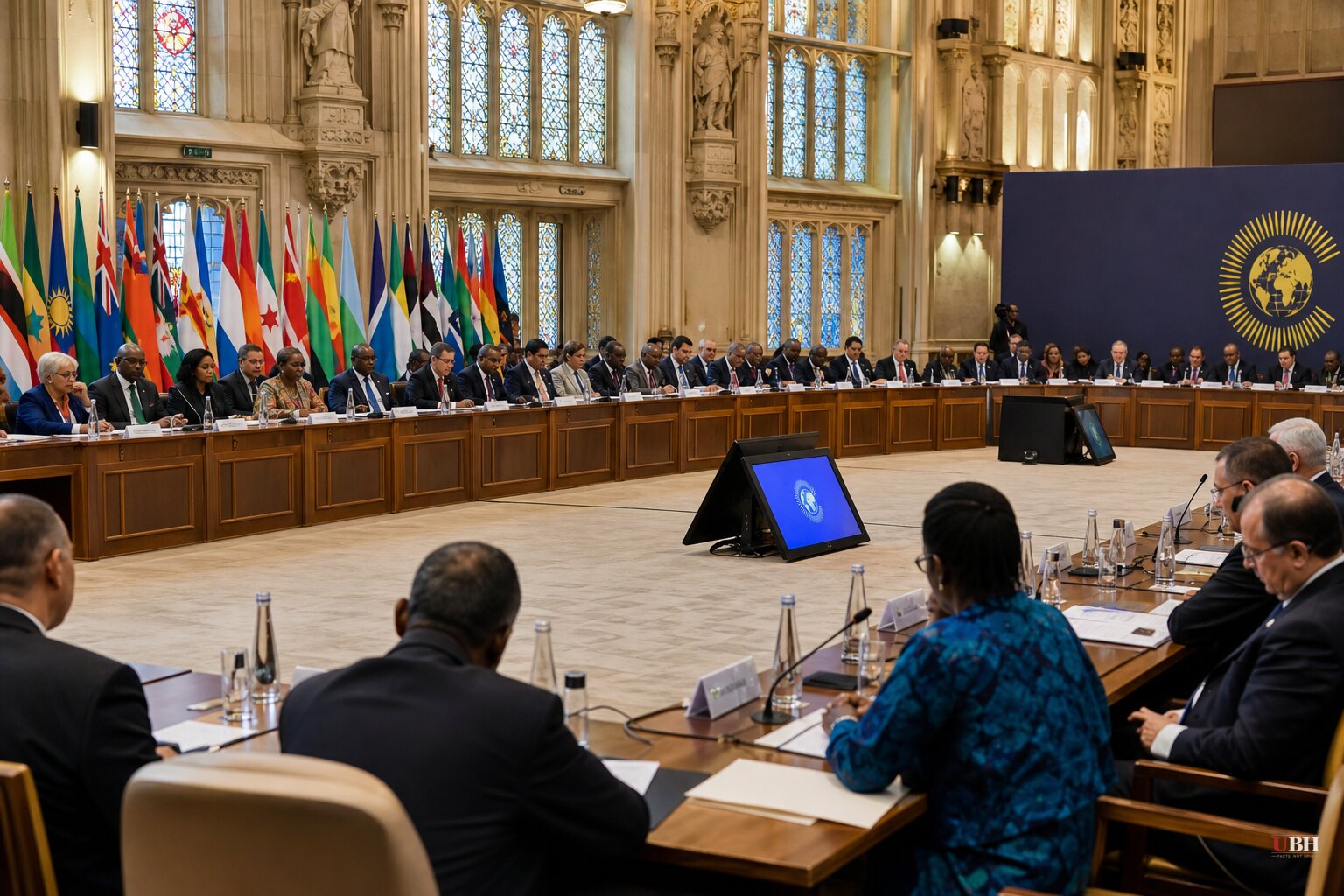
India's Chief Justice Surya Kant stood in London on Friday, August 28, 2026, and said what plenty of developing-world officials think but rarely get to say on a stage like this.
Speaking at the Commonwealth Secretariat's Marlborough House, Kant told delegates from 56 Commonwealth countries that the global push for clean energy is stacked against nations still trying to industrialize, according to the Times of India.
"Countries that are finally industrialising are being asked to move rapidly towards renewable power, and often made to bear the brunt of criticism when they cannot move fast enough," Kant said. "In comparison, the nations urging that transition spent two centuries building their own strength on coal and oil."
The UK started burning coal at industrial scale in the 1700s. The U.S. followed. Western economies built their entire industrial base, their infrastructure, and their wealth over roughly 200 years of fossil fuel use with zero climate constraints. Now those same countries want India, Nigeria, and dozens of other developing nations to hit renewable targets on a timeline measured in decades, not centuries.
Kant made his remarks at the High-Level Commonwealth Policy Dialogue on Climate Justice, an event organized by the Commonwealth Secretariat and the Commonwealth Legal Education Association, according to India Legal. He's currently on a four-day official visit to Germany and the UK, according to Business Standard.
The Resource Extraction Problem
Kant didn't stop at fairness rhetoric. He pointed to a real supply-chain problem: the clean energy transition itself depends on mining copper, cobalt, and lithium, and that extraction carries its own environmental and social costs.
He cited a Zambian High Court ruling in Nyasulu v. Konkola Copper Mines, where the court held a copper mining company liable for polluting local water supplies, according to India Legal. The materials needed to build solar panels, batteries, and wind turbines often come from mines in developing countries, and those mines can devastate the same communities being told to decarbonize.
"Developing countries facing myriad challenges depending on their geographical locations and pushing them towards clean energy at an unrealistic pace could create more challenges than solutions," Kant warned, according to the Times of India.
Not Anti-Climate, Anti-Hypocrisy
Kant wasn't arguing against climate action. Business Standard reported he framed the issue as reconciling "the urgency of the clean energy transition with the principles of fairness and shared responsibility that must underpin it." He also said courts must find solutions that protect the environment "without losing sight of the legitimate needs of development," arguing the two goals don't have to be a zero-sum fight.
He raised a specific human cost too. "When a smallholder or a fisher-family loses land, water or a harvest to a crisis they did little to cause, the consequences extend far beyond environmental harm; they threaten the very foundations of livelihood, dignity and equality," Kant said, according to Business Standard.
Climate change doesn't wait for industrialization timelines. The countries least responsible for historical emissions, small island nations, coastal fishing communities, and drought-hit farming regions are often hit hardest and fastest. A slower transition for developing economies might make industrial sense, but it doesn't slow the floods, droughts, or rising seas those same countries are already facing. Kant himself acknowledged this tension rather than dismissing it. He framed the challenge as reconciling urgency with fairness rather than picking one over the other.
A Push for Shared Legal Playbooks
Kant also used the speech to make a pitch for judicial cooperation. He argued Commonwealth courts don't need to reinvent legal frameworks for climate cases in every country. "We need not develop a separate jurisprudential vocabulary in every country where a climate question reaches the Courts," he said, according to both the Times of India and India Legal. "Rather, the Courts should be open to borrowing ideas, approaches, and solutions that have proved useful elsewhere in the Commonwealth."
He cited Indian cases like MC Mehta v. Kamal Nath and the 2024 MK Ranjitsinh v. Union of India ruling as examples of jurisprudence other Commonwealth nations could draw from, according to India Legal.
He also flagged a legal gap nobody's solved: climate-displaced people. "They fit neither our refugee law, which amounts to persecution, nor our migration law, which was never written with a receding coastline in mind," Kant said, arguing these populations "deserve a status of their own."
None of this comes with enforcement teeth. It's a policy dialogue, not a binding treaty, and the Commonwealth has no mechanism to force member nations to adopt Kant's proposed legal frameworks or to change how rich countries structure emissions targets for poorer ones. Whether any of the 56 countries in that room will act on it remains to be seen.
Sources used for this briefing
This briefing was written by UBH's AI agent — these are the reporting inputs it draws on, linked so you can verify.


